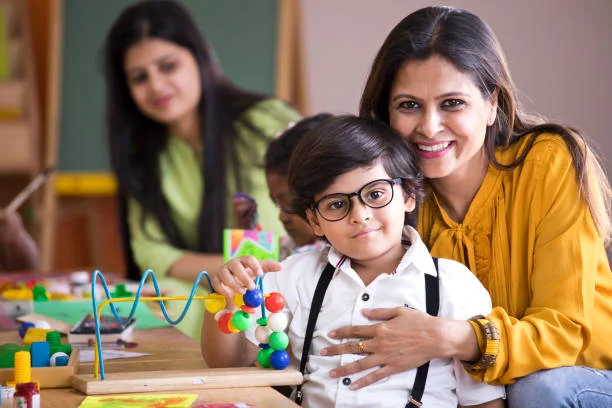
Parents across Uttar Pradesh are thinking more carefully today about how and where young children begin learning. They are no longer choosing a play school only because it is nearby or familiar. Families now want a learning environment that supports safety, care, routine, and early development in a balanced way for Play school choices in UP.
This blog examines what parents in UP now value most when choosing a play school.
Why Early Childhood Education Matters More Than Ever
Early childhood education is more crucial now because the early years determine how kids learn, talk, socialise and adjust to new environments. A preschool in Agra is now regarded as a significant milestone in general development by many families, and not just a day care centre.
Parents are increasingly considering how early learning can build confidence, communication skills, habits, and social development. This has led to a more careful and more informed school selection.
Key Factors Parents Now Consider Before Choosing a Play School
Parents now review the daily school experience more carefully than before. They want clear signs that a school can support safety, learning, adjustment, and healthy early development. They also compare whether the school’s approach suits the child’s age, pace, and daily needs.
Safety and Hygiene
Safety and cleanliness often shape the first impression and the final decision.
- Controlled entry and exit systems are now closely checked.
- Clean classrooms, washrooms and play areas are expected.
- Daily hygiene routines matter to parents during the school day.
- Safe furniture and supervised activity spaces add reassurance.
Teacher Qualifications
Parents look closely at the teachers who guide children every day.
- Early years training is valued for age-appropriate classroom support.
- Calm handling and clear communication are seen as essential qualities.
- Observation skills matter when children are still adjusting to school.
- Consistent staff can support stability and trust.
Learning Methodology
The teaching approach now matters as much as the physical school set-up.
- Play-based learning is often preferred in the early years.
- Activities should support speech, movement, curiosity, and expression.
- Many parents avoid schools that feel too academic too soon.
- Balanced routines can combine guidance with free exploration.
Infrastructure and Facilities
Parents often judge quality through how well the school supports children.
- Bright, airy rooms can help children feel comfortable and settled.
- Safe indoor and outdoor areas are important for movement and play.
- Well-organised activity zones suggest better planning for young learners.
- Transport safety is reviewed carefully when travel is longer.
Communication With Parents
Clear communication has become an important part of how parents assess a school.
- Regular updates can help parents track adjustment and participation.
- Honest feedback about behaviour and progress is highly valued.
- Parent meetings are useful when they focus on development.
Technology and Modern Learning
Parents usually want technology to support learning, not replace it.
- Digital tools may help classroom engagement when used carefully.
- Simple updates can improve day-to-day communication with families.
- Audio-visual aids can support attention in short, suitable formats.
- For some families, a play school in Lucknow with thoughtful modern tools feels better prepared for current learning needs.
Modern tools are most useful when they remain simple and child-friendly. Parents usually value technology more when it supports teaching, organisation, and communication without reducing human interaction.
The Growing Importance of Emotional and Social Development
Parents across UP are giving more importance to how children feel, relate, and settle in preschool. Emotional safety is now often treated as closely linked to learning readiness. Families are paying attention to whether a school supports sharing, listening, turn-taking, and gentle guidance through separation anxiety of Play school choices in UP.
This reflects a wider belief that the early school experience should build security and social confidence, not only introduce routines, rhymes, and classroom habits.
Conclusion
From Agra to Lucknow, parents are making play school choices with more care and better awareness. They are looking beyond convenience and giving closer attention to safety, teacher quality, learning methods, infrastructure, communication, and emotional development.
This change shows that families now expect a play school to support the child’s full early experience, not only basic supervision. Across UP, the decision is becoming more informed, more balanced, and more closely linked to what children need in their first learning environment.
Missing a piece of the puzzle? Find the hidden strategy here at 2A Magazine.