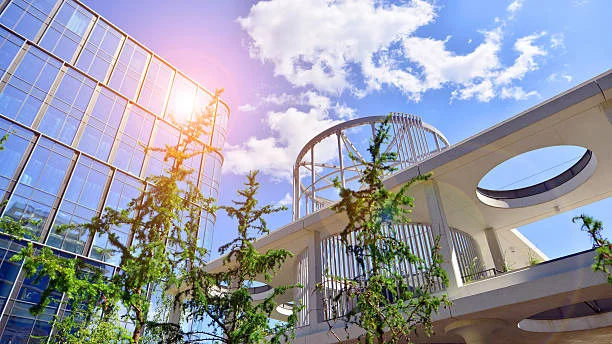
Industrial architecture is currently undergoing a profound transformation. Historically, massive logistics centres and manufacturing plants were designed with a singular focus on sheer utility, often completely ignoring long-term environmental impacts. Today, the approach has shifted dramatically. Innovative architects and urban planners are actively reimagining these colossal structures as eco-friendly, climate-responsive ecosystems. The stakes for this evolution are undeniably high. Academic research highlights the urgent need for structural change, noting that the building sector generates 38 percent of global energy-related CO2 emissions, whilst traditional concrete production consumes nearly 10 percent of the world’s industrial water. This staggering environmental toll has accelerated the widespread adoption of sustainable design principles right across the commercial real estate sector.
As global supply chains expand, the sheer footprint of these commercial facilities has grown exponentially, putting immense pressure on local power grids and natural ecosystems. In response to this mounting challenge, developers are pivoting towards sustainable frameworks. These frameworks prioritise the health of the surrounding environment just as much as they value operational output, fundamentally changing how we approach industrial zoning and large-scale construction.
In rapidly developing logistical hubs, particularly in regions like Thailand, the rising demand for green infrastructure is entirely reshaping the local market. Modern corporate tenants are no longer satisfied with simple, uninsulated metal enclosures that drain energy. When a multinational logistics firm or a domestic manufacturer looks for an industrial warehouse for rent, they now prioritise built-to-suit facilities that feature energy-efficient cooling systems, robust thermal insulation, and eco-conscious construction methods. This evolution reflects a much broader corporate commitment to sustainability, where reducing operational carbon footprints is viewed as being just as important as geographical location or available square footage.
These customisable spaces offer a significant competitive advantage. Businesses can drastically reduce their overhead costs by occupying properties that naturally regulate temperature and minimise electricity usage. Furthermore, aligning corporate logistics with eco-friendly infrastructure helps these businesses meet increasingly strict governmental environmental regulations and appeal to a more environmentally conscious consumer base.
Key Architectural Innovations in Logistics
To meet these strict new environmental standards, architects are deliberately integrating a wide variety of innovative design elements into commercial properties. The ultimate goal is to minimise daily energy consumption while maximising spatial efficiency and worker well-being. By blending advanced engineering with sustainable theory, modern logistics facilities are setting new benchmarks for the industry.
Several foundational trends are currently driving this architectural shift forward:
- Passive Ventilation Strategies: The implementation of exceptionally high ceilings and strategically placed louvres promotes continuous natural airflow. This intelligent design choice drastically reduces a facility’s reliance on energy-intensive mechanical cooling systems.
- Solar Energy Integration: The vast, flat roofs characteristic of logistics centres provide an ideal, uninterrupted canvas for photovoltaic panels, allowing expansive facilities to generate their own clean electrical energy.
- Sustainable Material Sourcing: Forward-thinking developers are increasingly utilising recycled structural steel, low-impact alternatives to traditional concrete, and locally sourced materials to cut down heavily on transportation emissions.
- Water Management Systems: Advanced rainwater harvesting and greywater recycling networks are being installed to significantly reduce the heavy strain on local municipal water supplies.
The Intersection of Productivity and Spatial Design
Beyond strict environmental conservation, sustainable industrial architecture places a very heavy emphasis on human-centric design. The dark, uninviting factory floors of the past are rapidly being replaced by bright, highly ergonomic work environments. The extensive use of translucent roofing panels and large, high-performance skylights floods interior operational spaces with natural daylight.
This thoughtful approach to lighting not only cuts down on commercial electricity usage during peak operating hours, but it also significantly boosts the mood, safety, and overall productivity of the workforce. By treating industrial structures as dynamic, carefully considered workspaces rather than mere storage boxes, architectural designers are creating healthy environments where businesses and their employees can both thrive. Studies consistently show that access to natural light and better air circulation can lower absenteeism and improve cognitive function among workers. In an industrial setting where focus and physical endurance are critical, these architectural enhancements translate directly into operational success.
Ensuring Longevity Through Maintenance and Verification
Implementing green building materials and energy-efficient technologies is realistically only the first step in the journey. For a massive commercial property to remain truly sustainable over decades of heavy use, these complex systems must be consistently monitored, validated, and maintained. Without proper oversight, even the most innovative eco-friendly designs can easily fall short of their initial environmental goals.
To guarantee that these green systems perform exactly as intended, rigorous evaluations are required long after construction is completed. It is widely recognised that proper oversight and building inspections in sustainable architecture are absolutely crucial for identifying hidden energy leaks, verifying the correct installation of eco-friendly materials, and improving indoor air quality over the total lifespan of the structure. During these thorough evaluations, trained professionals assess everything from the structural integrity of recycled materials to the efficiency of solar panel grids. This continuous feedback loop ensures that the facility operates at peak environmental performance, securing the long-term value of the property for both the tenant and the wider community.
A Blueprint for Future Commerce
The transformation of industrial architecture marks a pivotal, exciting moment in global urban development. By actively moving away from outdated, resource-heavy construction methods, the commercial real estate sector is proving every day that practical functionality and environmental stewardship can successfully go hand in hand. As climate-responsive design becomes the standard rather than the exception, the next generation of logistics infrastructure will undoubtedly play a leading role in building a far more sustainable future for global commerce.
Theory is good, but here is how to put it into practice at 2A Magazine.