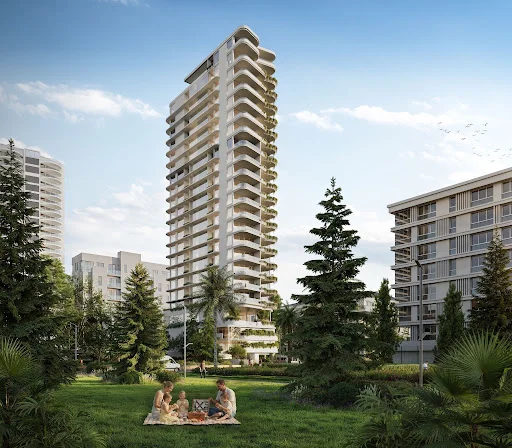
Architectural drawings provide precise technical information, but they are primarily intended for design professionals. Buyers, investors, real estate agents, and planning authorities often find it difficult to visualize the finished project from floor plans, elevations, and sections alone. This communication gap can delay approvals, investment decisions, and property sales.
Professional exterior rendering bridges that gap by transforming technical drawings into realistic visualizations that everyone can easily understand. More than a marketing asset, it is a strategic communication tool that helps projects secure approvals, attract investors, and drive sales with greater confidence.
Why Exterior Designs Struggle to Communicate on Paper
Architectural drawings contain all the information needed for construction, but they are rarely designed for audiences without architectural training. For developers, investors, brokers, and planning committee members, a drawing set often raises as many questions as it answers. Building scale feels abstract, material finishes are difficult to imagine, and the relationship between the building and its surroundings is rarely obvious from technical drawings alone.
When people cannot clearly picture the finished project, uncertainty replaces confidence.
- Buyers hesitate because they cannot fully imagine the property’s appearance.
- Investors struggle to assess the project’s market appeal without realistic context.
- Planning authorities often request additional clarification before approving a proposal.
In many cases, these delays are not caused by poor design but by ineffective communication. Traditional drawings simply are not the best format for helping non-technical audiences understand a project.
What Exterior Rendering Actually Does
At its core, exterior rendering transforms architectural drawings into photorealistic images that accurately represent a future building, including its proportions, materials, lighting, landscaping, and surrounding environment.
A professionally produced exterior rendering allows viewers to quickly understand:
- How the building fits within its streetscape.
- How its massing relates to neighboring structures.
- How materials will appear under natural lighting.
- How the overall design integrates with the site.
Instead of relying on assumptions, stakeholders evaluate a realistic visual representation of the project. This creates clearer communication between architects, developers, investors, marketing teams, and planning authorities while reducing misunderstandings and unnecessary revisions.
For this reason, many developers now consider professional exterior rendering services an essential part of project delivery rather than simply a marketing resource.
How Exterior Rendering Supports Property Sales
From a sales perspective, exterior rendering serves one primary purpose: eliminating uncertainty before a purchasing decision is made.
When prospective buyers can clearly visualize a future property, they evaluate it much like an existing building rather than trying to interpret technical drawings or imagine the final result. This increased confidence becomes especially valuable during pre-construction sales, when no completed building exists for potential buyers to visit.
Exterior renderings also play a crucial role in shaping first impressions. Today’s buyers typically discover new developments through websites, online listings, social media, brochures, or digital advertising. Within only a few seconds, they form opinions about the quality and credibility of a project.
A professionally produced exterior rendering immediately communicates professionalism, architectural quality, and development maturity. It signals that the project has been carefully considered and deserves serious attention, creating a competitive advantage in increasingly crowded property markets.
For pre-sale developments, where buyers are investing in a vision rather than a completed asset, a realistic visualization often becomes the element that transforms initial interest into genuine purchasing confidence. In this context, exterior rendering becomes much more than a design deliverable, it becomes an effective sales tool.
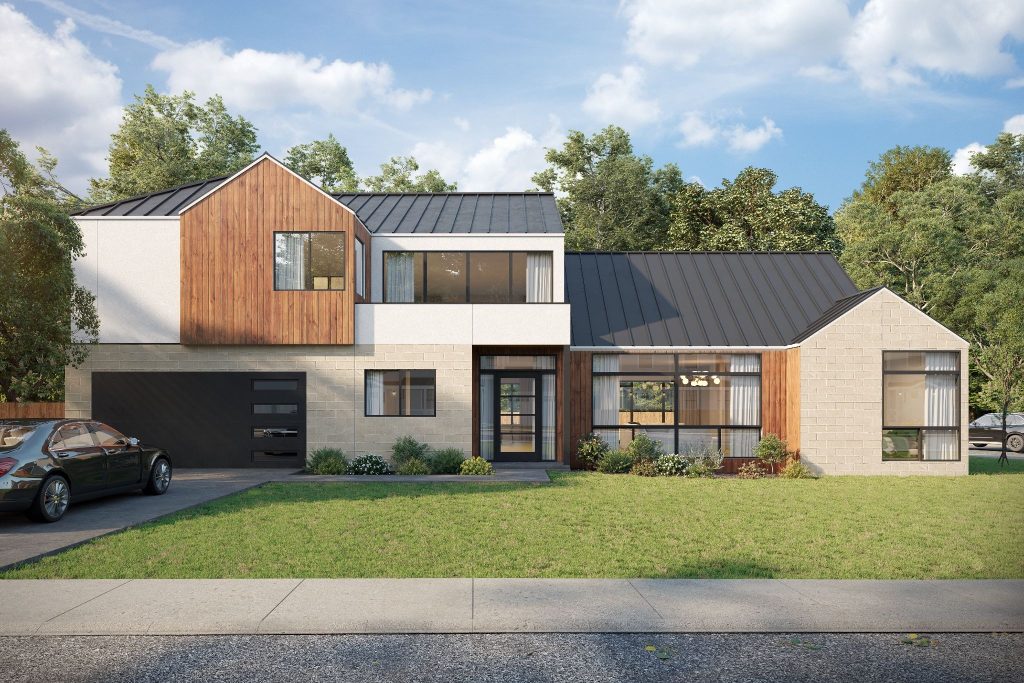
How Exterior Rendering Eases Planning and Permit Approvals
The role of exterior rendering extends far beyond marketing. It has also become an increasingly valuable resource during planning approvals and permitting processes.
Planning authorities are not evaluating architecture solely on aesthetics. Their responsibility is to assess how a proposed development affects its surroundings, including scale, massing, neighborhood character, public views, setbacks, and community impact.
When reviewers cannot accurately visualize these relationships, uncertainty frequently leads to requests for additional documentation or design revisions.
Many revision requests arise not because the design itself is problematic, but because decision-makers lack sufficient visual information to evaluate it confidently.
Professional exterior renderings help answer these questions before they arise by clearly illustrating:
- The perceived height and overall massing of the building.
- Its relationship with neighboring structures.
- How setbacks, frontage, landscaping, and public interfaces function within the site.
Providing this level of visual clarity allows planning authorities to evaluate projects based on actual design intent rather than assumptions. For developments in sensitive locations or highly regulated environments, realistic exterior renderings often contribute to smoother review processes and shorter approval timelines.
Why Accuracy Matters More Than Polish in Exterior Rendering
Not every exterior rendering serves these purposes equally well. Some images are visually impressive but contribute little to decision-making because they prioritize artistic style over architectural accuracy.
The most effective exterior renderings share three essential characteristics.
– Realistic lighting and materials: Lighting conditions and material finishes strongly influence how viewers perceive scale, proportion, and architectural quality. Overly dramatic lighting or unrealistic materials may create visually striking images but can establish expectations that the completed project cannot fulfill.
– Accurate environmental context: Buildings never exist in isolation. Their relationship with neighboring structures, surrounding landscapes, streets, and public spaces is fundamental to understanding the overall project. Omitting this context often creates unnecessary uncertainty later in the approval or sales process.
– Appropriate visual communication for the intended audience: Marketing visuals designed to inspire buyers require a different approach than renderings prepared for planning submissions. Investor presentations demand a balance between visual appeal and technical credibility. Experienced rendering studios understand these distinctions and adjust composition, camera angles, lighting, and level of detail according to each project’s objectives.
Choosing an experienced rendering partner such as MR Rendering is therefore not simply about producing attractive imagery. It is about creating visuals that stakeholders can trust when making important decisions.