
The .io genre has one idea: you start small, you get bigger, and everything else in the arena is either food or a threat depending on the size difference. That’s it. That single rule produced an entire genre because it needs no tutorial — you understand it in the first four seconds, before anyone has explained anything.
The genre is also inseparable from the browser, and not by accident. The whole appeal is that you go from seeing a link to being in a live multiplayer match in about five seconds — no install, no account, no lobby. Take that away and the format collapses: nobody downloads a client for a game they expect to die in twice before deciding whether they like it. Every title below opens in a tab and runs on modest hardware.
What actually differs between .io games is the mechanism of growth, and that mechanism determines everything else: how risky the game feels, whether being big is safe, and whether a beginner has any chance against someone who’s been playing for an hour.
Sorted that way, the genre makes a lot more sense than an unranked list of nine similar-looking arenas.
Why the growth mechanism decides everything
Three properties follow directly from how a game lets you grow, and they’re worth understanding before you pick one:
Does size make you safer or more vulnerable? In eating games, big usually means safe — you can consume anything smaller. In length-based games, big means harder, because a longer body is a larger obstacle you have to avoid hitting yourself. That inversion completely changes the late game.
Is growth reversible? Some games let you lose progress gradually. Others delete everything on a single mistake. The second kind is more tense and much less forgiving of a bad thirty seconds.
Can a small player beat a big one? In games where growth also means clumsiness, yes — constantly. In games where big is simply better, the answer is no, and joining a mature server is unpleasant.
Eating and absorbing: big means safe
The original .io formula. Consume things smaller than you, avoid things larger.
Eat Blobs Simulator
A colourful arena where the goal is to become the largest slime. It also supports single and two-player modes, which is unusual and genuinely useful — most .io games are strangers-only.
Two-player changes the dynamic entirely. Against a person next to you, size advantage becomes negotiable: you can cooperate to corner a bigger blob, which the format doesn’t normally allow.
Growth type: absorption. Bigger is straightforwardly safer.
Attack Hole
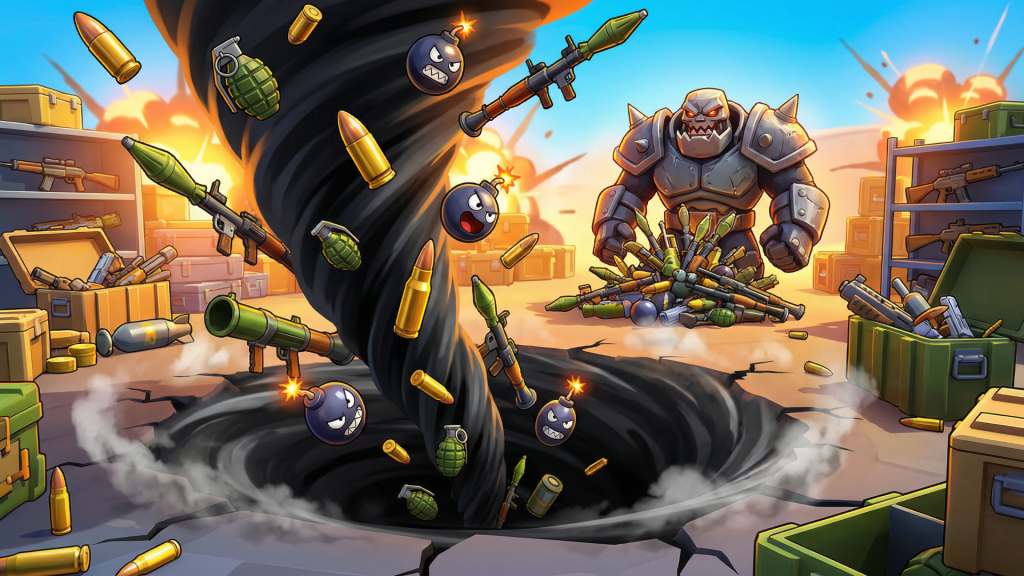
You control a hole that swallows weapons before a timer expires, then uses them against giant enemies. The hole-growth format is a cousin of the blob format with one important difference: the timer.
A timer changes the risk calculation completely. In a standard .io arena you can play cautiously forever. Here caution is itself a failure state — you must consume aggressively or the round ends with you too small for the boss.
Growth type: absorption against a clock. Passivity loses.
Makeup Hole

Same hole mechanic, aimed at a different audience: collect beauty items for makeover results rather than weapons for combat.
Worth including because it makes a point about the genre — the .io mechanic is theme-agnostic. Swallowing objects to grow works identically whether the objects are weapons or lipstick, and the reskin reaches players who’d never open a combat arena.
Growth type: absorption, collection-flavoured.
Length-based: big means harder
Snake-lineage games, where growth actively works against you.
Slither Classic
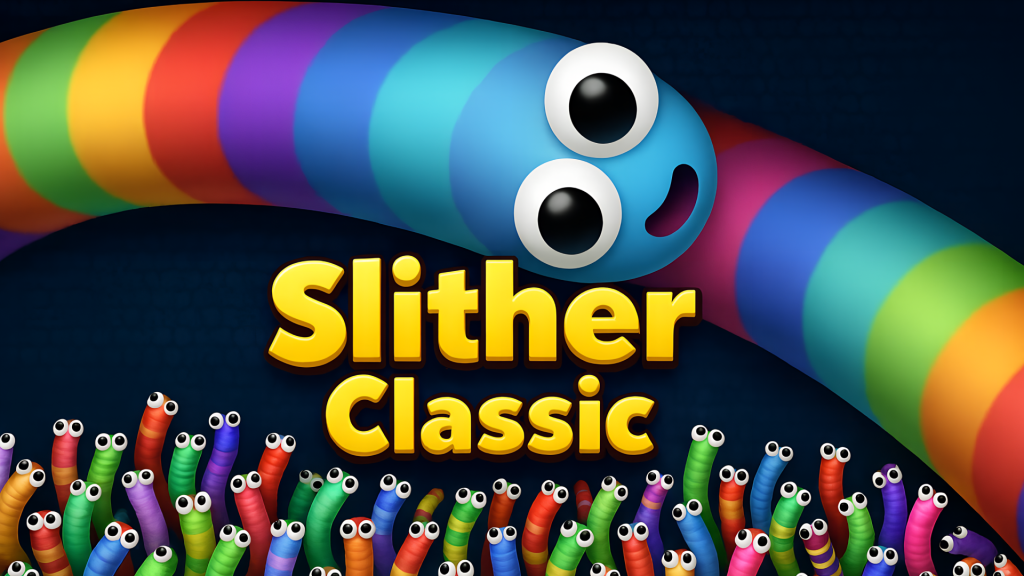
The purest expression of the format: eat dots, grow, outmanoeuvre others, never touch a body including your own.
Its longevity comes from a rule most players discover late — you don’t win by being fastest, you win by cutting people off. Size is a weapon only because a long body makes a long wall. That’s a strategic game hiding inside a reflex game.
Growth type: length. Getting big makes the arena smaller for you.
Snake 2048
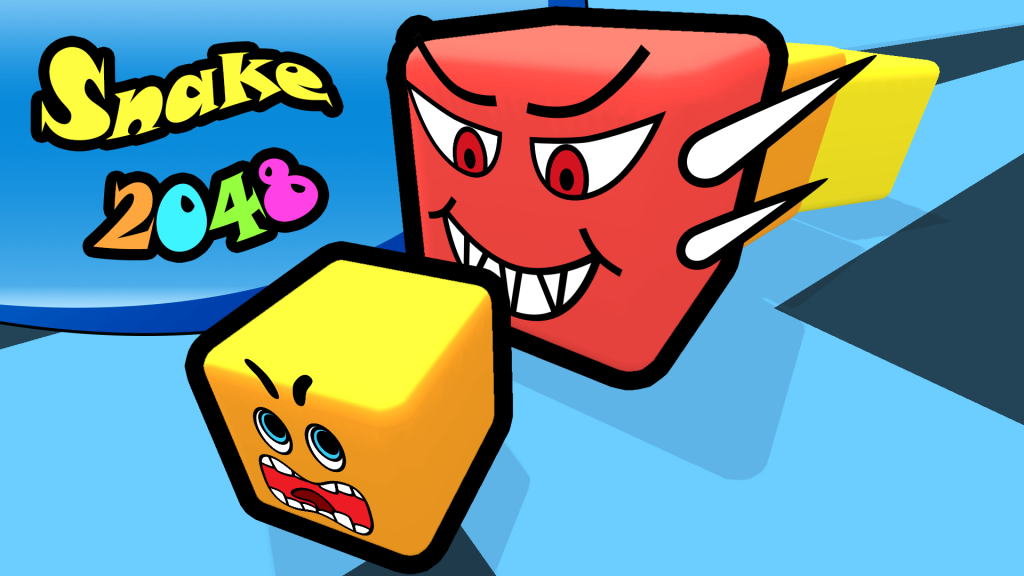
Snake crossed with 2048: grow by eating smaller numbered cubes while dodging larger opponents.
The numbers add information the classic format lacks. In Slither you estimate whether an opponent is bigger; here you can read it. That converts a judgement call into an arithmetic one, which suits players who find pure eyeballing frustrating.
Growth type: length plus numeric value. Bigger number beats smaller number.
Snake 2077: Glitch War
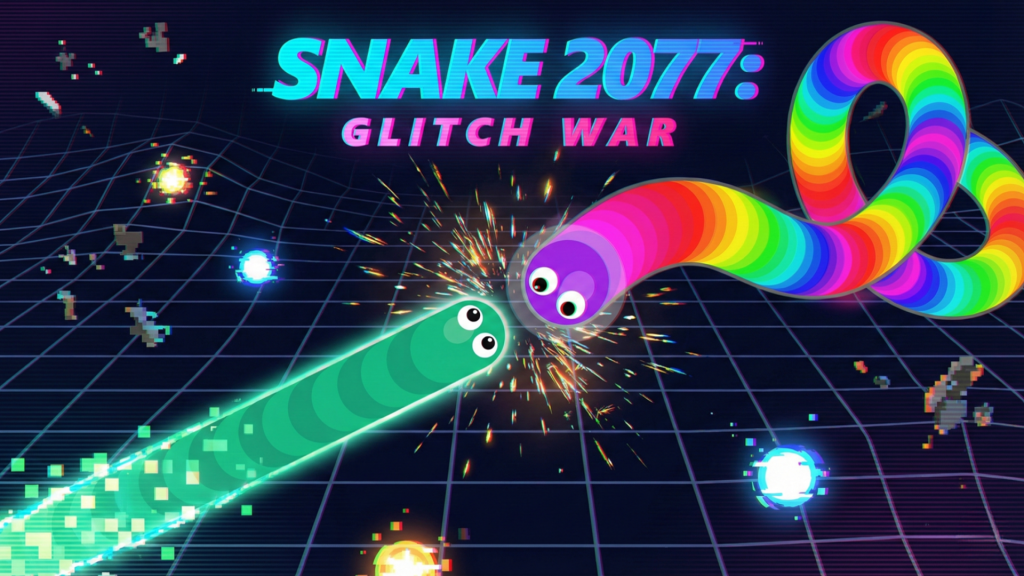
The same skeleton in a neon cyberpunk arena: collect energy, outmanoeuvre rivals, grow.
Not a mechanical revolution, and it doesn’t pretend to be. Its argument is legibility — high-contrast neon on dark backgrounds makes trajectories easier to read at speed than pastel arenas do. That sounds cosmetic and isn’t: in a game where you die by misjudging a line, being able to see the line matters.
Growth type: length, with better visual clarity.
The odd ones: growth by something else entirely
Tall io

You control a stickman collecting bricks to grow taller while fighting opponents. Vertical growth instead of mass or length.
It’s a genuinely different problem. Height doesn’t help you eat and it doesn’t obstruct anyone — it’s a score you have to protect while remaining mobile. Closer to a tug-of-war than a food chain.
Growth type: vertical. Purely competitive, not consumptive.
Kubz.io

A multiplayer voxel sandbox: mine, craft, survive, play with friends. The .io suffix here means “multiplayer in a browser” rather than “grow-to-win arena.”
Include it if you want the social half of the genre without the constant threat of deletion. Exclude it if you specifically want a competitive arena — this isn’t one.
Growth type: resources and building. No food chain at all.
Mystery Dumpling Go: Merge IO
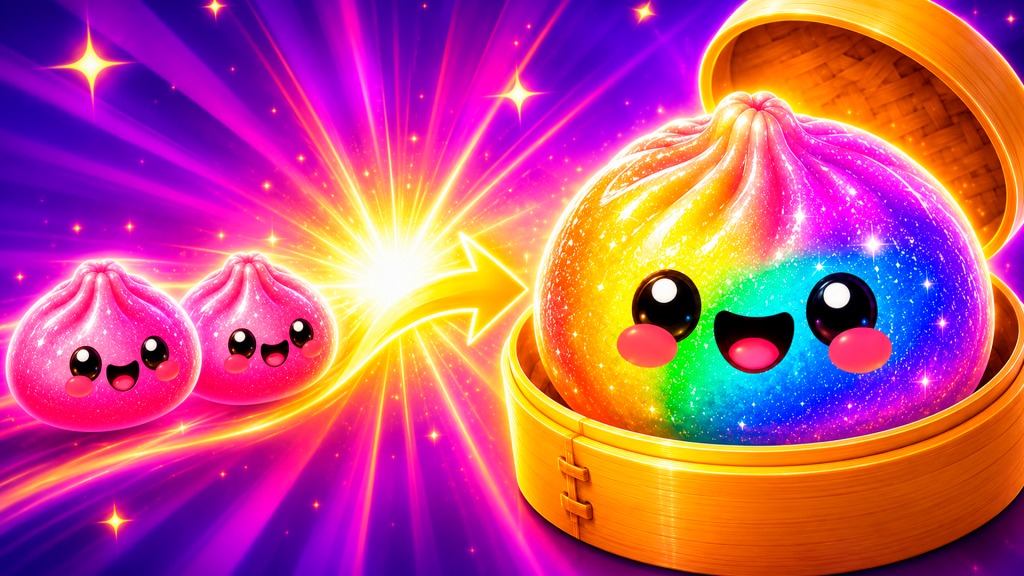
Collect and merge dumplings to evolve a squad, in an idle-flavoured arena game.
The merge layer solves the .io genre’s oldest problem: joining late. In a standard arena, arriving after everyone has grown means being food. Idle and merge systems give a new player something productive to do that isn’t immediately contested.
Growth type: merging. The most forgiving entry point here.
Where to start
- Never played an .io game: Slither Classic. The genre in its clearest form.
- Find pure arenas stressful: Mystery Dumpling Go. Merging gives you progress that can’t be eaten.
- Want it over quickly: Attack Hole. The timer guarantees a short round.
- Playing with someone in the room: Eat Blobs Simulator, for the two-player mode.
- Bounced off .io before: try Tall io. If what put you off was being eaten by a stranger who’d been playing for an hour, vertical growth removes that entirely.
The wider browser io games library is worth browsing by mechanism rather than by name — the titles look alike in thumbnails, and the growth model is the thing that decides whether you’ll enjoy it.
Frequently asked questions
Why are they called .io games?
The domain suffix. Early hits like agar.io and slither.io used .io addresses, and the name attached itself to the format — browser-based multiplayer arenas with one simple growth rule.
Do you need an account?
Usually not. Jumping in without registration is a defining trait of the genre, and games that break it tend to lose players at the sign-up screen.
Are opponents real people or bots?
It varies, and most games don’t say. Servers commonly fill quiet periods with bots so the arena never looks empty. Bots tend to move in smooth, predictable arcs; humans hesitate and change their minds.
Why do I die instantly when I join?
You joined a mature server. In eating and length games, existing players are already large, and a new small player is food. Games with merge or idle layers avoid this, which is why they’re the friendlier entry point.
Do these work on mobile?
Most do — single-input control adapts well to touch. Snake-type games are the most comfortable on a phone; games needing precise aim are noticeably better with a mouse.