Search “caricatronchi” online right now and you’ll notice something odd: dozens of blogs, forums, and art pages have popped up in just the past few months, all trying to pin down exactly what it is. That’s not an accident. It’s a sign of a term catching fire before anyone’s fully agreed on its rulebook.
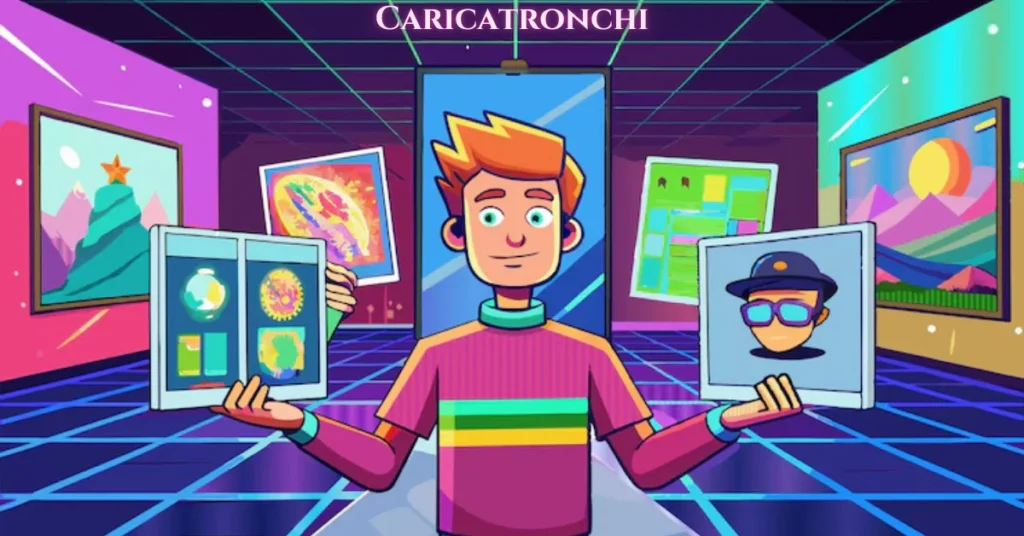
So what is caricatronchi, really? At its core, it’s an emerging digital art style that fuses classic caricature — think oversized noses, exaggerated grins, stretched proportions — with fragmented, almost surreal visual distortion. The name itself blends “caricature” with tronchi, an Italian word tied to fragments or logs, hinting at art that’s broken apart and rebuilt with personality.
What Exactly Is Caricatronchi?
Strip away the buzz, and caricatronchi is a way of turning a normal face or figure into something more expressive than realistic. Artists exaggerate a jawline, blow up the eyes, or twist a smile until the image feels alive with emotion rather than just accurate.
It isn’t traditional caricature, though. Classic caricature, the kind you’d get from a street artist at a fair, aims mostly for humor. Caricatronchi pushes further, adding fragmentation and abstraction so the final piece feels part cartoon, part surrealist portrait. It’s less “funny drawing” and more “visual mood board of a person.”
According to several digital art forums tracking the term, caricatronchi art frequently shows up as profile pictures, brand mascots, and social media avatars — places where personality matters more than photographic accuracy.
A Trend Built on AI Tools
Here’s the surprising part: caricatronchi wouldn’t really exist without generative AI. Tools like Midjourney and DALL-E have made it trivial for anyone, not just trained illustrators, to feed in a photo and get back an exaggerated, fragmented reinterpretation within seconds.
That accessibility matters. A decade ago, getting a caricature meant paying an artist at a fair or commissioning a freelancer. Now, a teenager with a phone can generate a caricatronchi-style avatar during a lunch break. This is exactly the kind of shift industry watchers point to when they talk about AI democratizing creative expression, as outlined in coverage from <cite index=”4-1″>Forbes on how generative tools are changing creative industries.</cite>
Some artists still hand-draw the effect using digital tablets, layering bold outlines and bright colors over exaggerated shapes. But the AI-assisted route is what’s driving the term’s sudden visibility online in 2026.
Real-World Examples Where You’ll Spot It
Caricatronchi isn’t confined to one corner of the internet. You’ll find it in:
- Brand mascots on small business social pages, where a bold, exaggerated character sticks in people’s memory better than a plain logo
- Gaming avatars and streamer overlays, where personality needs to read instantly at a glance
- Personal branding, especially for creators who want a memorable face without using their actual photo everywhere
- Meme culture, where distorted, expressive portraits spread faster than straightforward images
A small design studio, for instance, might swap a founder’s headshot for a caricatronchi version on their “About Us” page. It’s friendlier, more shareable, and honestly, a bit more fun than a stiff corporate photo.
The Upside of Going Caricatronchi
There’s real appeal here, and it’s not just novelty.
First, it’s fast. What used to take an illustrator hours can now take minutes with the right AI prompt. Second, it’s expressive. A caricatronchi portrait can communicate mood, energy, or personality in ways a plain photo simply can’t. Third, it travels well across platforms — bold colors and exaggerated shapes tend to pop on small phone screens, which matters enormously for anything meant to be scrolled past quickly.
Small businesses have also picked up on this. A distinct, exaggerated visual identity helps them stand out in crowded feeds without spending big on a full branding agency.
Where It Falls Short
That said, caricatronchi isn’t without drawbacks. The style can feel inconsistent since there’s no official rulebook yet — one artist’s version might look wildly different from another’s. Some viewers find heavily fragmented portraits a bit unsettling rather than charming, especially when features are distorted too aggressively.
There’s also a definition problem. Because the term is so new, plenty of confusion still exists about what actually counts as caricatronchi versus just a generic AI-generated caricature. That ambiguity, however, is fairly normal for internet-born trends before they settle into a fixed meaning.
What Experts Are Saying
“We’re seeing a pattern where niche visual styles get named online before there’s any formal art history behind them,” says one digital culture researcher who studies internet aesthetics. “Caricatronchi fits that mold. It’s less about a strict technique and more about a vibe people recognize when they see it.”
That observation lines up with how quickly the term has spread across forums and blogs in recent months, with barely any consensus on its precise origin, yet plenty of agreement on what it looks like.
Should You Care About Caricatronchi?
If you run a brand, manage social accounts, or just enjoy experimenting with your online identity, caricatronchi is worth a try. It costs little more than a bit of time with an AI image tool, and the payoff is a distinctive visual that’s hard to scroll past.
Artists, meanwhile, might see it as a fresh creative lane — one that blends traditional caricature skills with modern AI workflows rather than replacing them outright.
As of 2026, caricatronchi still sits in that early, undefined stage where a trend is more felt than formally described. But that’s often exactly when a style is most fun to experiment with, before the rules get written down. Whether it becomes a lasting art category or fades into the next internet buzzword, right now it’s a low-effort, high-personality way to stand out online.
FAQs
Is caricatronchi a real, official art movement?
Not officially. It’s an emerging internet term without a fixed dictionary definition, though it consistently describes exaggerated, fragmented digital caricature art.
Do I need artistic skill to create caricatronchi art?
No. Many people generate it using AI tools like Midjourney or DALL-E, though skilled digital artists also hand-create the effect with tablets and design software.
How is caricatronchi different from a regular caricature?
Traditional caricature focuses mostly on humor through exaggerated features. Caricatronchi adds fragmentation, abstraction, and emotional depth on top of that exaggeration.
Where do people usually use caricatronchi images?
Common spots include social media avatars, brand mascots, gaming profiles, and personal branding pages.
Will caricatronchi become a lasting design trend?
It’s too early to say for certain, but its low barrier to entry and strong shareability suggest it could stick around, at least as a recognizable online aesthetic.