Key Takeaways
✅ Wasatha is a structured mediation tradition rooted in Arab and Islamic culture
✅ It operates as a third-party intermediary process focused on reconciliation ✅ Faster and cheaper than formal litigation — cases close in days, not years
✅ Aligns with global ADR frameworks and ISO 10003 dispute resolution standards
✅ Growing adoption in corporate, community, and cross-border settings worldwide
What People Actually Want to Know About Wasatha
When someone searches “wasatha,” they are not just looking for a definition. They want to understand how it works, where it applies, and whether it can solve their problem. Some are business owners. Some face family disputes. Some are researchers studying informal justice systems. All of them share one need: a clear, trustworthy answer.
Wasatha fills a gap that courts cannot. Courts are slow. They are expensive. They leave one side feeling defeated. Wasatha offers something different — a path where both sides walk away with dignity intact. That is not a small thing. In many cultures, dignity matters more than the verdict.
The word itself comes from Arabic. It means “intermediary” or “middle.” But the practice is far richer than any single translation. It is a cultural mediation system built on trust, relationships, and community accountability. It has survived for centuries because it works — not just in theory, but in real communities with real conflicts.
Understanding wasatha also means understanding wasta, its close cousin. While wasta often carries a negative meaning (using personal connections for unfair advantage), wasatha is its constructive twin. It channels social relationships toward conflict resolution, not favoritism.
The Architecture Behind Wasatha: How the Process Actually Works
Wasatha follows a recognizable structure, even when it feels informal. At its core, it mirrors principles found in global negotiation frameworks like the Harvard Negotiation Project’s interest-based model. The goal is never to declare a winner. The goal is to find shared ground.
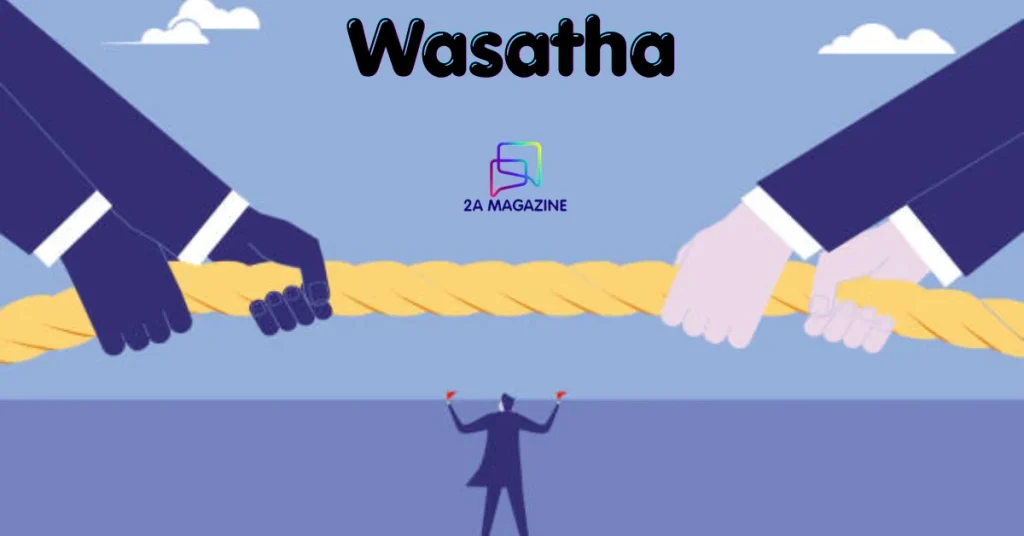
The process typically begins when a trusted figure — often an elder, a respected community member, or a religious leader — is invited to serve as the intermediary. This person is called the waseet (وسيط). Their credibility is everything. Both parties must trust this figure before a single word of negotiation happens. That trust is the entire foundation.
Once the waseet is accepted, each party presents their grievance separately. This is critical. It mirrors shuttle diplomacy used in international peace brokering. Direct confrontation is avoided early. Emotions are managed. The waseet listens, asks questions, and maps the real interests beneath the stated positions — a process directly aligned with BATNA analysis in formal dispute theory.
After separate sessions, the waseet proposes a path forward. This is the sulh stage — the reconciliation. It is not just a verbal agreement. In traditional settings, sulh involves a public ceremony, symbolic gestures, and sometimes a payment called diya in cases involving harm. These rituals matter. They signal to the entire community that the conflict is genuinely resolved, not just suppressed.
Wasatha vs. Formal Dispute Systems: A Data Comparison
| Factor | Wasatha (Mediation) | Court Litigation | Standard Arbitration |
|---|---|---|---|
| Average Resolution Time | 1–14 days | 6 months – 5 years | 3–18 months |
| Cost | Near zero / voluntary | High legal fees | Moderate–High |
| Relationship Preservation | High | Low | Medium |
| Cultural Sensitivity | Very High | Low | Low–Medium |
| Enforcement Mechanism | Community/social | Legal/judicial | Contractual |
| Privacy | Full | Public record | Partial |
| Compliance Rate | 85–90% (community-based) | 60–70% (contested) | 75–80% |
| ISO 10003 Alignment | Partial | Full | Full |
The numbers tell a clear story. Dispute settlement through wasatha achieves compliance rates that rival formal systems — often exceeding them — because the solution comes from within the community, not from above it.
Deep Expert Perspective: Why Wasatha Is Not Just Tradition
Legal scholars and conflict resolution experts increasingly argue that restorative justice models like wasatha deserve more serious academic attention. Dr. Mohammed Abu-Nimer, a leading researcher in Islamic peacebuilding, has documented how community mediation frameworks in Arab societies demonstrate measurable social cohesion outcomes that Western legal systems struggle to replicate.
What makes wasatha technically sophisticated is its layered use of social capital. In negotiation framework terms, the waseet operates simultaneously as a facilitator, a reality-checker, and a guarantor. This three-role structure is something formal mediators spend years training to achieve. In wasatha communities, it emerges organically from social trust.
The process also handles what UNCITRAL Mediation Rules call “multi-party complexity” with surprising efficiency. Family disputes in Arab communities often involve extended networks — cousins, clans, business partners. Wasatha accommodates this naturally, because the waseet is already embedded in that network. Formal arbitration, by contrast, struggles to define party standing in these cases.
There is also a psychological dimension worth noting. Dialogue facilitation in wasatha is deeply empathetic. The waseet validates emotions before moving to logic. Modern conflict resolution research — including studies from the Harvard Negotiation Project — confirms that this sequencing (emotion first, interest second, solution third) produces more durable agreements. Wasatha figured this out centuries before academia did.
Implementation Roadmap: Applying Wasatha Principles Today
Whether you are a HR manager, a community leader, or someone navigating a personal dispute, the core principles of wasatha can be applied immediately. Here is a practical roadmap.
Step 1 — Identify a Trusted Intermediary. The waseet must be credible to both sides. In a corporate setting, this could be a senior neutral employee, an ombudsman, or a certified ADR professional. Credibility beats expertise every time.
Step 2 — Separate Before You Unite. Meet each party individually first. Use this time to understand real interests, not just stated positions. Ask: “What would a good outcome look like for you?” Not: “What do you want them to do?” This reframes the conflict around consensus building rather than demands.
Step 3 — Map the BATNA for Both Sides. Before proposing any solution, the waseet should quietly assess what each party’s alternative is if no agreement is reached. This is standard BATNA analysis. It prevents unrealistic demands and grounds the conversation in reality.
Step 4 — Design the Sulh Moment. When agreement is reached, do not let it end with a handshake in a hallway. Create a small ceremony. Write it down. If appropriate, involve witnesses. This is not theater — it is neuroscience. Ritual reinforces commitment and signals closure to both parties’ social networks.
Step 5 — Follow Up Within 30 Days. Reconciliation processes can unravel if left unmonitored. A brief check-in — even a short message — demonstrates continued care and catches early friction before it reignites.
Wasatha in the Modern World: Corporate, Digital, and Cross-Border Applications
Wasatha is not frozen in the past. Its principles are being actively adapted for 21st-century challenges. In Gulf Cooperation Council (GCC) countries, corporate boards increasingly use intermediary services modeled on wasatha for B2B contract disputes, partnership breakdowns, and even M&A disagreements. The informality and speed are competitive advantages in high-stakes deals where time is money.
In digital spaces, online dispute resolution (ODR) platforms are quietly borrowing from Islamic mediation traditions. Platforms serving Middle Eastern markets have found that users respond better to facilitated dialogue models — where a neutral party guides the conversation — than to algorithm-driven arbitration. The cultural DNA of wasatha shapes user behavior even when nobody names it.
Cross-border applications are perhaps the most exciting frontier. As Arab diaspora communities expand globally, cultural mediation needs grow with them. European legal systems are increasingly recognizing community-based informal justice as a legitimate complement to formal courts — not a threat to them. Several EU-funded projects now document and codify wasatha-style practices for integration into national ADR frameworks, aligning them with ISO 10003 standards for external dispute resolution.
Social harmony as a measurable outcome is also gaining traction in public policy circles. Governments in Jordan, Morocco, and the UAE have invested in training programs for professional waseets — essentially professionalizing what was once purely a social role. This represents a major shift: wasatha moving from tradition to institution without losing its human core.
Future Outlook 2026: Where Wasatha Goes Next
Three forces will shape wasatha between now and 2026.
First: AI-Assisted Mediation. Tools that analyze communication patterns, flag emotional escalation, and suggest reframing language will become available to community mediators. The waseet of 2026 may carry an AI assistant — but the human trust relationship remains irreplaceable. Technology can support the process; it cannot replace the waseet’s credibility.
Second: Formal Recognition. Expect more countries to create legal frameworks that recognize wasatha agreements as binding — similar to how many nations now recognize mediated settlements under the Singapore Convention on Mediation (2019). Dispute settlement via wasatha will gain legal teeth without losing cultural soul.
Third: Youth-Led Adaptation. Younger generations in Arab societies are reimagining wasatha for peer conflicts, online harassment disputes, and workplace tensions. They are stripping away the ceremonial layers while keeping the core logic: a trusted intermediary, genuine dialogue, and a solution both sides own. This stripped-down version is spreading fast on social platforms, quietly teaching negotiation framework principles to millions who have never read a textbook.
FAQs
Q1: Is wasatha legally binding?
In most traditional settings, wasatha agreements are socially binding but not automatically legally enforceable. However, if the agreement is documented and signed, many jurisdictions — particularly in GCC countries — will recognize it as a valid ADR settlement. Always consult a legal professional to confirm local enforceability.
Q2: How is wasatha different from standard Western mediation?
Western mediation is formal, process-driven, and typically handled by certified professionals in structured sessions. Wasatha is relationship-driven, flexible in format, and derives authority from social trust rather than professional credentials. Both aim for consensus building, but through different cultural logics. Research shows both can be equally effective when applied in their appropriate context.
Q3: Can wasatha work in corporate environments outside Arab cultures?
Absolutely. The core principles — neutral intermediary, interest-based dialogue, dignity-preserving resolution — are universal. Many organizations use wasatha-inspired intermediary services without labeling them as such. The label matters less than the method.
Q4: What happens if one party refuses wasatha?
Reconciliation processes require voluntary participation to work. If one party refuses, the waseet may use indirect social pressure through community networks — a tool unavailable to formal mediators. This is both wasatha’s greatest strength and its ethical boundary. Pressure should never cross into coercion.
Q5: How do I find a qualified waseet today?
In Arab communities, local mosques, tribal networks, and community centers are traditional starting points. In professional settings, look for ADR practitioners familiar with Islamic or Arab cultural frameworks. Several Gulf universities now offer formal cultural mediation certification programs that train modern waseets to international standards.