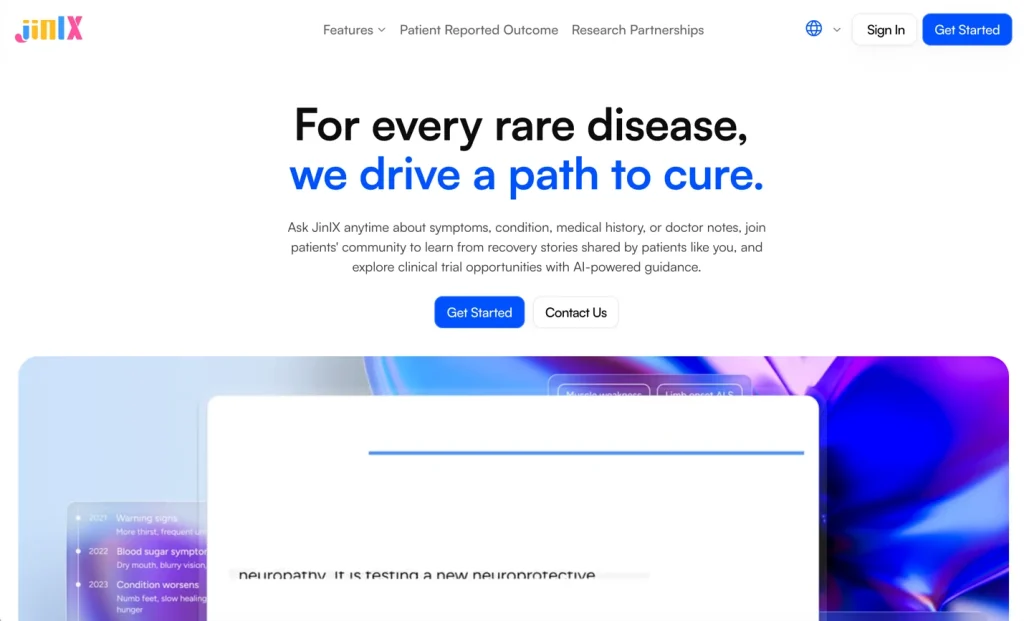
Living with a chronic condition means paying attention to patterns that can take months or years to reveal themselves. Symptoms that come and go, reactions to new medications, and subtle shifts in energy levels all contain clues — but only if they are captured and organized. The best symptom tracker apps for chronic illness go far beyond a simple calendar log. They consolidate scattered medical records into one coherent timeline, apply artificial intelligence to highlight what a human might overlook, and, in many cases, give patients full control over who sees their data. Some also connect you to communities of people who share your diagnosis, and a few even compensate you when your data helps advance research. Here we examine five standout platforms, beginning with JinIX, a solution built from the ground up for rare and difficult-to-diagnose diseases.
Why a Specialized Symptom Tracker Matters
General health apps often fall short when faced with the complexity of a chronic or rare illness. They may track steps or sleep but cannot interpret a decade of blood work, genetic panels, and specialist notes. A purpose-built symptom tracker bridges that gap, turning fragmented information into a story that makes sense to both you and your clinicians. Longitudinal tracking can shorten the diagnostic odyssey, improve appointment efficiency, and provide the objective evidence that is sometimes needed to be taken seriously. When patients own that data and can share it securely with researchers, the tool becomes not just a personal diary but a contribution to faster treatments for everyone with the same condition.
5 Symptom Trackers Built for Complexity
JinIX – AI-Powered Tracking with Patient-Owned Data
JinIX was designed for people navigating the uncertainty of a rare or hard-to-diagnose illness. Its AI Health Navigator does more than store entries; it reads your symptoms, medication history, and physician notes to suggest possible correlations and generate questions you can take to your next specialist visit. This transforms a symptom tracking session into a preparatory step for better medical conversations. The platform also builds a Patient Medical Journey timeline that assembles records from multiple providers — labs, imaging, consultation notes — into a single, chronological view. Instead of carrying folders to an appointment, you share exactly the portions of your timeline you choose, keeping full control over your information.
That control is reinforced by a dual-key encryption model and blockchain-based data integrity. Every access request is logged, and de-identification options ensure that when you decide to participate in research, your identity stays protected. The JinIX community adds a human layer: patients share real recovery stories, describing what treatments they tried and how their symptoms evolved. This peer insight can provide both practical guidance and emotional reassurance. While the platform is still growing, partnerships with organizations like Mount Sinai Health System demonstrate a clinical-grade seriousness that sets it apart. For anyone who wants an intelligent, privacy-first symptom tracker that treats their data as their property, JinIX represents a new way to manage complex health journeys.
Citizen Health – Research-Grade Record Aggregation
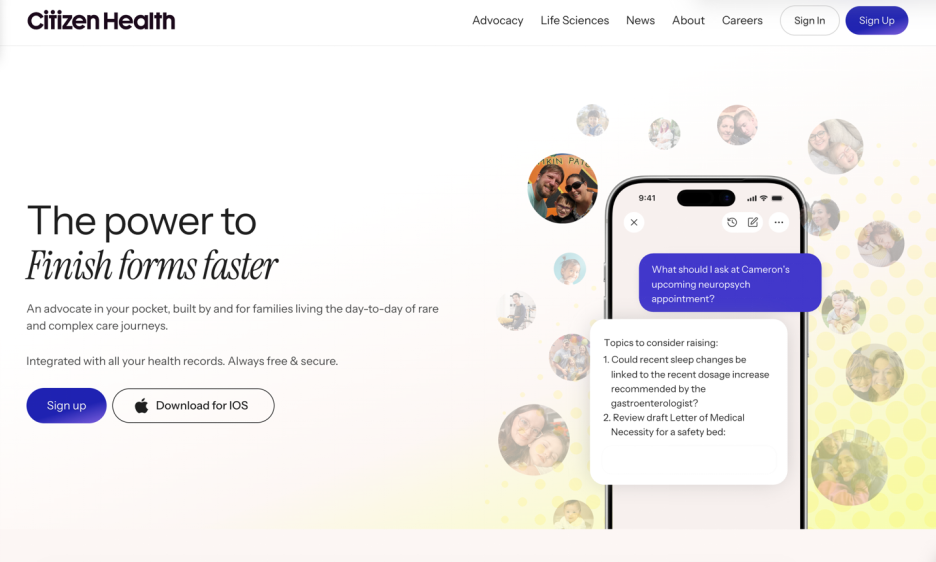
Citizen Health (formerly Ciitizen) has established itself as a powerful engine for record aggregation and symptom tracking in the rare disease space. The platform retrieves clinical data — including genetic reports, clinic notes, and imaging — from multiple providers, structuring it into one searchable profile. In 2025, Citizen Health introduced its AI Advocate, which helps patients interpret these records, spot trends, and prioritize their next care steps. This combination of human-curated data and AI analysis makes it easier to find patterns across years of fragmented care.
Crucially, Citizen Health’s model is built on trust and revenue sharing. When patients consent to share de-identified data for research, a portion of the commercial revenue flows back to their chosen patient advocacy organizations. Over 70 such groups and more than 120 condition communities are already active on the platform. The absence of a blockchain layer means data ownership is governed by policy rather than cryptographic verification, but Citizen Health’s track record of FDA-accepted data and $44 million in funding speak to its institutional credibility. For those who want a battle-tested record retrieval service paired with symptom tracking and a broad advocacy network, Citizen Health is a compelling choice.
Humanscape (Rarenote) – Blockchain-Based Rare Disease Community
Humanscape’s Rarenote platform shares JinIX’s belief that patients should own and govern their health data through blockchain technology. Users are organized by their specific diagnosis, creating niche communities where everyone truly understands the symptoms, treatments, and daily challenges involved. Within these groups, individuals log symptoms and medication responses, secure in the knowledge that every entry is cryptographically sealed and under their exclusive control.
Rarenote also compensates patients who allow their anonymized data to be used by research partners. This transforms a personal symptom tracker into an asset that can accelerate drug development while still respecting individual privacy. The platform’s strongest footprint is in South Korea, and its disease-specific design means someone with a rare metabolic disorder finds a highly relevant peer group rather than a generic health forum. For chronic illness patients who prioritize data sovereignty and want a condition-focused community, Rarenote demonstrates that symptom tracking can be both a personal health tool and a form of collective advocacy.

Patientory – Wearable Integration and Blockchain Security
Patientory widens the lens by connecting traditional medical records with real-time biometric data from wearables like Apple Watch and Fitbit. This makes it especially useful for managing chronic conditions where daily metrics — heart rate variability, sleep quality, activity levels — directly influence symptom severity. The mobile app stores and secures records from multiple providers, then layers AI-driven care plans on top of both clinical history and continuous device readings.
Built on a HIPAA-compliant private blockchain, Patientory provides an immutable audit trail for every data access event, answering the question of who saw what and when with cryptographic certainty. The platform also introduces the PTOY token, which rewards users for healthy behaviors and for sharing anonymized data. While the cryptocurrency component adds some learning curve, backing from pharmaceutical investors including Novartis and GSK lends credibility to the platform’s enterprise-grade security. For someone who wants to combine a symptom tracker for chronic illness with a quantified view of their daily physiology, Patientory bridges the gap between lifestyle monitoring and clinical documentation.
Sharecare – Broad Chronic Illness Management at Scale
Sharecare takes a more expansive approach, serving millions of users through employer and health plan partnerships. While not rare-disease-specific, its platform consolidates health insurance details, claims, and wellness tracking into a single “digital front door.” The RealAge assessment and condition-specific digital therapeutics programs function as symptom and lifestyle trackers for common chronic illnesses like diabetes, heart disease, and anxiety. Users can log symptoms, complete health assessments, and receive personalized nudges to stay on track.
A distinguishing feature is Sharecare+, which provides access to human health advocates who help members navigate care coordination, billing issues, and specialist referrals. On the back end, the platform’s Health Data Services division handles medical record retrieval and organization, though user reviews on this service are mixed. Sharecare’s scale — over $400 million in annual revenue — means it offers a polished, corporate-grade experience, but its data privacy model is trust-based rather than blockchain-verified, and it lacks the rare disease depth of more specialized competitors. For those whose chronic illness falls under more common diagnostic umbrellas and who already have access through an employer, Sharecare can serve as a convenient, all-in-one health companion.

Symptom Tracker App Comparison Table
| Feature | JinIX | Citizen Health | Humanscape (Rarenote) | Patientory | Sharecare |
| AI Health Navigator | Yes – analyzes symptoms, suggests questions | Yes – AI Advocate for record interpretation | No | AI-driven care plans from wearables and records | Yes – RealAge and digital therapeutic programs |
| Medical Record Aggregation | Patient-curated timeline with provider record upload | Comprehensive provider retrieval and digitization | Patient-entered and community-shared records | Multi-provider storage with wearable sync | Yes – via Health Data Services (record retrieval) |
| Blockchain Data Ownership | Yes – dual-key encryption and immutability | No – policy-based trust | Yes – blockchain for data sovereignty | Yes – HIPAA-compliant private blockchain | No |
| Patient Community | Global rare disease community with treatment story sharing | Condition-specific advocacy group communities | Disease-specific peer communities | No built-in community | No rare disease community; broad wellness network |
| Research Participation & Compensation | Yes – opt-in sharing with patient rewards | Yes – revenue sharing with patients and advocacy groups | Yes – compensation for data sharing | Yes – token rewards for data sharing | No direct compensation; data used for population analytics |
| Wearable Device Integration | No | No | No | Yes – Apple Watch, Fitbit, and 300+ devices | Yes – synced wellness devices |
| Best For | Rare disease patients wanting AI insight, data ownership, and peer stories | Rare disease patients needing deep record retrieval and advocacy ties | Rare disease patients valuing blockchain and tight disease communities | Chronic illness patients seeking biometric tracking with blockchain security | Broad chronic disease management through employer/health plan access |
Choosing the Symptom Tracker That Fits Your Life
The right symptom tracker for chronic illness depends on where you are in your health journey and what you value most. If you are chasing a rare diagnosis and want an AI-powered thinking partner that keeps you in control of your data, JinIX offers a uniquely integrated environment that combines tracking, timeline building, and community story sharing. If your records are scattered across many institutions and you want a proven retrieval engine with deep research connections, Citizen Health may be the natural starting point. For those who see data sovereignty as non-negotiable and want a condition-specific community, Rarenote’s blockchain foundation and peer networks provide a compelling alternative.
Patients who find daily wearable data essential to managing their condition will appreciate how Patientory merges biometrics with clinical records under cryptographic ownership. And if your chronic illness is more common and you already have access through a workplace plan, Sharecare’s broad platform can simplify day-to-day tracking and care navigation. Whichever tool you choose, the act of consistently documenting your experience transforms you from a passive patient into an active, data-empowered partner in your own care — and that shift can change the trajectory of your entire health story.