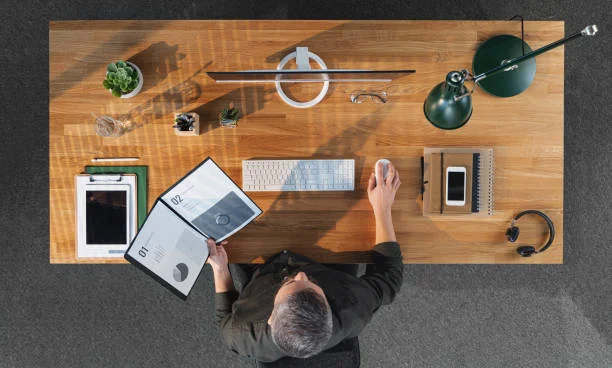
Most desk pain doesn’t arrive with much drama. It creeps in. A stiff neck after lunch. Tight shoulders by Thursday. Wrists getting cranky halfway through the inbox. Lower back feeling cooked after what looked like a very ordinary day. Then someone starts looking up common ergonomic desk mistakes and realises the problem probably isn’t one catastrophic setup decision. It’s a pile of small habits repeated often enough to become physical.
Office ergonomics gets treated like a one-off fix far too often. Buy a chair, put a screen on a desk, call it sorted. Real life is messier. People hunch when they’re tired, perch forward during meetings, work off laptops for too long, ignore arm support, and twist around whatever’s easiest in the moment. None of it feels especially serious while it’s happening. Over a few months, the body tends to disagree.
The screen ends up far too low
Laptop culture has done a number on posture. People spend hours looking slightly downward, chin drifting forward, upper back rounding, shoulders creeping up. It feels harmless because everyone does it. Neck tension usually says otherwise.
A screen placed too low nudges the body into a shape it was never meant to hold all day. Eyes go down, head follows, spine adapts, and the whole upper body starts carrying strain it doesn’t need. A proper monitor height changes the experience quickly. Eye line closer to the top of the screen. Head more neutral. Less collapsing through the chest. Less craning by mid-afternoon.
People sit on the edge of the chair and call it working
Plenty of workers own decent chairs and barely use them properly. They hover forward, leave the backrest untouched, and spend half the day holding themselves up instead of letting the chair do some of the work. Usually happens when concentration kicks in. The body leans towards the task and stays there.
A chair only helps when the body actually sits back into it. Lumbar support becomes useful. Weight distributes more evenly. The lower back stops doing all the heavy lifting alone. Forward perching might feel more active for a while, though it usually turns into fatigue wearing a disguise.
Arm support gets ignored until wrists start complaining
Wrists cop a lot from bad desk habits. Same goes for forearms and shoulders. Keyboard too high, mouse too far away, elbows floating with no support, hands cocked upward for hours. Very common. Very fixable.
A cleaner setup keeps elbows closer to the body, forearms more level, wrists straighter, and the mouse within easy reach. Small change, big difference. Once the arms stop reaching and bracing all day, the shoulders usually calm down too.
The desk becomes a storage unit instead of a workspace
Clutter changes posture more than most people realise. A crowded desk pushes the keyboard off-centre, sends the mouse into an awkward corner, and forces the body to work around mugs, notebooks, chargers, paperwork, lunch containers, and whatever else has quietly colonised the space.
An untidy desk doesn’t only look chaotic. It shifts the mechanics of the whole day. Twisting slightly to type. Reaching around objects. Holding one shoulder differently from the other. Nothing extreme. Just enough imbalance to get annoying over time.
Feet end up doing absolutely nothing useful
Feet planted on the floor sounds basic because it is basic. Still gets missed constantly. Chairs sit too high, feet dangle, or one leg tucks under the other for half the day. Then the pelvis shifts, the lower back compensates, and comfort falls off a cliff by late afternoon.
Ground support matters. The body tends to settle better when the feet have somewhere solid to go. If the desk height forces the chair up too far, a footrest often solves more than people expect.
The laptop turns every room into a bad workstation
Kitchen bench. Couch. Dining chair. Bed. Coffee table. Temporary setups have a habit of becoming semi-permanent. Convenient in the short term, rough on the body once the hours add up.
A laptop on its own almost always creates a compromise. Screen too low, keyboard attached to the screen, arms in the wrong place, neck angle poor from the start. Fine for a quick task. Pretty unforgiving across a full workday. External keyboard, mouse, and screen elevation make a huge difference when laptop work can’t be avoided.
People stay still for far too long
A perfect setup won’t save someone from six motionless hours. Muscles hate being parked in one position all day, even a decent one. A lot of discomfort blamed on furniture is really about duration. Bodies like variation. Shift position, stand up, walk somewhere, sit differently, reset.
Movement doesn’t need to be heroic. Short interruptions help. A lap around the office. Standing for a call. Refilling water. Changing posture before the body starts begging for it.
Good furniture gets wasted by bad habits
A surprisingly common office story: expensive chair, adjustable desk, proper monitor arm, still uncomfortable. Usually comes back to behaviour. Monitor never adjusted. Chair settings left on whatever came out of the box. Sit-stand desk stuck permanently at sitting height. Fancy gear, lazy setup.
Ergonomics works best when someone spends ten minutes making the equipment fit their body instead of forcing their body to fit the equipment.
Pain usually starts small and gets normalised
People are weirdly good at adapting to discomfort. Tight neck becomes “just one of those things”. Achy back becomes part of work. Tingling wrist gets ignored until it stops being ignorable. By then, the bad setup has often been in place for months.
A smarter approach catches the irritation early. Mild strain is useful information. Better to adjust the workstation while the body is complaining politely than wait until it starts shouting.
Small corrections beat grand overhauls
No need to rebuild the whole office in one hit. Raise the screen. Pull the mouse closer. Sit back in the chair. Clear the desk. Rest the feet properly. Break up the day with more movement. Simple corrections, less bravado.
Most ergonomic problems grow out of ordinary habits, not spectacular mistakes. Same logic applies to fixing them. Quiet improvements, repeated daily, usually do more than one dramatic purchase ever could.
The one article our competitors don’t want you to read at 2A Magazine.