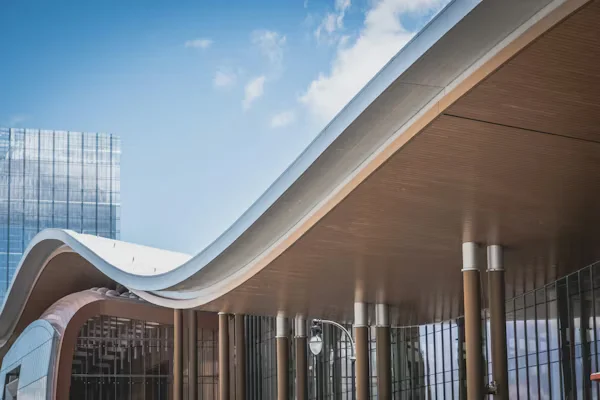
The modern skyline is a testament to both architectural ambition and monumental financial investment. Today, commercial developers are pushing the boundaries of what is possible with scale, complex geometry, and innovative building materials. As we progress through 2026, safeguarding these massive real estate investments has become a central economic priority. We can see this clearly when examining the sustainable design trends reshaping modern industrial architecture, where reducing operational overhead and meeting strict environmental regulations are deeply tied to long-term property value Structural integrity.
The integration of these financial strategies ensures that sustainable and high-tech buildings remain viable long-term assets rather than costly liabilities. However, the success of these highly ambitious projects relies on a foundational element that is often invisible to the naked eye. Structural integrity is no longer just a basic engineering concern. It has transformed into a critical pillar of risk management and asset protection for modern investors.
The Hidden Financial Risks of Construction Flaws
When planning a high-rise commercial complex or a sprawling industrial facility, developers face immense pressure to deliver on time and strictly within budget. Modern construction timelines leave little room for error, and a single microscopic flaw in a critical support beam or steel weld can lead to catastrophic structural failure. Such disasters result in devastating liability claims, heavy regulatory fines, and years of costly project delays. To mitigate these physical and financial risks without disrupting rigid construction schedules, industry leaders are increasingly relying on advanced diagnostic techniques.
A prime example of this evolution is the implementation of Ultrasonic Testing, a technique which allows engineers to send high-frequency sound waves deep into structural materials to identify hidden internal cracks or voids. Because this quality control method is non-destructive, it provides developers with immediate, highly accurate verification of material safety without requiring them to dismantle, delay, or damage the vital components being evaluated.
How Asset Protection Drives Market Growth
The financial community inherently recognises that proactive testing is significantly cheaper than reactive structural repairs. When institutional investors evaluate a new property, they scrutinise every element of the construction process to gauge potential future liabilities. This rigorous approach highlights the economic drivers of the design and building sectors, where proactive risk mitigation directly correlates with higher asset valuations. Investors, commercial lenders, and insurance underwriters now view thorough diagnostic evaluations as a mandatory step in calculating the true worth of a commercial asset. If a newly developed building cannot definitively prove the integrity of its core framework, its overall market valuation suffers, and insurance premiums will inevitably skyrocket.
This urgent need to protect multi-million dollar real estate investments has transformed engineering diagnostics into a massive global industry of its own. According to a recent market analysis of the non-destructive testing industry, the global sector was valued at USD 10.7 billion in 2023 and is projected to reach USD 25.8 billion by 2032. This remarkable growth is heavily fuelled by rapid global infrastructure development and the acute, financially driven need for highly accurate defect detection in commercial real estate.
Key Economic Benefits of Proactive Material Verification
Implementing rigorous structural integrity testing throughout the entire construction phase offers tangible, compounding financial returns. While the upfront costs of employing specialised diagnostic engineering teams might initially seem like an added expense, the long-term operational savings are undeniable. The integration of these diagnostic measures is no longer a luxury, but rather a fundamental component of successful project execution. For property developers aiming to maximise their return on investment, these sophisticated verification methods deliver several distinct economic advantages.
- Minimising costly construction delays: By identifying material flaws early in the fabrication or assembly process, project managers can address issues before they compound into massive scheduling roadblocks that incur daily penalty fees.
- Reducing long-term liability: Documented proof of structural soundness protects development firms from future litigation and significantly lowers commercial insurance premiums over the lifespan of the building.
- Enhancing lifecycle sustainability: Buildings constructed with verified, flawless materials require considerably less maintenance over time, thereby protecting the asset’s overall profitability and extending its usable lifespan.
- Ensuring regulatory compliance: Many international building codes and municipal regulations now mandate rigorous non-destructive evaluations, meaning proactive testing prevents unexpected fines, legal disputes, and failed safety inspections.
The intersection of corporate business and modern architecture has never been more complex or financially demanding. As commercial buildings grow taller, smarter, and greener, the financial stakes associated with their physical stability rise in tandem. Structural integrity verification has evolved from a simple quality assurance checklist into a sophisticated economic strategy. By investing in advanced material testing and defect detection, developers do much more than just build safer structures. They actively safeguard their capital, ensure strict regulatory compliance, and successfully solidify the long-term profitability of their architectural achievements.
Wait, there’s more to this story—see what you missed at 2A Magazine.