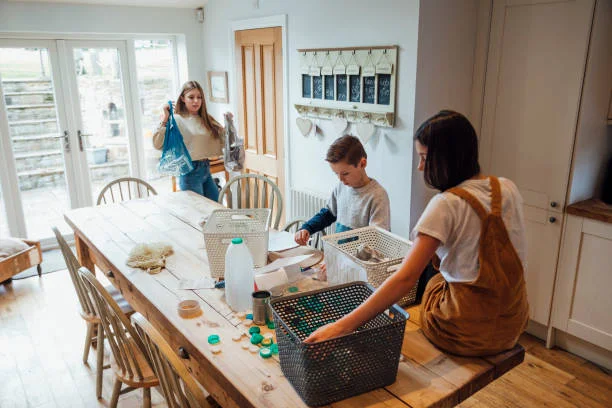
Clutter often accumulates gradually and becomes apparent when it impacts comfort. Objects that are not in their proper places, surfaces that are full plus storage areas that are at capacity can create persistent visual stimuli. Organizing a home is about more than aesthetics – it is a way to improve how a household operates and how residents feel in shared areas.
A tidy environment is a way to support a calm state of mind for residents. Daily tasks are more efficient but also require less mental effort when rooms are easy to move through and understand – this change is beneficial for wellbeing because it removes distractions as well as helps people feel comfortable.
The Influence of Clutter on Daily Activities
Daily tasks are often slower when a home is cluttered – Small delays occur when people search for items, move objects or clear surfaces before use – these moments of friction accumulate over time and lead to feelings of annoyance within the family.
Organization is a tool to lower these interruptions or maintain an even pace for activities. Routine jobs, like cooking or cleaning, are simpler when surfaces are empty and storage is predictable. Small habits, like keeping dishwasher pods next to dishwasher tablets in a specific location, are helpful for saving time and reducing pressure during busy periods.
Clutter & Mental Health
Visual noise from a cluttered room is a distraction that affects mental clarity. It is difficult to focus on a single task when many items are visible simultaneously – this situation is a cause of feeling unfocused or tired, even without other significant problems.
Removing clutter is a method to create a quiet visual space that helps individuals think clearly. Families often notice that conversations are more relaxed plus choices are easier to make when rooms are less crowded. A simple environment is also helpful for moving between different activities without mental exhaustion.
The Effect on Family Interactions
Shared rooms are significant for how family members interact – Tension between residents is sometimes an unintended result of a cluttered home. Arguments are possible when items are missing or when the work required to clean is high.
Cooperation is more likely in an organized home because there are fewer physical barriers. Interactions are more natural and less defensive when everyone can use shared spaces without trouble – this creates a peaceful atmosphere where communication is simple but disagreements are rare.
Clutter and the Stability of Routines
Predictability as well as access to necessary items are the foundations of daily routines. Clutter is a source of instability that makes routines feel inconsistent. Tasks that are usually familiar require more thought and physical effort when spaces are disorganized.
Better organization is a way to make routines automatic or less tiring. Kitchen tasks are more efficient when cleaning supplies, like dishwasher tablets, are in a permanent spot – this reduces the need for constant decision making and allows family members to finish tasks without confusion.
Establishing Functional Areas
A home is functional when it supports activities without the need for constant changes. Reducing clutter is a way to ensure each room serves its specific purpose. Rooms are more open next to easier to use, even during busy times, when they are organized.
Functionality is higher when every object has a specific place and returns there after use – this habit prevents the accumulation of items plus keeps spaces from becoming full again – these practices lead to a home that is stable and easy to manage every day.
Conclusion
Organizing a home is a practical method to improve family life because it changes the physical space but also the mental experience of the residents. A clear environment is a support for efficient routines, clear communication and a calm atmosphere – these advantages are more than visual – they influence how people feel as well as how they behave with one another.
Daily life is easier to manage and less stressful when clutter is absent. An organized environment provides space for comfort or connection, which makes the home a supportive place for all family members.