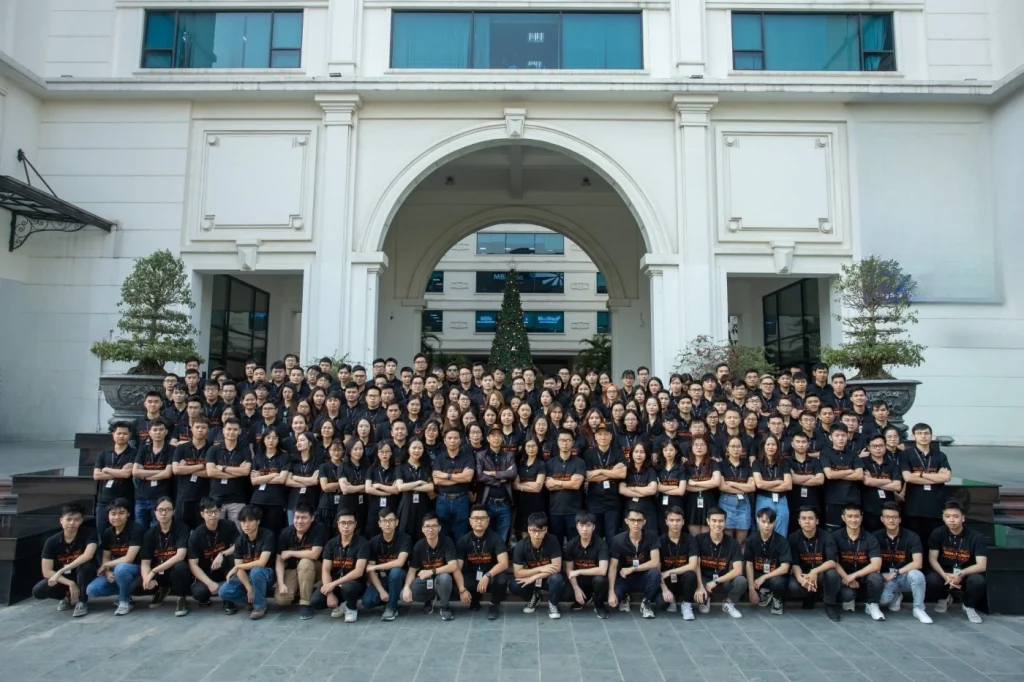
Building software for global markets requires more than technical skills. Teams need to understand product goals, work across different markets, and support a product beyond its initial launch. For PowerGate Software, this has shaped its development from a Vietnam-based software company into a global software product studio, with AI now becoming an important part of how its teams build and deliver products.
Starting from Vietnam with a global focus
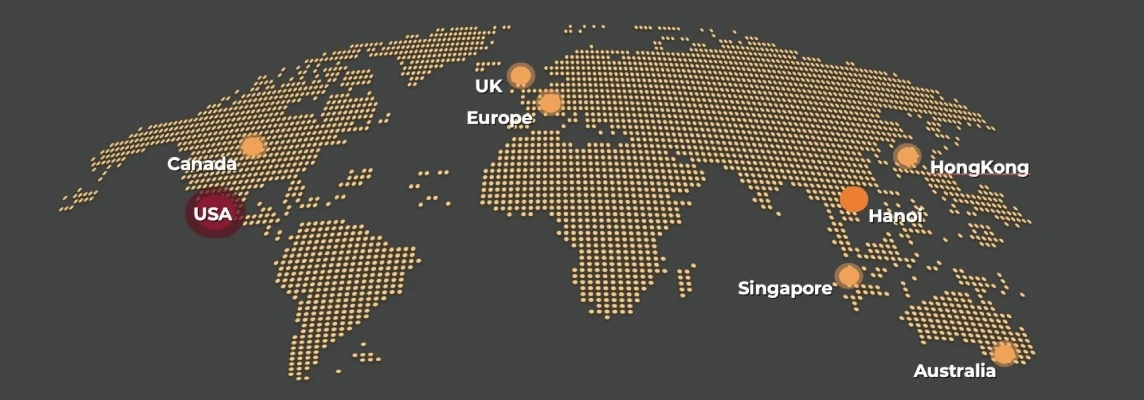
Founded in 2011, PowerGate Software has built its business around working with clients beyond Vietnam. According to the company, it has delivered more than 200 projects for over 180 clients across different markets and industries, with a 96% client satisfaction rate. Its work covers areas including healthcare, fintech, education, e-commerce, marketplaces, and enterprise software.
This international focus has influenced how PowerGate Software approaches software development. Rather than treating development as a standalone technical service, the company positions itself as a software product studio that can support products from early ideas through development, delivery, and ongoing maintenance.
That model is reflected in its current service portfolio, which includes product development consulting, UI/UX design, software product development, mobile and web development, QA, dedicated development teams, and product maintenance.
Moving beyond development tasks
Building a global software product is different from completing a list of development tasks.
A product team may need to clarify requirements, make architectural decisions, consider user experience, test different scenarios, and adapt the product as business needs change. These responsibilities require different capabilities to work together rather than operating as separate services.
PowerGate Software’s product development approach covers this wider lifecycle. Its process includes product consultation, UI/UX design, solution architecture, Agile development, product delivery, quality control, performance engineering, and ongoing support and maintenance.
The company also offers different engagement models depending on what a client needs. A business can work with PowerGate Software to build a product from scratch, extend an existing development team, or have the company manage an entire service such as product maintenance, QA, or DevOps.
This flexibility is relevant for global companies because product development needs can change over time. A startup may initially need a team to turn an idea into an MVP, while a growing company may later need additional engineering capacity or ongoing product support.
Experience across different products and markets
PowerGate Software’s case studies provide examples of the types of products its teams have worked on.
One project involved developing a US-based OKR software product that was later acquired by Microsoft. Another involved an IoT-powered micromobility application used across 60 cities in Southeast Asia. The company has also worked on healthcare, financial services, automated testing, and data-driven applications.
These projects are different in terms of users, technologies, and business requirements. That variety matters because global product development rarely follows one standard technical pattern.
For example, healthcare software requires attention to security, privacy, and healthcare workflows. Financial products require strong controls around sensitive data and regulatory requirements. Consumer applications may place greater emphasis on scalability, user experience, and performance.
PowerGate Software’s industry-specific services reflect this broader approach, with dedicated capabilities for healthcare, fintech, marketplaces, education, real estate, e-commerce, and other sectors.
Making AI part of product development
The next stage of PowerGate Software’s development is closely connected with AI. The company now describes itself as an AI-Powered Software Studio, with AI embedded across its product lifecycle rather than limited to building standalone AI applications. Its current workflow covers areas such as product consultation, design, architecture, development, testing, delivery, and maintenance.
In practice, PowerGate Software uses AI to support different roles across the development process. Developers can use AI for code generation, debugging, and optimization. Designers can apply AI to design workflows and user feedback analysis, while business analysts can use it for requirements work. QA teams can use AI to create test cases and identify potential bugs, and project managers can apply it to planning and risk analysis.
This distinction is important. Being AI-powered does not simply mean adding a chatbot to every product or using an AI coding assistant. The more useful application is to use AI where it can reduce repetitive work, improve decision-making, or help teams deliver and maintain software more effectively.
PowerGate Software also provides dedicated AI development services, including AI chatbots, recommendation systems, predictive analytics, AI workflows, AI agents, and voice AI. Its technology stack includes LLMs, RAG, cloud AI platforms, chatbot frameworks, speech processing, and computer vision.
From a Vietnam-based team to a global product studio
PowerGate Software’s story reflects a broader change in Vietnam’s software industry. Vietnamese technology companies are increasingly working with international businesses on products that require more than development capacity. The challenge is to understand the product, communicate with stakeholders, maintain quality, and support the software as it evolves.
For PowerGate Software, the move toward a global AI-Powered Software Product Studio brings these capabilities together. Its Vietnam-based engineering foundation remains important, but the value it aims to provide is broader than access to developers. It is about helping international companies design, build, improve, and maintain software products with a combination of product expertise, engineering capabilities, and AI-assisted workflows.

B-rock LinkerAuthorEdit Profile
As software development continues to change, this approach allows Vietnam-based companies to compete not only on development cost, but also on the ability to take meaningful responsibility for products serving users around the world.
If you’d like to learn more, check out more articles on our blog.