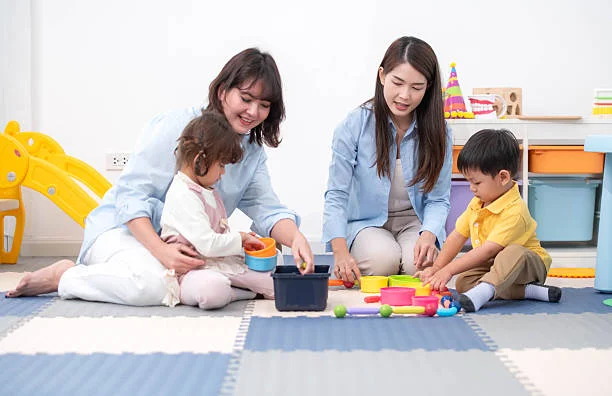
The educational landscape is evolving at an unprecedented pace. As classrooms become more modernised and technology integration becomes the standard across Australia, parents and educators are understandably focused on ensuring children are prepared for the complex challenges of tomorrow. However, preparing for a highly digital and rapidly shifting future does not mean pushing intense academic pressure onto toddlers or replacing traditional toys with screens. Instead, the most effective way to equip children with the resilience and adaptability they need is rooted in something much more natural. By encouraging exploration, active engagement, and play-based early education, teachers and caregivers lay the critical groundwork for lifelong academic success and emotional well-being.
Building the Brain’s Cognitive Architecture
To understand why active play is so vital to future success, it is helpful to look at how young minds physically develop during the critical years from birth to age six. During this sensitive period, the human brain is highly plastic and constantly forming new neural pathways based on daily experiences, sensory input, and environmental stimuli.
Parents seeking a strong start for their children often look for environments that prioritise this type of holistic, hands-on development. For instance, families exploring options like a Ryde preschool see firsthand how early STEM exposure and tactile learning routines encourage children to ask thoughtful questions and test hypotheses in a highly supportive setting.
These early learning environments are crucial because, according to early childhood guidelines published on Childcare.gov, an official U.S. government resource, human brain architecture is profoundly shaped by physical exploration. Their resources note that while the process of refining neural pathways continues throughout life, early sensory experiences and problem-solving create a robust foundation for children’s brain development and critical thinking skills.
This means that early sensory experiences, physical movement, and interactive play are not just pleasant ways for children to pass the time. They are biologically necessary activities that build the foundational structural capacity for complex thought, emotional regulation, and advanced problem-solving later in life.
How Play Fosters Critical Cognitive Skills
When young children engage in play, they are doing much more than having fun. They are actively investigating the world around them and gathering data. Whether they are building towering blocks, mixing bright paints, or navigating a challenging outdoor obstacle course, they are essentially applying the scientific method through trial and error.
Through these carefully guided and unstructured play experiences, young learners develop several essential skills that are highly sought after in modern education:
- Cognitive flexibility: The ability to adapt seamlessly to new rules or changing scenarios during imaginative group games.
- Resilience and perseverance: Learning to regulate emotions and try again when a block tower falls or a puzzle piece does not quite fit.
- Social collaboration: Working alongside peers to achieve a shared goal, which builds empathy, negotiation skills, and effective communication.
- Tactile problem-solving: Using physical materials to grasp abstract mathematical and scientific concepts like volume, spatial awareness, and basic physics.
Bridging the Gap to Digital Learning
As children eventually transition from early childhood education into primary school, the tools they use to learn will inevitably shift. Today’s primary classrooms heavily feature interactive screens, collaborative software, and online research modules. Interestingly, the tactile problem-solving skills learned in early childhood actually create the exact neural framework necessary for students to later thrive in these tech-driven environments.
When children enter primary education, they will rely heavily on their foundational critical thinking abilities to adapt to modern educational formats, including the rise of online learning and virtual schools, which demand high levels of self-directed engagement. By mastering the concepts of cause and effect through physical play in their early years, young learners are much better equipped to understand the logic, navigation, and interactive elements of modern educational software. They learn to view technology as a tool for discovery rather than just a source of passive entertainment.
A Balanced Approach to Tomorrow’s Education
True future readiness is about fostering a well-rounded, adaptable, and inquisitive mind. While the educational tools of tomorrow will continue to advance and digitise, the human brain still develops at its own fundamental pace. Giving children the time, space, and encouragement to play, explore, and interact with the physical world ensures they build the robust cognitive architecture required for whatever comes next Play-Based Early Education.
By valuing tactile, play-based learning just as highly as later academic achievements, parents and educators can help the next generation step into their modern classrooms with confidence. Ultimately, a strong foundation of play creates students who are curious, capable, and equipped with a genuine love for learning that will last a lifetime.
Wait, there’s more to the story. See the connection here at 2A Magazine.