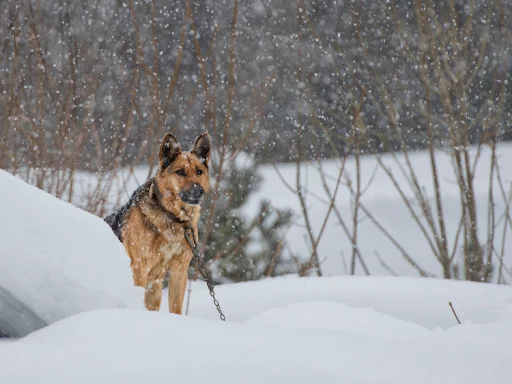
Winter is tough on outdoor dogs, especially when temperatures plummet. A well-insulated, properly heated dog house can make all the difference between a dog that’s comfortable and one that’s at serious risk. Here’s how to set your dog up for a warm, safe season.
Cold Weather Risks for Outdoor Dogs
Outdoor dogs face more than just discomfort when winter sets in. Prolonged cold exposure can cause hypothermia, frostbite, and lasting stress on a dog’s immune and cardiovascular systems. Small breeds, senior dogs, puppies, and short-haired dogs are especially vulnerable and feel the effects of cold much faster than larger, thick-coated breeds. Warning signs can escalate quickly, making a properly prepared dog house essential for any dog that spends meaningful time outdoors in winter.
How Cold Is Too Cold?
Cold tolerance varies significantly by breed, size, coat type, age, and health condition. As a general guideline:
| Temperature | Small or Short-Haired Dogs | Medium Dogs | Large or Thick-Coated Dogs |
| Above 45°F (7°C) | Safe | Safe | Safe |
| 32–45°F (0–7°C) | Use caution | Generally safe | Safe |
| 20–32°F (-7–0°C) | High risk | Use caution | Use caution |
| Below 20°F (-7°C) | Dangerous | High risk | Use caution or bring indoors |
The American Kennel Club provides detailed cold-weather guidance by dog type, including specific thresholds for vulnerable dogs such as puppies, seniors, and short-coated breeds.
Choosing a Winter-Ready Dog House
A structurally sound, weather-adapted dog house is the foundation everything else builds on. When shopping for insulated outdoor dog houses, prioritize designs built specifically for cold-weather conditions.
Key Features to Look For
A winter-ready dog house should include:
- Solid wood construction – Anti-corrosion fir or cedar holds heat better than plastic and resists moisture naturally.
- Waterproof roof – Asphalt or treated wood roofing prevents rain and snow from seeping in.
- Raised floor – Even a few inches of elevation keeps cold ground from drawing heat away from below.
- Covered or offset entrance – A doorway positioned to block prevailing wind is far more effective than a straight-through opening.
- Right-sized interior – The space should be snug enough for your dog’s body heat to warm it efficiently, yet large enough for your dog to stand, turn, and lie down comfortably.
Featured Pick: XL Outdoor Wooden Dog House
For a weather-resistant option that covers the essentials right out of the box, the insulated dog house for 2 large dogs is worth considering. It features anti-corrosion fir wood, a waterproof asphalt roof, chew-proof metal edges, a raised floor, and a PVC door curtain for draft control. It’s designed for year-round outdoor use and accommodates medium to large breeds.
Insulating a Dog House
Even a well-built dog house benefits from added insulation in colder climates. Insulation keeps your dog’s body heat trapped inside and slows heat loss through the walls, ceiling, and floor.
Wall and Roof Insulation
Rigid foam insulation boards are the most practical choice for lining interior walls and ceilings. They’re inexpensive, easy to cut to size, and widely available at hardware stores. Once installed, cover the foam with a thin interior plywood sheet to protect it from chewing and scratching.
Reflective foil insulation is a useful complement to foam. It reflects radiant heat back into the space and can be layered behind or over foam boards for added effect.
For the roof, avoid sealing the interior completely. A small vent near the roofline prevents condensation buildup, which can leave the interior damp and colder over time.
Floor Insulation
The floor is often the biggest source of heat loss, since cold ground pulls warmth away from below. Elevating the dog house two to four inches off the ground is the most effective first step. Inside, a layer of rigid foam board beneath the floor panel adds meaningful insulation, and a waterproof insulating mat on the surface adds further comfort. Avoid carpet in outdoor dog houses. It absorbs moisture readily, loses insulating value when wet, and can harbor mold over time.
DIY vs. Pre-Insulated Options
DIY insulation works well if your current dog house is structurally sound. It’s more affordable and lets you tailor the approach to your climate. Pre-insulated dog houses cost more upfront but tend to deliver better structural performance without the added effort.
If your existing dog house is in good condition, insulating it yourself is usually the better value. If you’re replacing an old or poorly built structure, investing in a purpose-built weatherproof house is the smarter long-term decision.
Best Bedding for Winter
Good bedding raises the effective temperature inside a dog house and gives your dog a warm surface to rest on. The material matters more than the volume.
Top Bedding Materials
| Bedding Type | Insulation | Moisture Resistance | Easy to Clean | Best For |
| Straw | Excellent | Good | Moderate | Outdoor dogs |
| Pine Shavings | Good | Good | Moderate | Outdoor dogs |
| Fleece Blanket | Good | Low | Easy | Indoor/outdoor dogs |
| Old Towels or Rags | Poor | Poor | Easy | Not recommended in cold climates |
Straw is the top choice for outdoor dogs in winter. It traps air pockets that retain body heat, resists moisture well, and doesn’t freeze the way saturated fabric does. Pine shavings are a solid alternative with natural moisture-wicking properties. For dogs that split time between indoors and outdoors, a thick washable fleece blanket is easy to maintain and provides decent warmth. Whichever material you choose, replace it at least once a week. Wet or compressed bedding loses its insulating value and can leave your dog colder than no bedding at all.
Bedding to Avoid
Hay is a common mistake. It looks similar to straw but retains moisture, compacts quickly, and is prone to mold. Cotton blankets and towels absorb water easily and offer little warmth once damp. Stuffed synthetic beds without waterproof covers are equally unreliable outdoors.
Heating Options
In regions with severe winters, insulation and bedding alone may not be enough. Adding a heat source can make a meaningful difference, provided safety comes first.
Heated Dog Beds and Pads
Heated beds and self-warming pads are the safest and most accessible heating option for most owners. Self-warming pads require no electricity; they work by reflecting your dog’s body heat back upward. Electric heated pads use low-wattage elements and typically include automatic shutoff features. Both are well-suited to mild and moderately cold conditions and carry minimal safety risk when used as directed.
Dog House Heaters
Low-wattage panel heaters and small oil-filled radiators designed specifically for dog houses are the right choice when more warmth is needed. Look for models with tip-over protection, a built-in thermostat, and a low surface temperature that won’t pose a burn risk. Keep any heater positioned away from bedding and walls to reduce fire risk. Standard indoor space heaters should never be used in a dog house. They are not designed for small enclosed spaces and present a serious fire hazard.
Heat Lamps
Heat lamps warm a space quickly and perform well in very cold climates, but they require careful setup. Mount the lamp securely to the ceiling or wall, well out of your dog’s reach, and never position it directly over bedding. Use a lamp guard and a thermostat controller to regulate temperature and prevent overheating. Check the bulb and wiring regularly for signs of wear.
| Heating Option | Safety Level | Cost | Best For |
| Self-Warming Pad | Very high | Low | Mild winters |
| Electric Heated Pad | High | Low to medium | Moderate cold |
| Panel Dog House Heater | High (when correctly installed) | Medium | Cold climates |
| Heat Lamp | Moderate (requires careful setup) | Low to medium | Very cold climates |
Weatherproofing Tips
Insulation and heating are only effective if cold air, wind, and moisture can’t find a way in. Weatherproofing closes the gaps that undermine everything else.
Sealing Gaps and Drafts
Inspect the dog house for gaps where panels meet, around screws, and along the roofline. Fill any openings with weatherproof caulk or expanding foam sealant. For wooden structures, applying an exterior wood sealant once a year prevents moisture absorption that leads to warping, cracking, and gradual heat loss.
Door Flaps and Windbreaks
The entrance is the primary source of heat loss in any dog house. A heavy-duty PVC door flap or a vinyl curtain cut into strips blocks drafts while allowing free entry and exit. If the entrance faces into the dominant wind direction for your area, reposition the house or add a wooden windbreak on the exposed side.
Positioning for Warmth
Where the dog house sits has a direct impact on how much cold it has to contend with. Place it against a wall, fence, or structure that provides wind shelter, and face the entrance away from prevailing winds. In snowy climates, a roof with enough pitch to shed snow avoids the added cold transfer that comes from accumulation.
Monitoring Your Dog in Winter
Setting up a warm dog house is essential, but checking in regularly throughout the season matters just as much. Conditions change and equipment can fail.
Signs Your Dog Is Too Cold
Watch for these signs that your dog isn’t staying warm enough:
- Persistent shivering
- Hunched posture or reluctance to move
- Tucked tail and general restlessness
- Whining or vocalizing without a clear reason
- Pale, stiff, or cold paws, ears, or tail tip, which may indicate frostbite
If you notice any of these signs, bring your dog indoors immediately and warm them gradually. If frostbite or hypothermia is suspected, contact a veterinarian promptly.
When to Move Them Indoors
Once temperatures drop below 20°F (-6°C), most dogs should come inside regardless of how well-prepared their outdoor shelter is. Puppies, senior dogs, and dogs with existing health conditions should be brought in at higher thresholds, around 32°F (0°C) or above. No dog house replaces the safety of an indoor environment during an extreme cold snap.
In Summary
Keeping your dog’s house warm in winter comes down to good structure, smart insulation, the right bedding, and knowing when to step in. A few targeted upgrades go a long way toward keeping your dog safe and comfortable all season long.
FAQs
Can a dog stay warm enough in a dog house during winter?
Yes, provided the dog house is properly insulated, weatherproofed, and correctly sized. A well-prepared shelter can maintain a noticeably warmer temperature than the outside air, particularly for healthy adult dogs with thicker coats. That said, in severe cold below 20°F (-6°C), even the best outdoor setup has limits, and bringing your dog inside is always the safer choice.
Is a wooden dog house warmer than a plastic one?
Generally, yes. Wood is a natural insulator and retains heat better than plastic. It also manages moisture more effectively, which helps keep the interior temperature stable. Anti-corrosion varieties like fir and cedar are especially suited to outdoor use. Plastic dog houses are lighter and easier to clean, but they’re less effective at retaining warmth in cold climates.
How small should a dog house be for warmth?
Smaller is warmer. The interior should be just large enough for your dog to stand up, turn around, and lie down comfortably. As a practical guideline, aim for an interior length roughly 25% greater than your dog’s body length measured from nose to tail base, with enough height for your dog to stand with a few inches of clearance. An oversized dog house is harder to heat and tends to feel drafty.
What is the best insulation material for a dog house?
Rigid foam board is the most practical and cost-effective choice. It offers solid thermal resistance, is easy to cut to size, and is widely available at hardware stores. Once installed, cover it with an interior plywood panel to prevent chewing. Reflective foil insulation works well as a secondary layer. Avoid fiberglass insulation batts, which can irritate a dog’s skin and airways if the material is exposed or disturbed.
Should a dog house have ventilation in winter?
Yes. A small vent near the roofline is important even in cold weather. Without it, moisture from your dog’s breath accumulates inside, leading to condensation that leaves the interior damp. Damp air feels colder and undermines the effectiveness of both insulation and bedding. One vent is enough to manage this without meaningfully reducing warmth.
Can I use a regular space heater in a dog house?
No. Standard household space heaters are designed for larger, ventilated rooms and are a fire hazard in a small enclosed dog house. If added heat is needed, use a heater specifically designed for dog houses, a low-wattage electric heated pad, or a self-warming mat. Always look for products with tip-over protection and a built-in thermostat.
How often should I change my dog’s bedding in winter?
At least once a week. Moisture from your dog’s body and paws can dampen bedding quickly, and wet bedding loses its insulating properties fast. In particularly wet or snowy conditions, check every few days and replace as needed. Dry bedding is what keeps your dog warm, not the volume of it.