There’s something pretty personal about a house that’s grown into itself over the years. You can usually tell the second you walk in. Maybe it’s the way late-afternoon light spills across a scuffed wood floor, or a doorway that leans just slightly off-square because the house has settled a few times since 1962. Stuff like that isn’t a flaw. It’s just evidence homes evolve without losing their identity. Years of people living, fixing, ignoring, and re-fixing the same little corners until the place ends up with a kind of personality.
But change finds everybody eventually. Kids show up. Or move out. Work changes. You start cooking more. You stop cooking entirely. At some point, you look around and realize the house doesn’t quite fit the way it used to, and that’s when the question shows up: how do you update a place without quietly erasing what made you fall for it?
It’s a balance, and honestly, it takes more listening than swinging a sledgehammer.
The Identity Beneath the Surface
Every home has an identity, even if you’d struggle to put it into a sentence. Sometimes it’s the architecture itself, the neat symmetry of a colonial, the warm bones of a craftsman, that funky split-level your aunt always made fun of. Other times it’s something looser. A feeling. A sense that the rooms breathe a little. That kind of unforced, lived-in honesty new builds tend to chase but rarely catch.
Before you change a single thing, it’s worth pausing on a pretty basic question. What is this house actually about?
Not what it could be. Not what some reel told you it should be. What it already is.
Once you can put even a vague label on that, you’ve got something to defend.
Change That Listens Instead of Overwrites
A lot of people approach renovation like a reboot. Gut it. Modernize the whole thing. Make it look like the listing photos.
And then six months later, they wonder why the place feels strangely hollow.
A better approach treats the work more like a conversation. Each change actually responds to what’s already there. Materials get picked because they go with the house, not because they’re trending. Lines and proportions stay respected, even when the floor plan opens up.
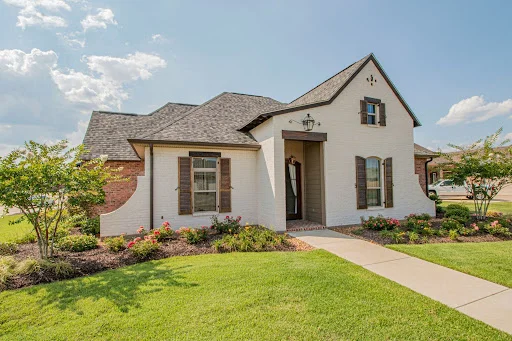
This shows up especially with exterior home renovations, where the first impression is doing a lot of work. Mess with the facade without really understanding the original intent, and the house can start to feel like it doesn’t belong on its own street. But when those updates are done with some patience, they tend to pull out the details that were always meant to be the stars; you just couldn’t see them under the wrong paint color or behind the wrong shutters homes evolve without losing their identity.
It’s not a transformation, really. It’s more like translation.
The Role of Restraint
Not every chance to change something needs to be taken.
That’s a tough one. Inspiration is everywhere now. White-on-white kitchens. Open everything. Walls of glass. It’s easy to want a piece of all of it.
But restraint is usually what saves a home’s identity in the long run. Sometimes that means keeping the original windows, even though they whistle a little in winter. Sometimes it’s salvaging old trim instead of ripping it out for something straight from a big-box catalog.
Sometimes it’s picking materials that’ll age the same way the existing stuff has, so in ten years it all still belongs together.
Restraint isn’t settling. It’s just being intentional. Because when everything changes at once, nothing feels rooted anymore.
Blending Old and New Without Tension
One of the more satisfying things about updating an older house is finding ways for different eras to share space. When it clicks, it doesn’t feel forced. It almost feels like that’s how it was always supposed to be.
A modern addition can sit quietly behind a traditional front. A contemporary kitchen can live comfortably inside a hundred-year-old wall if the transitions get the attention they deserve. Even bolder choices can land right if they respect the scale, texture, and tone of everything around them.
The trick is continuity. Not in style, exactly. More in spirit.
Materials can echo each other. Colors can build little bridges between rooms. Small things, like hardware, lighting, and even cabinet pulls, end up doing a surprising amount of work, tying the whole place together.
It’s not about matching. It’s about relating homes evolve without losing their identity.
Memory as a Design Element
We tend to talk about design as if it’s purely visual. But memory does a huge amount of the heavy lifting in how a home actually feels.
The exact spot where the sun lands on the kitchen counter at 4 pm in October. The creak in the third step from the top. The view out the window over the sink. People hold onto these things, even if they never bring them up.
Good design respects those invisible anchors. That might mean leaving a window right where it is, even if the wall around it gets reworked. Or protecting a straight line of sight through the house. Or finding a way to reuse a material that’s been there forever, so it carries its history into the next chapter instead of ending up at the dump.
These choices don’t really show up in before-and-after photos. But you feel them every day after.
And that’s the whole point.
The Quiet Work of Integration
The best home evolutions are usually the ones you don’t notice right away. Everything just feels right.
There’s a soft continuity from one room to the next. Nothing jars. Nothing demands attention. You move through the place, and it sort of unfolds, without trying too hard.
That kind of cohesion doesn’t happen by accident. It comes from a thousand small decisions stacked on top of each other. From deciding what to keep, just as much as what to change.
And from accepting that a house isn’t a finished object. It’s something that keeps living, keeps shifting, but ideally doesn’t forget where it came from.
Letting a Home Keep Its Voice
In the end, holding onto a home’s identity isn’t about pinning it under glass. It’s about letting it keep growing in a way that still feels true to itself.
That looks different for every house. For some, it’s barely-there updates you’d miss on a quick walkthrough. For others, it’s much bigger moves that still tip their hat to the original character.
There’s no clean formula for it.
But there is a mindset. One that values continuity over novelty. Depth over polish. Meaning over how it photographs.
Because the houses that stick with us, the ones you find yourself thinking about years later, usually aren’t the most perfect ones. They’re the ones that felt real.
Your roadmap doesn’t end here. See where the data leads you next at 2A Magazine.