Picture this. You walk out to your car after a hailstorm. The hood looks like someone went at it with a golf ball. Your stomach drops. Then someone says — “you don’t need a respray, just an Ausbeulstation.”
That single word has quietly become one of the most important terms in modern auto repair. And if you haven’t heard it yet, you’re about to understand why car owners and workshop owners alike are paying close attention.
What Exactly Is an Ausbeulstation?
The word itself comes straight from German. “Ausbeulen” means to remove dents or bulges. “Station” is exactly what it sounds like — a dedicated workspace. An Ausbeulstation is a professional workstation designed to repair vehicle dents and minor body damage without traditional painting or heavy bodywork.
Think of it as the surgical table of the auto repair world. Everything a technician needs — the lighting, the tools, the pulling systems — is set up in one focused station built for one job: getting your car’s panels back to factory-fresh shape.
Instead of repainting or replacing parts, it focuses on restoring the original shape of the metal panel. Technicians use specialized tools and techniques to carefully push or pull dents back to their original form.
The result? Your car keeps its original factory paint. No filler. No primer. No color mismatch two years down the line.
How an Ausbeulstation Actually Works
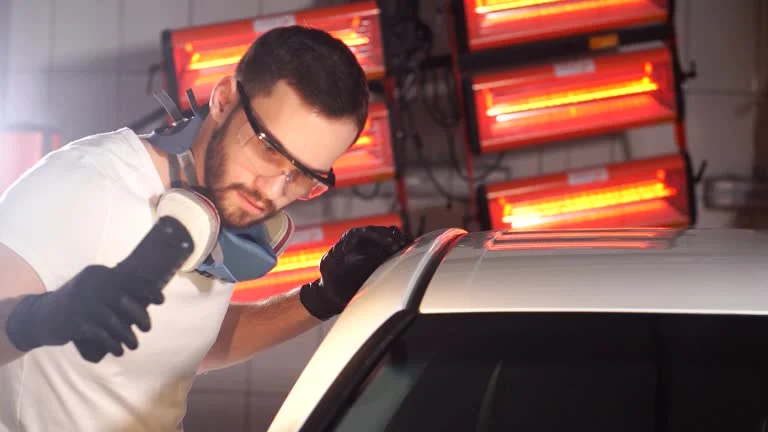
This is where it gets genuinely interesting. Most people assume dent repair means grinding, filling, and spraying. An Ausbeulstation works on an entirely different logic.
The core techniques involve pushing metal from the inside using rods and hand tools, or pulling metal using glue tabs and studs to gently reshape the dent.
Here’s a simple way to think about it. Imagine pressing a dent out of a tin can from the inside with your thumb. The Ausbeulstation does essentially that — but with precision-engineered rods, controlled force, and professional lighting that reveals every millimeter of distortion on the panel surface.
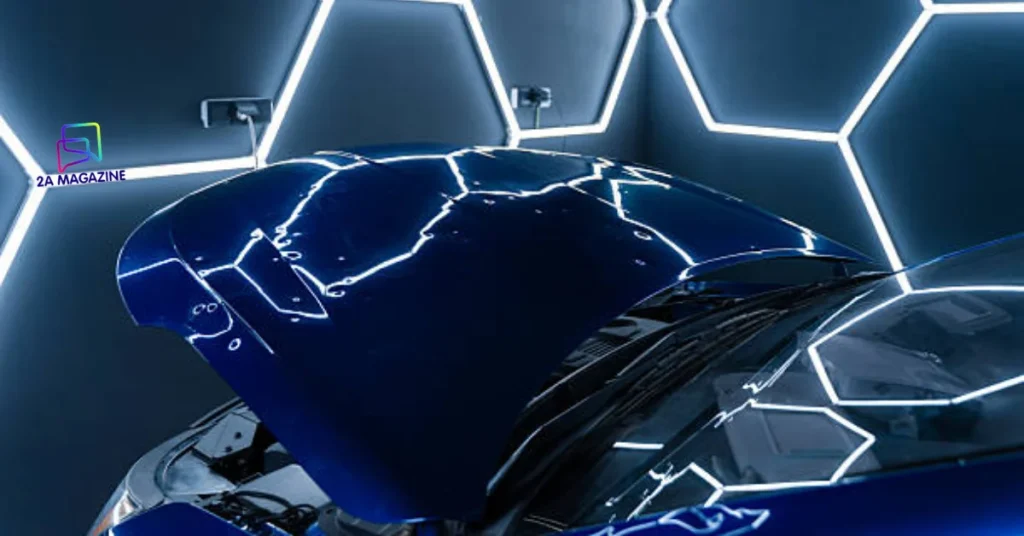
Modern Ausbeulstation setups often include LED reflection lighting systems that allow technicians to see even the smallest distortions in a vehicle’s surface.
These reflection boards are critical. Under normal light, a shallow dent can be nearly invisible. Under LED reflection panels, it shows up clearly, letting the technician work with absolute accuracy.
The typical repair process looks like this:
- Assessment — LED lighting reveals the full extent of the dent
- Access — technician reaches the back of the panel through existing openings
- Massage — slow, controlled pressure pushes the metal back into shape
- Glue pull — for areas without rear access, tabs are attached and the dent is pulled outward
- Final check — reflection panels confirm a flush, smooth surface
Many repairs can be completed in under an hour. That’s a dramatically different experience from a traditional body shop, where your car can sit for days.
Why Workshops Are Switching to Ausbeulstation Setups
The shift happening in auto repair right now isn’t accidental. As we navigate 2026, with electric vehicles and lightweight materials dominating the roads, Ausbeulstation setups are more relevant than ever.
Electric vehicles in particular present a challenge for traditional bodywork. Many EV panels use aluminium or composite materials that don’t respond well to heat or filler. Paintless dent repair — the core method of any Ausbeulstation — works beautifully with these materials.
Traditional methods often require harmful chemicals and lengthy processes. In contrast, Ausbeulstation minimizes waste and uses eco-friendly practices.
For workshop owners, the business case is clear too. A technician with a well-equipped Ausbeulstation can handle more jobs per day, charge competitive rates, and deliver results that traditional body shops simply can’t match on turnaround time.
According to industry observers, paintless dent repair is now standard equipment in professional workshops across Europe and North America — and the global PDR market continues to expand as vehicle complexity grows. You can explore the broader context of paintless dent repair standards at Wikipedia.
The Skill Factor — It’s Not Just About the Equipment
Here’s something most people overlook. While the equipment in an Ausbeulstation is highly effective, the success of the repair depends heavily on the technician’s skill. Dent repair requires patience, precision, and a strong understanding of metal behavior.
It’s a bit like saying a good kitchen makes a good chef. The station matters — but the hands behind the tools matter more.
Technicians must know how much pressure to apply and where to apply it. Too much force can stretch the metal or damage the paint, while too little force may not correct the dent completely. Many technicians spend years learning paintless dent repair and other advanced dent removal methods.
This is actually one reason why certified Ausbeulstation specialists command a premium in the market. Their expertise isn’t just in owning the right tools — it’s in reading the metal, understanding how each panel responds to pressure, and knowing when a dent can be fully corrected versus when deeper damage requires a different approach.
Ausbeulstation vs. Traditional Body Repair — A Real Comparison
Let’s put both methods side by side honestly.
| Factor | Ausbeulstation (PDR) | Traditional Body Repair |
|---|---|---|
| Paint preserved? | Yes | No |
| Repair time | 30 min – a few hours | 1–5 days |
| Cost | Lower | Higher |
| Eco impact | Minimal | Chemical-heavy |
| Suitable for EVs | Yes | Sometimes limited |
| Resale value impact | Positive | Risk of mismatch |
The one area where traditional bodywork still wins is severe structural damage or deep creases where the metal has been significantly stretched. In those cases, an Ausbeulstation alone isn’t enough.
But for the vast majority of everyday dents — hail damage, parking mishaps, minor collisions — it’s not even a close contest.
What the Future Looks Like for Ausbeulstation Technology
Ausbeulstation setups are incorporating automation, AI-driven diagnostics, and sustainable practices, making dent repair faster, more accurate, and accessible for both professionals and DIY enthusiasts.
Some newer systems now include digital scanning tools that map the dent before any physical work begins. AI systems can calculate the ideal repair sequence — which points to push first, how much force to apply, where to start the pull. The technician becomes a guided operator rather than working purely by feel.
With advancements in AI and machine learning, we might see smarter systems that can assess damage instantly, streamlining the process further and enhancing customer satisfaction.
Mobile Ausbeulstation units are also growing in popularity. These are van-mounted setups that bring the full station capability directly to a customer’s home or office — no drop-off required. For busy professionals, that’s genuinely useful.
It’s reasonable to say that within a few years, AI-assisted dent scanning and repair sequencing will become standard in high-end Ausbeulstation configurations. The question for workshops isn’t whether to adopt this technology — it’s when.
Should You DIY or Go Professional?
The Ausbeulstation is a cutting-edge dent repair machine that can be leased or purchased by individuals with little to no experience using big, expensive tools. |
Entry-level PDR kits and compact Ausbeulstation setups are available for home use. And honestly, for small shallow dents, a patient DIY enthusiast can get reasonable results.
But here’s the honest take — for anything beyond a small door ding, professional results require professional skill. You can own a surgeon’s scalpel, but that doesn’t make you a surgeon.
For significant hail damage, crease dents, or repairs on newer vehicles where resale value matters, the cost of a professional Ausbeulstation service is almost always worth it. You’re not just paying for the tools — you’re paying for the thousands of hours of experience behind them.
Conclusion
The Ausbeulstation has quietly become one of the most important pieces of technology in modern automotive care. It’s faster, cleaner, cheaper, and better for your car’s long-term value than traditional bodywork in most common dent scenarios.
As vehicles get more sophisticated — especially with the EV shift underway in 2026 — this paintless, precision-based approach to dent repair is only going to grow in relevance. If your car’s wearing a dent right now, the Ausbeulstation is very likely your best first call.
FAQs
Q1: What does “Ausbeulstation” mean in English?
It’s a German compound word. Ausbeulen means to remove dents or bulges, and Station refers to a dedicated workstation. Together it describes a professional setup for paintless dent repair.
Q2: Is paintless dent repair (PDR) suitable for all types of dents?
PDR works best for round, shallow dents where the paint hasn’t cracked. Deep creases, sharp-edged dents, or damage where paint has chipped typically require traditional bodywork alongside or instead of PDR.
Q3: How long does a typical Ausbeulstation repair take?
Small dents can be fixed in 30 minutes or less. Larger panel damage or multiple dents from hail can take a few hours. Either way, it’s significantly faster than traditional body shop turnaround times.
Q4: Does Ausbeulstation repair preserve the car’s resale value?
Yes — and this is one of its biggest advantages. Because the factory paint is preserved, there’s no risk of color mismatch or visible repair work that lowers value at resale or trade-in.
Q5: Can Ausbeulstation systems be used on electric vehicles?
Absolutely. In fact, EVs benefit more from PDR-based repair because their aluminium and composite panels are often poorly suited to heat-based or filler-heavy traditional repair methods.