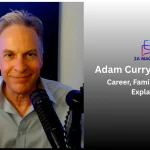
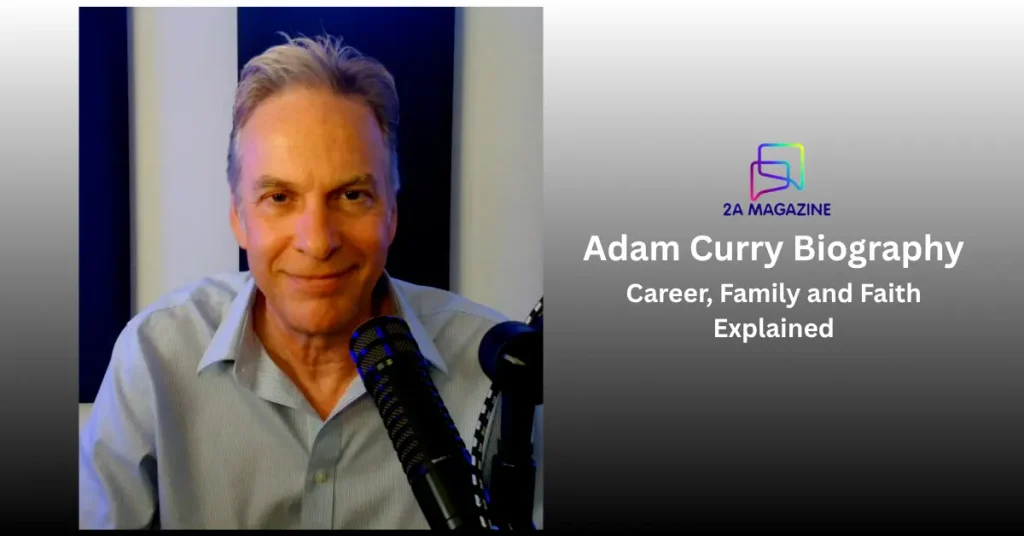
Adam Curry went from a kit transmitter in Amstelveen to a meeting with Steve Jobs. How does a teenage radio tinkerer end up there? The route runs through Dutch pirate radio, MTV, a lost domain fight and one of the first podcasts.
adam curry in Brief
Adam Curry was born on September 3, 1964, in Arlington, Virginia. He turned 62 last month and now lives in Fredericksburg, Texas, with his wife, Tina.
He grew up in the Netherlands and worked as an MTV VJ from 1987 to 1994. He then built web companies, released the Daily Source Code in 2004, and has hosted No Agenda since October 2007.
Key dates
- 1972–1987: Lives in Amstelveen, the Netherlands
- 1987–1994: Works as an MTV VJ
- 1993: Registers the mtv.com domain
- 1996: Think New Ideas lists on Nasdaq
- August 2004: Records the first Daily Source Code
- June 2005–May 2007: Hosts a show on Sirius Satellite Radio
- October 2007: No Agenda begins
- 2020: Podcast Index starts with Dave Jones
- July 2026: John C. Dvorak dies and the show carries on
adam curry’s Early Life: Arlington, Amstelveen and a Kit Transmitter
Adam Curry was born in Arlington, Virginia. A few sources list Washington, D.C., which sits just across the river. His family moved to Amstelveen, in the Netherlands, in 1972, and he stayed until 1987.
He’s fluent in English and Dutch. His father worked in PR and loved early online gear. Curry has said his dad brought home a Minitel terminal from France and a Sinclair ZX80 computer.
Radio came first, though. At 13, Curry built an FM transmitter from a Radio Shack kit, and he says he still has it. He needed something to play on it, so he built a mixer and learned to use a microphone.
By 15, he was working on pirate stations around Amstelveen and Amsterdam. Reference accounts name Radio Picasso and Radio Decibel, and say he used the on-air name John Holden.
A short stint at college in West Virginia followed, according to a bio posted by Harvard’s Berkman Center. By 1983, he was hosting a national music show in the Netherlands.
That show was Countdown, a weekly pop-music program on the Dutch station Veronica. There was also an English version on the pan-European channel Music Box. On Fridays, he teamed with DJ Jeroen van Inkel for the Curry and Van Inkel radio show on Radio 3.
Curry told Guy Kawasaki that his radio and TV career began at 19. That sits comfortably with the 1979 start listed in our net worth profile, which counts his pirate-radio years.
adam curry at MTV: Seven Years on Cable
MTV recruited Adam Curry from the Netherlands in 1987. The channel was moving onto basic cable, and Curry was already an experienced TV host. He took over Headbangers Ball and the Top 20 Video Countdown.
He interviewed stars including Michael Jackson and Paul McCartney. He also worked radio on the side, with a slot on New York’s WHTZ and the national program HitLine USA. From November 1991 to June 1994, he hosted Adam Curry’s Top 30 Hitlist for Entertainment Radio Networks.
Curry’s own picture of MTV is less glamorous than the legend. He told Kawasaki the early studio was low-budget and shared with a daytime talk show. Segments were taped without the videos, and tapes went by car to Long Island for playout. He called the work tedious rather than wild.
He also said management never warmed to his ambitions. His contract allowed radio work, which his bosses found odd. He left the teleprompter blank and made it up as he went.
Still, he looks back fondly. Curry helped pitch MTV’s Spring Break coverage to Budweiser, and he ended up on a Bud Light boat with Spuds MacKenzie. He says he’s happy he was part of the channel’s run, and he counts it at seven and a half years.
From mtv.com to OnRamp: How adam curry Got Online
Curry found the internet around 1987 or 1988. He got a dial-up account through Panix in New York and learned to run a Gopher server. College viewers emailed him, and since they didn’t count in MTV’s ratings, they became his informal focus group.
In 1993, he registered the unclaimed mtv.com domain. He wanted to be MTV’s unofficial voice online. He says his bosses saw no problem with it.
He left MTV in 1994 to start OnRamp, a web design and hosting company. MTV then sued him for the domain. The fight ended in an out-of-court settlement.
Curry says OnRamp’s first big job was a Grammy Awards cybercast with Visa and Casio as sponsors. He also says he registered cnet.com for that company’s founders and ran their email for about a year.
OnRamp later became part of Think New Ideas, which listed on Nasdaq in 1996 under the ticker THNK. Curry served as chief technology officer. Think later merged into Answerthink.
Europe, Reality TV and the Ventures That Didn’t Work
In 1999, Curry took his family back to Europe. He told Kawasaki his Dutch wife wanted to live near her parents. Reference accounts place the family in the Netherlands and in Rijkevorsel, Belgium, in a castle farmhouse.
He hosted a morning talk and music show on Radio Veronica. In 2002, the family starred in Adam’s Family, a reality series on the Dutch network SBS6.
Not every venture worked. Jamby, a 1999 incubator he started with two partners, was ultimately unsuccessful. The webshop Sportus.nl went bankrupt in 2001, and Freedom Controller was cancelled in 2002. His role in Kennisnet, a project to bring the web to Dutch schools, ended in lawsuits.
RotorJet, a helicopter-services company he started in 2000 with partner Simon Cavendish, went bankrupt in 2005. In April 2005, a Dutch court ordered Curry to repay about $3 million he had withdrawn from it, according to a court document cited in reference accounts.
The Podfather Years: Daily Source Code, PodShow and Sirius
On August 13, 2004, Curry recorded the first Daily Source Code in his car on the way to the Netherlands. Three months later, he moved to Guildford, England.
The idea behind the show was simple. Curry wanted big files to land on his computer without any waiting. He wrote a blog post on it, titled The Last Yard.
He then persuaded Dave Winer, creator of Radio UserLand, to add file attachments to RSS feeds. Curry flew to New York to explain it in person. Two years of back-and-forth testing followed.
The iPod made it click. Curry saw it as a radio receiver, much like the Sony transistor radio his grandmother gave him at seven. Subscribe, download, listen: that was the plan.
Then Steve Jobs called. Curry says Jobs wanted his blessing to put podcasts in iTunes and the iPod. He gave Apple the ipodder.org directory, which held about 5,000 shows. In 2005, Jobs played the Daily Source Code on stage at the D conference.
Curry and Ron Bloom started PodShow in January 2005. It later became Mevio. By May 2008, Mevio claimed 9 million unique visitors, and by July 2008 it had raised over $38 million, including a $15 million third round.
The company then slid out of view. It became Bitesize Entertainment in 2012 and BiteSizeTV in 2014, then closed.
Meanwhile, Sirius Satellite Radio gave Curry a weekday evening show. Adam Curry’s PodShow ran from June 2005 to May 2007.
He had fun along the way. He plugged his podcast in Second Life under the name Adam Neumann. In December 2007, he backed Ron Paul’s presidential bid on his show. In 2006, he sued the Dutch tabloid Weekend for reprinting his Flickr photos.
No Agenda: adam curry and John C. Dvorak, 2007 to 2026
Adam Curry and John C. Dvorak released the first No Agenda in October 2007. The show airs twice a week, on Thursdays and Sundays. It picks apart mainstream news coverage, usually for close to three hours.
There are no advertisers. Instead, No Agenda runs on what Curry calls value for value. Listeners send whatever they think an episode is worth. Curry calls them producers who give time, talent or treasure.
The format worked. Curry told Kawasaki that some listeners sent $5, some $50, and a few $500. He thanks donors on air by name and amount. In July 2016, the show won Best Podcast in the News and Politics category at the Podcast Awards.
Reference accounts note that the show also airs alternative takes on the news, including the 9/11 Truth Movement and free-energy suppression. Fans like the unconventional angle. By late September 2026, the show had passed 1,900 episodes.
Then came July 2026. Dvorak co-hosted the Sunday, July 19 episode, number 1887, and died the next morning at 80. Curry announced the show would go on, starting with a memorial episode with stories from Dvorak’s family and friends.
Guest co-hosts have filled the second chair since, including Rob Dew, Dana Brunetti and Jason Calacanis. In the same week Dvorak died, a granddaughter arrived, according to the notes for Curry’s podcast We Get To Do This. Curry marked episode 1900 on his 62nd birthday.
Podcast Index and Podcasting 2.0
In 2020, Curry and software engineer Dave Jones started Podcast Index, a free and open directory of shows. By 2024, it held over four million entries. Curry told Kawasaki that a third partner, Aric Mackey, handles legal and financial questions.
Curry says he acted because Apple had become the front door to podcasting. When Joe Rogan pulled his feed from Apple for Spotify, he says, the show vanished from other apps too. Podcast Index lets any app plug in without Apple’s say-so.
Podcasting 2.0 adds features such as chapters, transcripts and per-minute payments over Bitcoin’s Lightning Network. Curry likened Lightning to a payments app for Bitcoin. Listeners can also send one-off boosts. His Substack says the community has built more than 25 upgrades, backed by over 60 apps and services.
Curry won’t claim the Podfather title for himself. He told Kawasaki he’s heard it applied to several people, and that no single person fathered podcasting. In his view, nobody can own it, and that’s the point.
adam curry Family: Three Marriages and One Daughter
Adam Curry married Dutch singer and broadcaster Patricia Paay in 1989. They divorced in 2009 and have a daughter, Christina, born in 1990.
His second wife was Micky Hoogendijk, a Dutch model, photographer and actress. They married in July 2012. Curry announced their separation on No Agenda on January 29, 2015, and they divorced that year.
His third wife is Tina Snider. They married on May 19, 2019, in Austin, after about four years together. Dvorak nicknamed her The Keeper, which is also the name of the couple’s podcast, Curry & The Keeper.
Tina is a semi-retired nonprofit professional, Curry told Kawasaki. She spent time at Ronald McDonald House Charities, among other groups. He says her fundraising rule stuck with him: people give when they’re asked.
Curry is also the nephew of Donald Gregg, a former CIA official and U.S. ambassador to South Korea. He calls him Uncle Don on the show.
Faith, Texas and Life After Dvorak
Adam Curry and Tina found faith around the time he turned 58, according to reference accounts. In a January 2025 Dutch TV interview, Curry said both felt the urge to find a church and read the Bible. After watching a scene from The Chosen, he felt ready for baptism. He takes it as an honor when people call him a Jesus freak.
Today they attend Bridge Church in Fredericksburg. Curry hosts a weekly show with Pastor Jimmy Pruitt called We Get To Do This. The couple also co-host Curry & The Keeper.
Texas is home. Curry lived in Guildford, London, San Francisco, Los Angeles and Austin before settling in the Hill Country. He told Kawasaki in 2021 that he loved it, though Californians were moving in. Our net worth profile reports a $1.3 million home purchase in Fredericksburg in August 2021.
Curry has also been open about Tourette syndrome. He discussed it on The Joe Rogan Experience on September 8, 2020, and on the Tourette’s Podcast a month later. He’s been on Rogan six times, most recently on February 13, 2025. [INTERNAL LINK: Joe Rogan net worth → Joe Rogan net worth article]
He’s also a licensed amateur radio operator, with the call sign K5ACC.
What adam curry Has Said About His Career and Money
Curry rarely talks about his finances in detail. Two on-the-record remarks stand out, and they pull in different directions.
In June 2010, Curry told Howard Stern’s audience about a $65,000 Ask Jeeves stake he’d forgotten until his lawyer called. Once the company listed, he said, “That went public and all of a sudden I had $150 million.” He didn’t say how much he kept. [INTERNAL LINK: Howard Stern net worth → Howard Stern net worth article]
In 2021, he told Kawasaki the value-for-value model had put kids through school. “We’re not billionaires or millionaires,” he added. He was speaking about the No Agenda team, not publishing a balance sheet.
Neither remark is an audited figure. Aggregators put his net worth near $2 million, and our own range runs from $2 million to $5 million. No verified disclosure sits behind any of it.
What This Means to Them, In Their Own Words
Curry’s love for the work is plain in his own telling. He says he’s been broadcasting for about 40 years, since age 15. No Agenda, by his account, is the longest job he’s held and the first without an employment contract.
It’s also the one where he lives paycheck to paycheck, never sure what next week brings. He says he loves it anyway. He wants to keep the show open and running as long as he can.
He credits Joe Rogan with putting him back in front of a wide audience after years of low visibility. He also says mainstream media disappoints him from the inside, which is why he rarely does it now.
His best thinking, he told Kawasaki, happens in the shower. His wife once noted he’d been in there 45 minutes. At night, he hands his brain a problem and wakes up with it clearer.
What Reporters Found That Wasn’t in the Interview
Curry’s interviews favor the wins. Court records, trade press and reference accounts add the rest.
- MTV.com: Curry says MTV’s managers sanctioned the domain. Reporting shows MTV sued after he left in 1994, and the case settled. Terms weren’t made public. One domain-industry blog puts the payment at $100,000 and calls a widely repeated $1 million figure wrong. Neither number is confirmed.
- Setbacks: Dutch press and court records document the failures of Jamby, Sportus.nl, Freedom Controller and RotorJet, including the April 2005 repayment order.
- PodShow and Mevio: Curry told Kawasaki that investors from top venture firms never got their money back. Reporting adds that Mevio raised over $38 million. Neither source says what Curry himself took home.
- Creative Commons case: In March 2006, a Dutch court barred the tabloid Weekend from reprinting Curry’s photos, with a €1,000 fine per repeat. The court awarded no damages.
adam curry Today: The Takeaway
Adam Curry’s story is one of early bets, wins and misses. A radio kid from Amstelveen became an MTV face, an early web builder and a founding voice of podcasting. Many of his ventures lost money, and the one that stuck is the show he still records twice a week.
The summer of 2026 changed that show’s sound. Dvorak is gone, and Curry now sits with guest co-hosts. Still, the open, listener-funded model he’s pushed since 2007 keeps running.
As for money, no one outside his circle can say for sure. The best public figures sit in our net worth profile.
More on This Topic: Adam Curry Net Worth 2026 — From MTV VJ to the Podfather: What’s He Actually Worth?
FAQ
Who is Adam Curry?
Adam Curry is an American broadcaster, web entrepreneur and podcaster. He was an MTV VJ from 1987 to 1994, and he’s called the Podfather for his early role in podcasting. He hosts No Agenda and lives in Fredericksburg, Texas.
How old is Adam Curry, and where was he born?
He was born on September 3, 1964, in Arlington, Virginia, so he’s 62. A few sources list Washington, D.C. He stands 6 ft 5 in (1.96 m).
Is Adam Curry married?
Yes. He married Tina Snider on May 19, 2019. His earlier marriages were to Patricia Paay (1989–2009) and Micky Hoogendijk (2012–2015). He has a daughter, Christina, born in 1990.
Did Adam Curry invent podcasting?
He helped build it with software creator Dave Winer, and he made one of the first shows, the Daily Source Code. Curry himself says no single person fathered podcasting.
What happened to No Agenda after John C. Dvorak died?
Dvorak died on July 20, 2026, at 80. Curry kept the show going with a memorial episode and guest co-hosts. Episode 1907 aired on September 27, 2026.
What is Adam Curry’s net worth?
Aggregators estimate about $2 million, and our range is $2 million to $5 million. No verified financial disclosure exists.
Disclaimer: The information presented reflects publicly available reporting and documented records only. It does not constitute confirmed statements from the individuals involved, and all financial figures are editorial estimates rather than verified disclosures.
Sources: Guy Kawasaki, podcast interview with adam curry (September 2021). The Howard Stern Show, Adam Curry call-in (June 14, 2010). TWiT, John C. Dvorak profile and This Week in Tech episode 1094. Also consulted: Wikipedia entries for Adam Curry, No Agenda and John C. Dvorak; Harvard Berkman Center RSS board bio; Sedo domain-dispute coverage; Curry’s Substack on Podcasting 2.0; show notes for Curry & The Keeper and We Get To Do This; No Agenda newsletter.