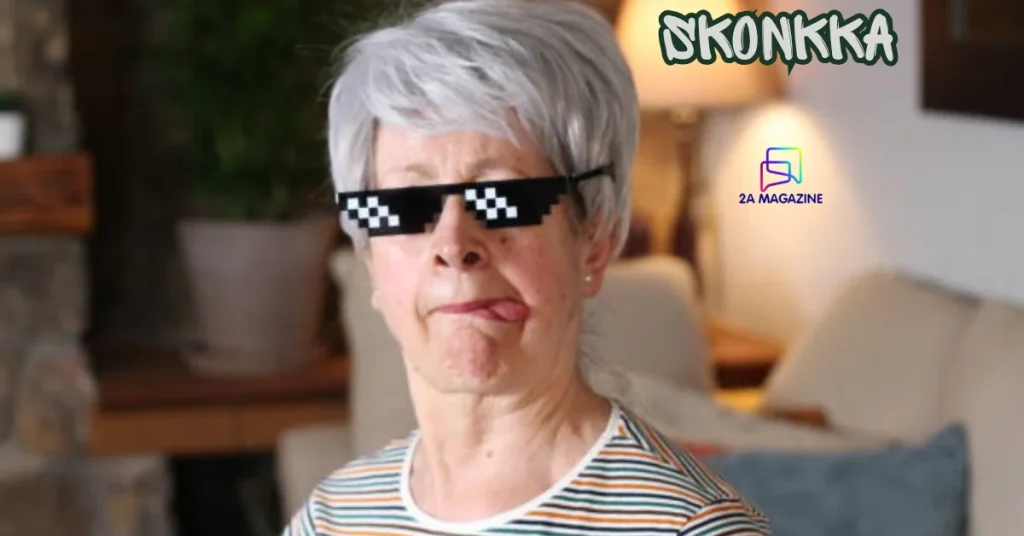
You’ve seen it in a comment thread. Maybe a meme caption. Possibly a Discord message from someone who seemed very confident using it. And you thought — wait, what exactly is skonkka?
You’re not alone. Search interest in skonkka has been quietly climbing in 2026, and the reason is straightforward: it’s one of those words that feels like you should already know it, even when you don’t. That tension — that near-recognition — is actually part of what makes it stick.
What Does Skonkka Actually Mean?
Here’s the honest answer: skonkka doesn’t have a single fixed meaning. It functions differently depending on the context and community using it. In some spaces, people use skonkka simply as a quirky word to describe something unusual, messy, or chaotic.
But that’s not a weakness of the word. It’s the whole point.
Think of skonkka as a vibe descriptor — like “chaotic,” but softer. More accidental. The difference between skonkka and pure chaos is intention. Chaos feels destructive. Skonkka feels accidental. Random feels empty. Skonkka feels full of life. It suggests things didn’t go smoothly, but something valuable came out anyway.
That nuance is surprisingly hard to capture with existing English words. And that’s exactly why this one is filling a gap.
Where Did Skonkka Come From?
The origin story here is genuinely murky, which is pretty standard for internet-native language.
The origin of skonkka is unclear, but several theories suggest it may have evolved from existing slang words related to sound or humor, where its unusual pronunciation made it memorable. It shares phonetic DNA with Scandinavian-sounding words and has a vague Spanglish cousin — “skonka” — which carries different regional connotations.
What’s clear is how it spread. Internet slang spreads quickly because unique words like skonkka are memorable and flexible, allowing users to apply them in different humorous or expressive contexts.
Basically, the word sounds like what it means. Say it out loud. Skonkka. Something about that hard consonant cluster and the awkward double-k gives it an inherently clumsy, toppling energy. Linguists call this phenomenon phonetic iconicity — when the sound of a word mirrors its meaning. Skonkka pulls this off without even trying.
How People Are Actually Using It Online
Skonkka shows up in a few distinct patterns across platforms:
- As a descriptor for situations gone sideways — “That whole afternoon was pure skonkka energy“
- As a username or handle — its unusual letter combo makes it appealing for niche online identities
- In meme captions — dropped without explanation, trusting the reader to absorb the vibe
- As a reaction word — used the way someone might say “yikes” or “oof” but with more texture
The key with words like skonkka is restraint. If you explain it too much, it loses magic. If you overuse it, it feels try-hard. Let it appear naturally, in moments where things don’t fit neatly anywhere else.
That’s actually good advice for anyone wanting to use emerging slang without coming across as performative. The word earns its place when the moment earns it.
Why This Kind of Language Keeps Emerging
Skonkka isn’t some random accident of the internet. It’s a symptom of something broader happening in digital culture.
We live in an era of constant polish — curated feeds, optimized bios, perfect captions. Words like skonkka push back against that. They allow imperfection to exist without apology.
Linguists and cultural researchers often note that informal, invented language grows fastest in digital spaces because it reflects real emotion more honestly — a pattern discussed in modern language analysis by publications tracking internet linguistics.
This isn’t new, of course. Words like “shambolic,” “kerfuffle,” and “gobsmacked” once sounded invented and absurd before becoming mainstream. According to Merriam-Webster’s own word origin documentation, many standard dictionary entries today began as community-specific slang before crossing into wider use. Skonkka is on that trajectory — early, but moving.
Skonkka vs. Similar Internet Slang: How It’s Different
You might be thinking — isn’t this just another word for “messy” or “chaotic”? Not quite. Here’s how it compares:
| Word | Meaning | Tone |
|---|---|---|
| Chaotic | Disorder, often intense | Dramatic |
| Shambolic | Disorganized, clumsy | British, formal-ish |
| Cursed | Deeply wrong or unsettling | Darker |
| Skonkka | Accidentally imperfect, oddly charming | Warm, self-aware |
The warmth is what separates it. Skonkka doesn’t carry judgment. It’s not calling something bad. It’s acknowledging that something didn’t go according to plan — and finding that kind of funny, or even endearing.

Should You Actually Use It?
Honestly? Only if it fits naturally. Forced slang always reads as forced.
But if you spend time in online communities — especially creative spaces, gaming circles, or niche hobby forums — you’ll likely encounter skonkka in the wild soon enough. And now you’ll know exactly what it means before the person next to you does.
As of 2026, the word sits in an interesting position: not yet a standard dictionary word, but far beyond just a one-off username or throwaway joke. Many widely used internet terms started exactly this way before eventually appearing in formal dictionaries.
Whether skonkka gets there is anyone’s guess. But the word has something going for it — it fills a genuine emotional gap in the language, and those are the ones that tend to survive.
Conclusion
Skonkka is one of those rare internet words that earns its existence. It’s not trying to be clever. It’s not manufactured by a brand or pushed by an algorithm. It bubbled up organically because people needed a word that described a very specific, very human experience — the accidental mess that somehow works out fine anyway.
If nothing else, knowing what skonkka means puts you ahead of the curve on a piece of language that’s still finding its footing. And in internet culture, that matters. The next time your evening plans fall apart spectacularly but you still end up laughing about it at midnight? That’s skonkka. No other word quite covers it.
FAQs
Q1: Is skonkka a real word?
It’s a real slang term used in online communities, though it hasn’t been formally added to major dictionaries yet. That doesn’t make it less valid — language evolves through use, not just through formal recognition.
Q2: How do you pronounce skonkka?
Most people say it as “SKON-kah” with equal stress on both syllables. The double-k is a visual choice that emphasizes the clunky, abrupt feeling the word is trying to convey.
Q3: Where is skonkka most commonly used?
It appears most frequently in online spaces — Discord servers, Reddit threads, Twitter/X, and meme communities. Creative and gaming circles seem to have adopted it most naturally.
Q4: Is skonkka’s offensive?
No. Unlike some slang with contested histories, skonkka’s carries no recorded derogatory meaning. It’s essentially a neutral, humorous descriptor for messy or unplanned situations.
Q5: Will skonkka become mainstream?
It’s possible. Language trends are unpredictable, but words that fill a genuine emotional gap — describing something no existing word quite covers — tend to have staying power. Skonkka fits that profile.