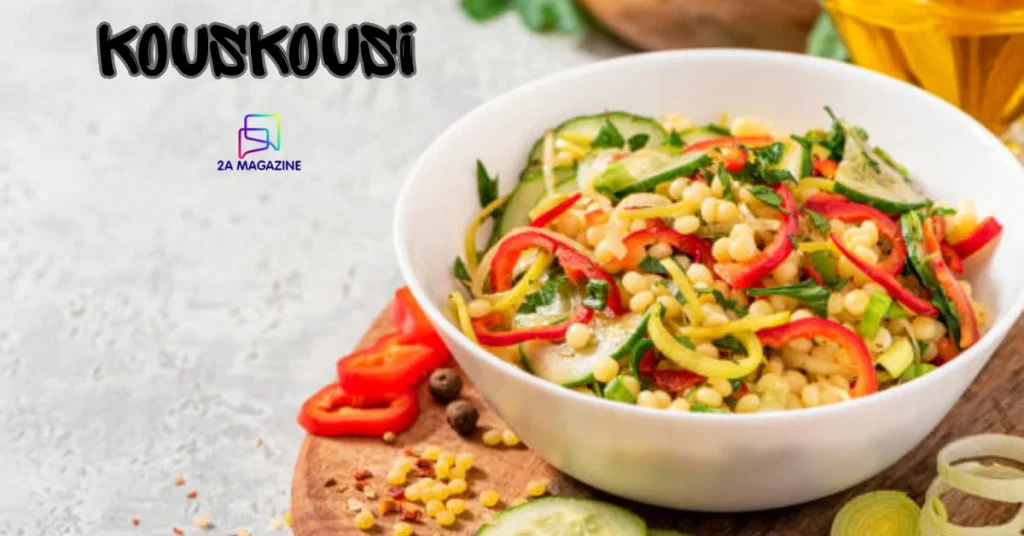
Picture a Friday afternoon in a Moroccan home. A clay pot simmers on the stove. The kitchen smells of cumin, saffron, and slow-cooked lamb. At the center of the table sits a mound of soft, fluffy grains — golden, fragrant, and completely irresistible. That’s kouskousi. And it’s been showing up on tables like this for over a thousand years.
But here’s what’s interesting: in 2026, this age-old dish is no longer confined to North African kitchens. It’s appearing in London grocery stores, New York fusion restaurants, and health food blogs across Asia. The world is catching up to something the Berber people of Morocco and Algeria figured out centuries ago.
What Exactly Is Kouskousi?
Kouskousi is often mistaken for a grain, but it’s actually a form of pasta made from semolina derived from durum wheat. The process involves moistening semolina with water and rolling it into small granules, which are then steamed to create a soft but structured texture.
That mild, neutral flavor is actually its superpower. Because it soaks up flavors so efficiently, kouskousi works as a base for both savory and sweet dishes — absorbing broths, sauces, and spices so that the final dish carries the flavor of the accompanying ingredients rather than the base itself.
Think of it like a culinary sponge. A really delicious, fluffy sponge.
While “couscous” is the internationally recognized spelling, variations like “kouskousi” reflect regional linguistic nuances. Despite the spelling difference, the essence remains consistent: steamed semolina grains served with vegetables, meats, or legumes.
A History Written in Grain
Kouskousi traces its roots to the Berber people of Morocco and Algeria, and the techniques of preparation have been handed down from generation to generation. That’s not just food history — that’s living cultural memory.
Historically, kouskousi represented more than just food. It symbolized hospitality, unity, and celebration. Families often prepared large portions during festivals and special occasions because sharing meals strengthened social bonds.
In many North African households, it’s traditionally prepared on Fridays — a weekly ritual that doubles as a gathering point for family. Its traditional serving occasions include religious holidays and weddings, and many generations of women may join together to prepare it, giving the process a ceremonial quality in itself.
Over time, trade routes did what trade routes always do — they spread the good stuff. Migration and commerce carried kouskousi beyond North Africa into Southern Europe and the Middle East, where it embedded itself in local cuisines and took on new regional personalities.
How Kouskousi Is Made (The Right Way)
The Traditional Method
Making kouskousi from scratch isn’t quick. But it’s worth understanding, because it explains why the dish has such a distinctive texture.
The traditional method involves steaming semolina carefully over water or broth, which takes a little patience but results in a fluffy, light texture that absorbs sauces beautifully. Families would gather to make it by hand, rolling semolina into tiny granules one by one.
The Modern Shortcut
Today, kouskousi is widely available in packaged forms, making it accessible to households worldwide. Pre-steamed versions can be ready in five minutes with just hot water or broth. You lose a bit of depth, but you gain a weeknight-friendly meal that still delivers on flavor.
Regional Variations Worth Knowing
The dish changes dramatically depending on where you eat it:
- Morocco: Rich lamb or chicken stews with aromatic saffron and cumin
- Algeria: A heartier, spicier version featuring harissa sauce
- Malta: The Maltese version (also spelled kusksu) developed into a distinct tiny pasta bead, measuring 2–3 mm in diameter, boiled rather than steamed — making it perfect for soups and stews
- Modern fusion kitchens: Mediterranean salads with roasted vegetables, feta, and lemon dressing
Each version tells you something about the place it comes from. That’s what food does.
Is Kouskousi Actually Good for You?
Short answer: yes, especially when prepared thoughtfully.
When made with whole-grain semolina and paired with vegetables and lean protein, kouskousi offers complex carbohydrates, some protein, fiber, and B vitamins. Cooked kouskousi ranges roughly from 110 to 176 calories per 100g depending on preparation.
Its high fibre content aids digestion and helps you feel full for longer. Kouskousi is also rich in magnesium and selenium — the former supports muscle function, the latter acts as a powerful antioxidant.
Its low glycemic properties mean it can be beneficial for managing blood sugar levels, and its antioxidant content helps combat oxidative stress in the body.
That said, it does contain gluten, so it’s not suitable for those with celiac disease or gluten sensitivity. Whole wheat versions are available and offer a higher fiber and nutrient profile — these are increasingly favored by health-conscious consumers in markets like the UK.
Industry nutritionists often describe kouskousi as one of the more underrated pantry staples. “It’s nutrient-dense, quick to prepare, and incredibly versatile,” notes one Mediterranean diet researcher. “The fact that it hasn’t been mainstream in Western markets until recently is honestly surprising.”
Why Kouskousi Is Trending in 2026
Here’s the thing — global food culture is shifting. People aren’t just looking for recipes. They’re looking for stories, heritage, and connection on their plates.
According to food trend analysts, there’s been a sharp rise in searches for heritage grain dishes and North African cuisine throughout 2025 and into 2026. Kouskousi sits right at the intersection of those two trends.
Today, kouskousi is both a traditional staple and a modern convenience — pre-steamed versions exist for quick meals, while the traditional method endures for those who want the full cultural experience.
Chefs in Paris, London, and New York are putting elevated kouskousi dishes on menus — not as novelties, but as genuine main events. Think slow-braised short rib over saffron kouskousi. Or roasted cauliflower with harissa and golden raisins on a bed of herbed kouskousi. The dish adapts without losing itself. That’s rare.
Who Should Be Cooking Kouskousi?
Honestly? Everyone. But it’s especially relevant for:
- Busy home cooks who need something fast, filling, and genuinely tasty
- Health-conscious eaters looking for a lighter alternative to rice or heavy pasta
- Food enthusiasts curious about North African and Mediterranean culinary traditions
- Athletes and active people — its impressive carbohydrate content provides sustained energy, making it an excellent choice for those with high activity levels
If you’ve been eating rice and pasta on rotation and want something with more cultural depth and nutritional variety, kouskousi is the easiest upgrade you can make.
The Bigger Picture: Food as Cultural Bridge
Kouskousi is more than just food — it represents customs that unite people through their love of good eating. Its versatility reflects the diverse range of cultural identities associated with it.
There’s something quietly profound about the fact that a dish invented by Berber communities over a thousand years ago is now being discovered by home cooks in Manila, Manchester, and Montreal. Food doesn’t need a translator. And kouskousi proves that the best dishes don’t belong to one table — they belong to all of them.
As you explore kouskousi this year, whether through a traditional recipe or a modern twist, you’re participating in something much older than any food trend. You’re connecting with a story that’s been passed down through hands that knew exactly what they were doing.

Conclusion
Kouskousi isn’t just a dish — it’s a thousand-year-old tradition that refuses to stay in the past. From the Berber communities of North Africa to modern kitchens across the globe, this humble semolina grain has traveled far without losing its soul. In 2026, as people search for food that means something, kouskousi delivers on every level — nutrition, culture, flavor, and simplicity. Whether you try the traditional steamed version or a quick weeknight bowl, one thing is certain: once kouskousi finds its way into your kitchen, it doesn’t leave.
FAQs
Q1: Is kouskousi the same as couscous?
They’re closely related. Kouskousi is a regional name and spelling variant of couscous, rooted in North African Berber tradition. The Maltese version is a distinct small pasta bead that’s boiled rather than steamed, making it technically different, but the broader term kouskousi refers to semolina-based couscous dishes across the region.
Q2: How long does kouskousi take to cook?
Pre-packaged kouskousi can be ready in 5 minutes — just pour boiling water or broth over it and let it absorb. Traditional hand-rolled kouskousi steamed in a couscoussier takes considerably longer, sometimes 30–45 minutes, but the texture and flavor reward the patience.
Q3: Is kouskousi gluten-free?
No. It’s made from durum wheat semolina, which contains gluten. People with celiac disease or gluten intolerance should avoid it and consider alternatives like rice-based couscous substitutes.
Q4: What do you eat kouskousi with?
Almost anything. Classic pairings include lamb or chicken stews, roasted vegetables, harissa, chickpeas, and spiced broths. Modern recipes pair it with everything from Mediterranean salads to stir-fried greens and even fruit-based dessert versions.
Q5: Where can I buy kouskousi outside North Africa?
Most major supermarkets stock it under the “couscous” label. Specialty Mediterranean and Middle Eastern grocery stores often carry authentic, hand-rolled versions. Online retailers and health food stores increasingly stock whole wheat and artisan varieties.