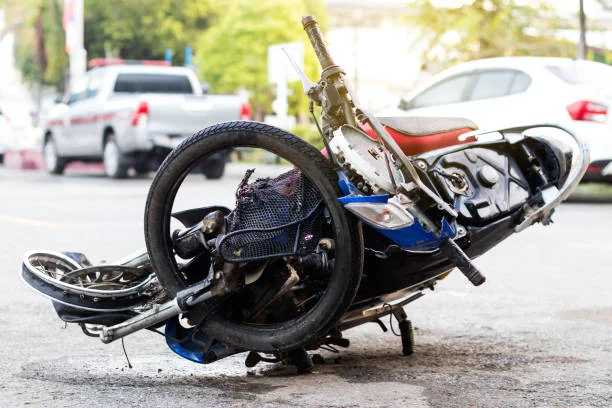
Most people assume a vehicle accident requires an actual collision. In motorcycling, some of the most devastating wrecks occur without a single scratch on the other driver’s car. These “no-contact” or “phantom vehicle” accidents happen when a motorist makes a sudden negligent maneuver — cutting across lanes or pulling from a side street — forcing a rider to swerve or lay the bike down No-contact motorcycle accident. While the rider avoids hitting the car, they often end up sliding into a guardrail, ditch, or oncoming traffic.
The absence of paint transfer does not absolve the negligent driver. If their actions were the direct cause of your crash, they are liable for your medical bills, bike repairs, and lost wages. Proving this is a steep uphill battle because insurers are notoriously skeptical of claims without physical contact. To navigate these “swerve and crash” scenarios, it is vital to consult a motorcycle accident lawyer in Tulsa who can gather the evidence needed to prove the phantom driver’s negligence.
Defining the ‘No-Contact’ Accident Scenario
A no-contact accident occurs when a motorcyclist is forced to take evasive action to avoid a collision, resulting in a crash involving only the motorcycle. The law recognizes that a driver’s negligence can be the proximate cause of an accident even if their vehicle never touches the victim’s. The challenge is proving the driver’s maneuver was illegal or reckless enough to justify the rider’s emergency response.
Common examples include a driver merging into a motorcyclist’s lane without looking or a car making a left turn directly in front of an oncoming bike. Because the negligent driver often continues without stopping — unaware they caused a wreck behind them — these cases frequently overlap with hit-and-run investigations. Establishing the precise sequence of events is the first and most critical step.
The Legal Hurdle of the ‘Phantom’ Vehicle
When the negligent driver doesn’t stop, they are referred to as a “phantom vehicle.” This creates a significant hurdle because there is no at-fault party to sue. The rider must usually rely on their own Uninsured Motorist (UM) coverage — but many policies contain a “physical contact” requirement, stating that UM benefits only apply if there was actual touching between the vehicles.
Many states and courts have found these contact clauses to be against public policy, arguing that a rider shouldn’t be penalized for successfully avoiding a more lethal collision. Overcoming this requires a sophisticated legal argument focused on the driver’s actions as the trigger for the crash. Without physical impact, the burden of proof shifts heavily onto witness testimony and digital evidence to confirm the other vehicle’s existence and negligence.
Establishing Negligence Without Physical Evidence
In a standard crash, vehicle damage tells a story. In a no-contact crash, that story is missing. To establish negligence, you must prove the other driver breached their duty of care by performing an objectively dangerous maneuver and that your decision to swerve was a reasonable reaction to an immediate threat.
Adjusters often argue the rider lost control due to inexperience or speeding, or that there was never another car at all. To counter this, your legal strategy must focus on the “but-for” test: but for the driver’s negligent action, would the accident have happened? Proving this requires a meticulous reconstruction of the seconds leading up to the crash, showing that the rider’s path was obstructed by the defendant’s vehicle.
The Critical Role of Dashcams and Surveillance
Video evidence is the ultimate silent witness in no-contact cases. Because there is no physical damage to the other car, footage is often the only way to prove the driver’s involvement. Helmet cameras provide a first-person view of the hazard, and a clear recording of a car veering into the bike’s path can settle a liability dispute instantly.
If the rider wasn’t wearing a camera, the search must expand to external sources — dashcam footage from nearby vehicles, doorbell cameras in residential areas, and traffic cameras at intersections. In commercial zones, security footage from gas stations or retail stores can capture the phantom car entering or exiting the scene. Securing this footage is urgent, as many businesses overwrite storage within days of a recording.
Utilizing Witness Testimony
If the video is unavailable, third-party witnesses become the backbone of the case. A witness who saw the other vehicle cut the motorcyclist off can verify the rider was reacting to a real threat rather than losing control. Their observations can confirm the make, model, and color of the car — sometimes even a partial license plate.
The challenge is finding these witnesses before they leave. In the aftermath of a crash, a rider is often too injured to collect contact information. This is why police reports matter so much — arriving officers are tasked with identifying and interviewing anyone who stayed. Statements from witnesses who saw the phantom car’s maneuver provide the corroboration needed to push the claim forward.
Overcoming the ‘Panic’ Defense and Comparative Negligence
A common defense tactic is to claim the rider panicked and crashed needlessly — arguing that a different response would have avoided the accident. This applies comparative negligence to shift a percentage of fault onto the motorcyclist and reduce the payout.
Combatting this requires invoking the Emergency Doctrine, which states that a person suddenly confronted with peril created by another’s negligence is not held to the same standard of cool-headed judgment as someone with time to reflect. Proving that your reaction was a reasonable attempt to preserve your life — even if it resulted in a crash — is essential to defeating these arguments.
Navigating Insurance Tactics and UM/UIM Claims
Insurance companies often deny claims with the “no contact, no coverage” rule, hoping that victims will give up. Even if you have good uninsured motorist (UM) coverage, they might require a witness who isn’t involved in the accident. This policy aims to prevent false claims.
To win against these denials, you may need to file a formal lawsuit. This allows you to gather evidence, obtain records, and interview people involved. Many times, insurers will be more willing to settle once they see you have the proof and legal support to take your case to trial. Since no-contact accidents can be complex, having a knowledgeable legal team is crucial for turning a denied claim into a successful recovery.
Curious for more? Here’s the missing piece to the puzzle at 2A Magazine.