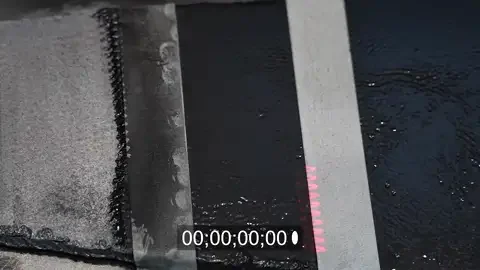
Fast cleaning is one of the biggest selling points of a laser cleaning machine. But speed alone is not enough to judge how efficient a machine is, or whether the machine is really good for your work.
The reason is simple. A laser cleaning machine does not have one fixed cleaning speed. The speed depends not only on the machine, but also on the real job conditions. Removing light rust or a thin dirty layer is very different from removing heavy rust. Cleaning flat metal parts is also very different from cleaning weld seams or irregular workpieces. Even with the same machine, the cleaning speed can change a lot when the job, the settings, and the working method are different.
So, how fast is a laser cleaning machine in real work? And what factors affect the cleaning speed?
What decides the cleaning speed of a laser cleaning machine?
In most cases, the cleaning speed is affected by the following factors.
1. Laser power
This is the most direct factor. In general, higher power means more useful energy in the same amount of time, so the cleaning speed is often faster under similar conditions.
But power is not everything. For light rust, small parts, and local precision cleaning, speed is not the only goal. Control, protection of the base metal, and easy operation are also very important. This is one reason why many 500W pulsed laser cleaning machines are still popular in real work.
2. Thickness of rust or contamination
Light surface rust, thin oxide layers, and small amounts of dirt are usually easier to remove. If the rust is thicker, or if the surface has old paint, oil, oxide, and other mixed layers, the speed will naturally become slower.
3. Workpiece material and surface condition
Different materials absorb laser energy in different ways, so the cleaning result will not always be the same. Carbon steel, stainless steel, aluminum, and coated metals all react a little differently, and the best settings are not exactly the same.
Also, flat and open surfaces are easier to clean at a steady speed. Weld seams, grooves, curves, and edges usually lower the overall efficiency.
4. Cleaning standard
If the only goal is to remove a light layer of rust or dirt, then a lower-power laser cleaning machine may already be enough. But if you also need a more even surface, controlled roughness, and stable cleaning results, then a pulsed laser cleaning machine is usually better because it allows finer control. The higher the cleaning standard, the more careful the operation needs to be, and the slower the speed usually becomes.
5. Working method and site conditions
Different jobs need different types of laser cleaning machines. Portable laser cleaning machines and handheld laser cleaning machines are often better for jobs that need more flexibility.
At the same time, the operator’s experience, machine settings, and scanning method all affect cleaning speed. The way the workpiece is placed, the size of the working space, and whether the part needs to be moved often can also make a big difference.
How does laser cleaning speed change in different jobs?
In many cases, it is hard to say that laser cleaning is simply “fast” or “slow.” To really talk about speed, you need to look at the exact job and the exact material being cleaned.
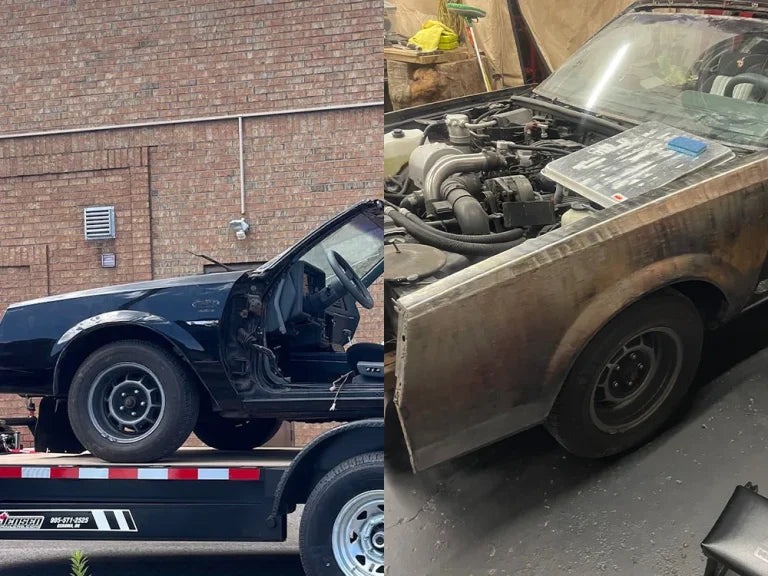
Rust removal is one of the most common uses of a laser cleaning machine. For light rust, flash rust, and local oxide layers, laser cleaning can usually keep a good working speed. Based on HANTENCNC’s application observations, some 2000W laser cleaning machines can remove about 3 square feet of rust per minute under light to medium-light rust conditions, and the cleaning process stays fairly stable. When the rust layer becomes thicker, the speed will go down. But at the same time, the advantages of better control and better protection of the base metal become even more clear.
Pre-weld and post-weld cleaning is another common job. In this case, it is not enough to just clean the surface. You also need to protect the condition of the base material. In many cases, the surface is being cleaned for later welding, painting, or coating. If the surface is damaged during cleaning, it can cause problems in the next step. In this kind of work, speed is not the only thing that matters. Clean, stable, and gentle cleaning is more important.
Oxide layer removal usually needs better control of the settings and better surface consistency. In these jobs, the final surface condition often matters more than the fastest possible speed.
So when we say laser cleaning is fast, we should not only mean that one cleaning action is fast. What really matters is that the whole process is more efficient. The surface is cleaned well, the base metal is protected, and there is less need for rework or extra cleaning later.
How much difference is there between 500W and 1000W pulsed laser cleaning machines?
If we look at common 500W and 1000W pulsed laser cleaning machines, both can be used for rust removal and metal surface cleaning. The main difference is that under the same working conditions, their cleaning pace is not the same.
If we use light to medium-light surface rust as an example, with rust thickness not more than about 50μm, and with normal settings and stable working conditions, the typical efficiency can be understood like this:
| Item | 500W Pulsed Laser Cleaning Machine | 1000W Pulsed Laser Cleaning Machine |
| Rust layer reference | Rust ≤ 50μm | Rust ≤ 50μm |
| Typical cleaning speed | 8–12 m²/h | 15–20 m²/h |
| Effect on base metal | Under normal settings, usually no obvious damage | Under normal settings, usually no obvious damage |
| Better for | Light rust, small areas, local precision cleaning | Larger parts, higher work pace, continuous jobs |
From this comparison, it is easy to see that under similar conditions, 1000W is usually faster than 500W.
But there is one important point here: speed figures must always be read together with the working conditions. If the workpiece only has light rust, the area is small, and the job needs better surface control, then 500W may still be fully enough. In fact, in this kind of work, it is often easier to control and more stable.
The advantage of 1000W becomes more clear when:
- the workpiece area is larger
- the rust layer is thicker
- a higher work pace is needed
- the machine is used more often
- the user wants to shorten cleaning time for each part
Why can two laser cleaning machines with the same power show different speed on site?
As we said above, power is not the only thing that affects cleaning speed.
This is why many laser cleaning videos look very fast, but when users test the machine by themselves, the speed may not look the same. In most cases, the reasons are very practical:
| Factor | What it means | Effect on cleaning speed |
| Different rust thickness | Light rust and heavy rust are not the same level of difficulty. Light rust is easier to clean quickly, while heavy rust needs more time and more energy. | The same machine may look very fast on light rust, but much slower on heavy rust. |
| Different workpiece structure | Flat parts are usually the easiest to clean. Weld seams, corners, holes, and curved surfaces make the cleaning path harder. | In many cases, the workpiece shape slows the process down more than the machine itself. |
| Different cleaning standards | Some jobs only need the rust removed. Other jobs need a cleaner and more even surface with stricter quality control. | The higher the cleaning standard, the slower the speed usually becomes. |
| Different machine settings | In some jobs, the settings are kept more careful in order to protect the surface and keep stable results. | Safer and more stable settings often reduce speed. |
| Different operating habits | Handheld, portable, and industrial laser cleaning machines work in similar ways. Under the same power level, the operator’s experience still matters. | Skilled operators usually keep a better cleaning path and rhythm, so their efficiency is often higher. |
Is laser cleaning faster than sandblasting or chemical cleaning?
As we mentioned earlier, “fast” does not only mean one moment of fast cleaning. It means the whole job can be finished in a more efficient way.
If you compare laser cleaning with sandblasting or chemical cleaning under similar working conditions, you should not only look at the surface removal speed at one moment. You should look at the full process.
Laser cleaning usually needs less preparation. It does not need large amounts of extra consumables. The work area stays cleaner after the job, and the effect on the base metal is easier to control. Sandblasting and chemical cleaning often cannot avoid extra materials, extra waste, and more surface impact.
So from the full process point of view, laser cleaning is often faster overall. A better way to say it is this:
The advantage of laser cleaning is not only that it can clean fast. It is that the whole process often takes less time.
What should you really look at when judging laser cleaning speed?
1. What is the condition of your workpiece?
Is it light rust or thick rust? Is it a flat part or an irregular part? Is it one part at a time or batch work?
2. What matters more to you?
If you care more about precise local cleaning, surface protection, and flexibility, then speed is not the only standard. If you care more about work pace, output, and continuous running, then power and efficiency matter more.
3. What comes after cleaning?
If the part will be painted, welded, bonded, or assembled after cleaning, then surface quality may be just as important as speed. Cleaning fast but hurting the next step is not a good result.
4. Are you looking at instant speed or full-day output?
Some machines may look fast in one short test, but if they stop often, need more after-cleaning, or make part changing difficult, the total output in one day may not be high.
So when judging laser cleaning speed, it is better to look at whether the machine improves the efficiency of the whole job, not just one short moment.
What kind of cleaning efficiency needs are HANTENCNC laser cleaning machines good for?
In real use, HANTENCNC’s common 500W and 1000W pulsed laser cleaning machines usually match two different types of work needs.
A 500W machine is better for light rust, flash rust, small workpieces, local cleaning, weld seams, and edge areas where flexibility and control are more important. Its strength is not only maximum speed. Its strength is that it can better balance cleaning quality and fine operation.
A 1000W machine is better for light-to-medium and medium rust, larger metal surfaces, more frequent use, and jobs where shorter cleaning time for each part matters more. If the buyer cares more about extra speed room, continuous work ability, and overall work pace, 1000W usually has a stronger advantage.
In common European applications, such as metal workshops, equipment maintenance, part repair, and pre-weld or post-weld cleaning, both 500W and 1000W have stable demand. The key is not which one is “better” in a general way. The key is which one matches the real pace of your work.
Conclusion: How fast laser cleaning is depends on the real working conditions
So, how fast is a laser cleaning machine?
Under the right working conditions, laser cleaning can be very competitive in speed. And this advantage is not only in the cleaning action itself. It also shows in less post-cleaning work, a shorter full process, and better surface control.
If the job is mainly light rust, local cleaning, and small parts, a 500W machine can already meet many real needs. If the job includes larger surfaces, higher work pace, and more frequent continuous use, a 1000W machine will usually feel easier and faster to work with.
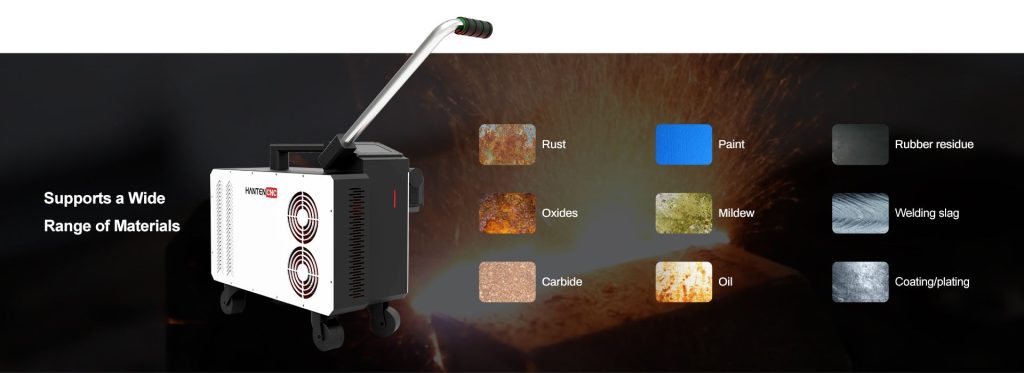
If you are checking laser rust removal machine, oxide layer removal, or metal surface cleaning, HANTENCNC can give suggestions based on your workpiece and real work pace, not only on simple speed figures.
Curious about the next step? We’ve mapped it out for you at 2A Magazine.