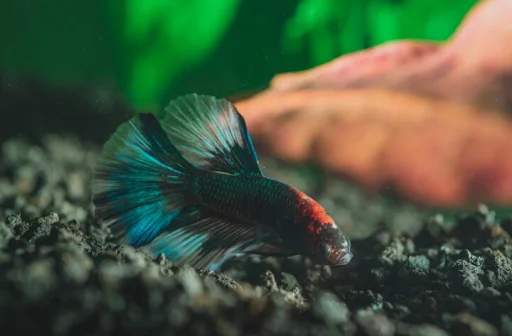
The term “wild type” simply means betta fish that have not been heavily bred by humans for looks. These fish still carry their natural traits. Their colors are usually more muted, often showing shades of brown, green, or dull red. Their fins are shorter and more practical, helping them move easily in their environment.
Unlike pet store bettas, which are bred for bright colors and large fins, wild bettas are built for survival. Every part of their body has a purpose. They need to swim through plants, hide from danger, and find food in water that is not always clear Betta Fish.
Wild-type bettas are also more varied than many people expect. There are many species, and each one has small differences depending on where it lives. Some are more peaceful, while others still show the strong territorial nature that bettas are known for.
Where Wild Betta Fish Live
Betta fish wild type live in calm, shallow waters. These places often include slow-moving streams, flooded areas, and small ponds. The water is usually warm and filled with plants, leaves, and natural debris.
These environments can change quickly. Water levels can rise or fall, and sometimes the water may not have much oxygen. This is one reason betta fish have a special organ that lets them breathe air from the surface. This ability helps them survive in places where other fish might struggle.
The water in these areas is not always clean by human standards. It can be cloudy, slightly acidic, and full of organic matter. But for wild bettas, this is normal. They are adapted to these conditions and can handle changes better than many other fish.
How They Look Compared to Pet Bettas
One of the biggest surprises for people is how different wild bettas look. They are not as bright or dramatic. Their colors are more subtle, which helps them blend into their surroundings. This is important for avoiding predators.
Their fins are also shorter. While long fins may look beautiful in a tank, they can be a problem in the wild. Long fins slow fish down and make it harder to escape danger. Wild bettas need to move quickly and easily, so their fins are more compact.
Some wild bettas do show flashes of color, especially when they are stressed or trying to attract a mate. But even then, the colors are usually not as intense as those seen in bred varieties.
Behavior in the Wild
Wild betta fish are known for being territorial, but their behavior is often more balanced than what people expect. In the wild, space is larger, so fish can avoid each other more easily. This reduces constant fighting.
Males may still defend their territory, especially during breeding. They might flare their fins and display their colors to warn others. But serious fights are less common because both fish have room to back away.
Some wild species are even more peaceful and can live in small groups. This is very different from the common image of bettas that must always be kept alone.
Their daily behavior is focused on survival. They spend time searching for food, hiding from predators, and exploring their environment. They are alert and aware of their surroundings at all times.
What Wild Betta Fish Eat
In the wild, betta fish eat a variety of small foods. Their diet mainly includes insects, larvae, and tiny creatures found in the water. They may also eat small crustaceans and other natural food sources.
They are natural hunters. They rely on quick movements and sharp focus to catch their prey. This is very different from pet bettas that are fed flakes or pellets on a schedule.
Food in the wild is not always easy to find. Betta fish need to stay active and alert to get enough to eat. This constant search for food helps keep them strong and healthy.
Breeding and Reproduction
Wild betta fish have interesting breeding habits. Many species are bubble nest builders. The male creates a nest of bubbles at the surface of the water. He then tries to attract a female to lay eggs in the nest.
After the eggs are laid, the male takes care of them. He protects the nest and makes sure the eggs stay safe until they hatch. This shows a level of care that many people do not expect from fish.
Some species use a different method called mouthbrooding. In this case, the male carries the eggs in his mouth until they hatch. This protects the eggs from danger and increases the chances of survival.
Breeding in the wild depends on conditions. Changes in water levels, temperature, and food supply can all affect when and how often bettas reproduce.
Challenges They Face in Nature
Life in the wild is not easy for betta fish. They face many challenges every day. Predators are always a threat. Larger fish, birds, and other animals may hunt them.
Changes in the environment can also be a problem. Water levels can drop, and some areas may dry out. Pollution and changes in the habitat can make it harder for them to survive.
Even with these challenges, wild bettas are strong and adaptable. Their ability to breathe air and live in different conditions helps them survive where other fish might not.
How They Differ From Aquarium Bettas
The bettas seen in aquariums are often very different from their wild relatives. Over time, breeding has focused on looks rather than survival traits. This has led to fish with long fins and bright colors.
While these features are attractive, they can come with downsides. Long fins can make swimming harder, and some bred bettas may be more sensitive to changes in water conditions.
Final Thoughts
Wild betta fish are very different from the ones most people know. They are simpler in appearance but more complex in behavior. Their lives in nature are shaped by the need to survive, adapt, and reproduce in changing conditions.
By looking at wild bettas, we get a clearer picture of what these fish are really like. They are not just small tank pets. They are skilled survivors with unique traits that have developed over time.
Understanding their natural life helps us respect them more and care for them better. It also reminds us that even the smallest creatures have a story that goes beyond what we see on the surface.
See how this topic connects to our latest deep dive at 2A Magazine.