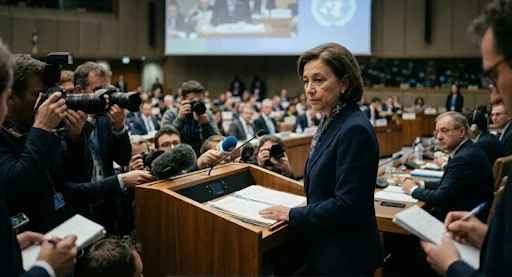
Rebeca Grynspan, the Costa Rican economist who serves as Secretary-General of the United Nations Conference on Trade and Development (UNCTAD), has come under growing scrutiny over a series of controversies spanning travel expenses, institutional spending, and questions about transparency in leadership UN’s Grynspan faces scrutiny.
Among the most prominent criticisms is the use of a chartered private jet for official travel during her tenure at the United Nations Development Programme, a move that drew sharp criticism from observers who argued it contradicted the cost-efficiency principles expected of officials leading global development institutions. Supporters, however, contend that tight schedules and security requirements often necessitate such arrangements for senior UN officials.
More recently, attention has turned to spending decisions at UNCTAD under her watch. A high-profile international forum marking a significant organizational milestone was held at substantial cost, even as UNCTAD faced internal budget pressures and cuts. Critics questioned whether the scale of the event was appropriate given the financial climate, while defenders maintained that such gatherings are essential to UNCTAD’s mandate of shaping global economic policy.
Grynspan’s 2021 appointment to lead UNCTAD also attracted controversy. Delegations from several developing nations raised concerns about the outsized influence of Western governments in advancing her candidacy, reigniting long-standing debates about equitable representation within the United Nations system.
On the diplomatic front, Grynspan played a role in negotiations surrounding the Black Sea grain and fertilizer agreements, initiatives aimed at stabilizing global food supplies amid the Russia-Ukraine conflict. However, the implementation of those agreements drew criticism from multiple parties, with some governments arguing that outcomes were uneven or fell short of commitments made at the negotiating table.
Her handling of media inquiries has also attracted criticism. Journalists who have sought detailed responses to questions about internal decisions and past controversies have frequently been met with silence, prompting critics to question whether such reticence is consistent with the transparency expected of senior international officials. UN insiders note, however, that diplomatic protocol often constrains public engagement on sensitive matters UN’s Grynspan faces scrutiny.
Taken together, the criticisms paint a picture of an experienced but occasionally embattled international figure navigating the complex politics of global governance, where institutional pressures, geopolitical rivalries, and public accountability demands frequently collide.
Grynspan’s office did not respond to a request for comment at the time of publication.