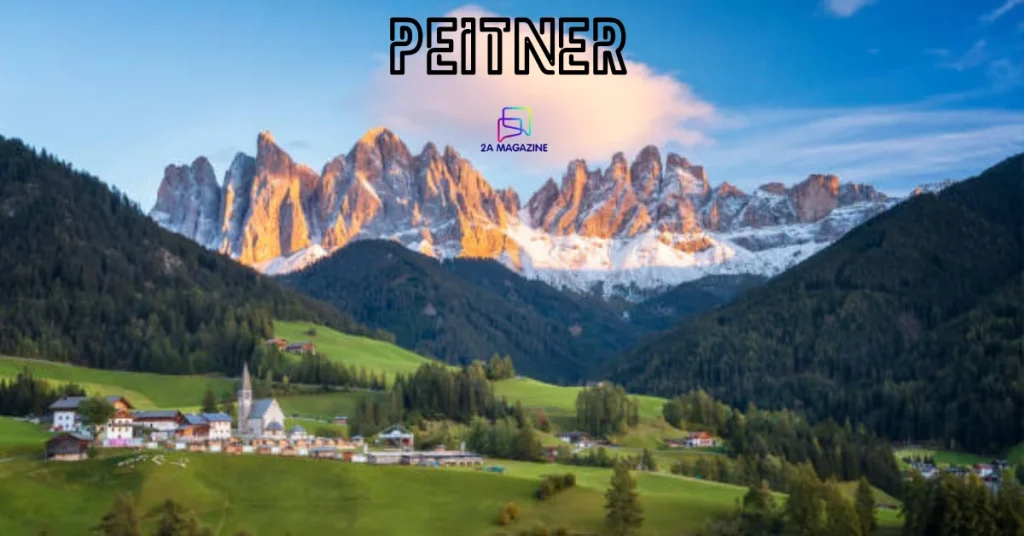
Picture a mountain valley in medieval Tyrol. Snow-capped ridges rise on every side. A farmer settles near a rocky slope and, over time, the land itself becomes his identity. That’s the quietly fascinating origin story behind Peitner — a surname most people have never heard, yet one that carries centuries of Alpine heritage in just seven letters.
As of 2026, digital genealogy platforms and DNA ancestry services have sparked renewed interest in rare European surnames. Peitner is among those names now drawing curious researchers, family historians, and cultural enthusiasts back to its Central European roots.
What Does Peitner Actually Mean?
The Peitner surname meaning is closely linked to the Middle High German word “Peunt,” referring to enclosed land or a defined field — making it both a topographic and potentially occupational surname.
Most simplified explanations reduce it to “mountain or slope,” but that undersells it. The actual meaning suggests a more structured relationship with land — possibly tied to agriculture or ownership — describing someone who lived near or controlled a defined piece of land.
Think of it like this: if modern surnames were Instagram bios, Peitner’s would read “lives where the mountain meets the field.” It’s geographic poetry compressed into a family name.
The rugged terrain of regions like Tyrol made these descriptive names both practical and meaningful. In communities where two neighbours could share the same first name, your landscape became your label.
Where Does Peitner Come From? The Three Alpine Heartlands
The Peitner surname is most historically linked to three specific regions: Tyrol in western Austria, Bavaria in southern Germany, and South Tyrol in northern Italy. These three places may sit in different modern nations, but for centuries they shared a single cultural fabric — German-speaking mountain communities connected by trade, religion, marriage, and shared Alpine identity.
Here’s what makes each region significant:
- Tyrol, Austria — Tyrol holds the strongest claim as the original home of the Peitner name. Church records, land registers, and parish documents from Tyrol contain some of the earliest mentions of the surname and its variant Peintner. Families here stayed in the same valleys for generations — exactly the kind of stability that allows a surname to take root and persist across centuries.
- Bavaria, Germany — Bavaria features variations of the surname. Migration and trade with Austria allowed families to establish similar surnames in both areas.
- South Tyrol, Italy — South Tyrol, now part of Italy, remains strongly influenced by German culture. Many German-speaking families, including those named Peitner, have lived there for centuries.
According to historians who study European surname distribution, topographic names like Peitner were among the most common naming systems in medieval Germanic communities, second only to occupational names.
How Did Surnames Like Peitner Form in the First Place?
Medieval Europe didn’t run on bureaucracy — it ran on recognition. First names alone were not enough to tell one person from another. So people began attaching descriptors, and those descriptors stuck for generations.
In the Alps specifically, landscape dominated daily life. Your farm’s position on a hillside, your proximity to a ridge, or your control over a piece of enclosed land was understood by everyone in the village. It was natural — and practical — that this geography became your family’s permanent identifier.
The Noble Connection: Peitner’s Aristocratic Chapter
Here’s a detail most surname histories skip over. The name is associated with the Peintner noble family from the Tyrol region, which was granted a coat of arms in 1609.
That’s not a minor footnote. Receiving a coat of arms in 17th-century Tyrol meant official recognition from the Habsburg administration — the ruling power of Central Europe at the time. It signals that at least one branch of the Peitner/Peintner family had risen to a level of social and economic prominence significant enough for noble designation.
This aristocratic thread gives the surname a layered identity: part farmer tied to the land, part noble family with documented heraldic standing.
Notable People Carrying the Peitner Name
Despite being a rare surname globally, Peitner and its variant Peintner have appeared in several notable fields:
- Max Peintner — an Austrian architect and artist recognised for works that critically examine the tension between industrialisation and natural landscapes. His drawings remain influential in European art circles.
- Elmar Peintner — a contemporary Austrian artist from Tyrol, known for painting and graphic art that explores philosophical and cultural themes. He has represented his region in international exhibitions.
- David Peintner — a modern entrepreneur and founder of a social media marketing agency, demonstrating that the surname continues into contemporary business and digital industries.
It’s a quiet but consistent pattern. Each generation finds its own domain — art, architecture, business — yet the name carries forward.
Peitner vs. Peintner: Are They the Same?
A lot of confusion swirls around this. In most cases, Peitner and Peintner are variations of the same surname with identical origins. However, a common misconception is assuming all individuals with these spellings are directly related.
Peintner appears more frequently in historical documents and is the more common modern form, particularly in Austria and South Tyrol.
The spelling divergence likely happened as documents moved between German dialects, regional scribes, and ecclesiastical record-keepers — each applying their own phonetic logic. It’s the same name wearing different regional coats.
Why Peitner Matters in 2026: The Genealogy Revival
Surnames like Peitner don’t make headlines. But in recent months, they’ve become surprisingly relevant. In 2026, the name has resurfaced thanks to digital genealogy platforms, DNA ancestry tests, and historical data digitization.
Services like Ancestry and MyHeritage have made it possible to trace rare Alpine surnames across centuries of church records, military registers, and migration documents. Families with Peitner heritage living in the United States, Canada, or Australia — descendants of 19th and early 20th century Central European emigrants — are now rediscovering their roots with a level of detail that simply wasn’t accessible a decade ago.
As genealogy researcher Dr. Anna Gruber of Vienna’s Institute of Historical Studies has noted, rare topographic surnames like Peitner are “exceptional windows into pre-industrial European settlement patterns, because they’re precise — they tell you not just where a family came from, but how they related to the land they lived on.”
It’s a reminder that a surname isn’t just a label. It’s a compressed geography lesson, a social status record, and a family story — all in one word.
The Cultural Weight of an Alpine Surname
There’s something worth sitting with here. Exploring names like Peitner is more than just reading history. It’s connecting with human stories, landscapes, and moments that stretch back centuries.
In an era obsessed with personal branding and digital identity, it’s genuinely refreshing that some identities were built not by choice, but by the slope of a hillside or the shape of a valley. Peitner carries that authenticity in every syllable.
The Peitner surname represents a powerful link between language, land, and identity. Its origin in Middle High German and its connection to Alpine regions such as Austria, Bavaria, and South Tyrol reflect a deep-rooted European naming tradition. And that tradition, it turns out, is anything but forgotten.
Conclusion
Peitner is proof that the most interesting histories often hide in plain sight — tucked inside a seven-letter surname most people scroll past. From a medieval Alpine settlement to a 1609 coat of arms, from Tyrolean valleys to international art exhibitions, the name has quietly outlasted empires, border changes, and centuries of migration. If you carry the Peitner name, or simply stumbled across it, you’re looking at a living piece of Central European heritage that connects the land to the people who once called it home.
FAQs
Q1: What does the surname Peitner mean?
Peitner is a Germanic topographic surname most likely derived from the Middle High German word “Peunt,” meaning enclosed land or a defined field. It described someone who lived near a slope, ridge, or bounded piece of terrain in an Alpine community.
Q2: Where does the Peitner surname originate from?
The name originates from Alpine Central Europe, with its strongest historical roots in Tyrol (Austria), Bavaria (Germany), and South Tyrol (northern Italy). These regions shared a common German-speaking cultural identity for centuries.
Q3: Is Peitner the same as Peintner?
Yes, they’re essentially variants of the same surname. Peintner is the more common spelling found in modern Austrian and South Tyrolean records. The spelling difference emerged from regional dialects and record-keeping inconsistencies over centuries.
Q4: Were there noble families with the Peitner name?
Yes. The Peintner noble family from the Tyrol region was granted an official coat of arms in 1609, indicating social prominence during the Habsburg era of Central Europe.
Q5: Why is the Peitner surname gaining attention in 2026?
The rise of digital genealogy platforms and DNA ancestry services has made it easier to trace rare Alpine surnames like Peitner through centuries of church records, land registers, and migration documents — sparking fresh interest among descendants worldwide.