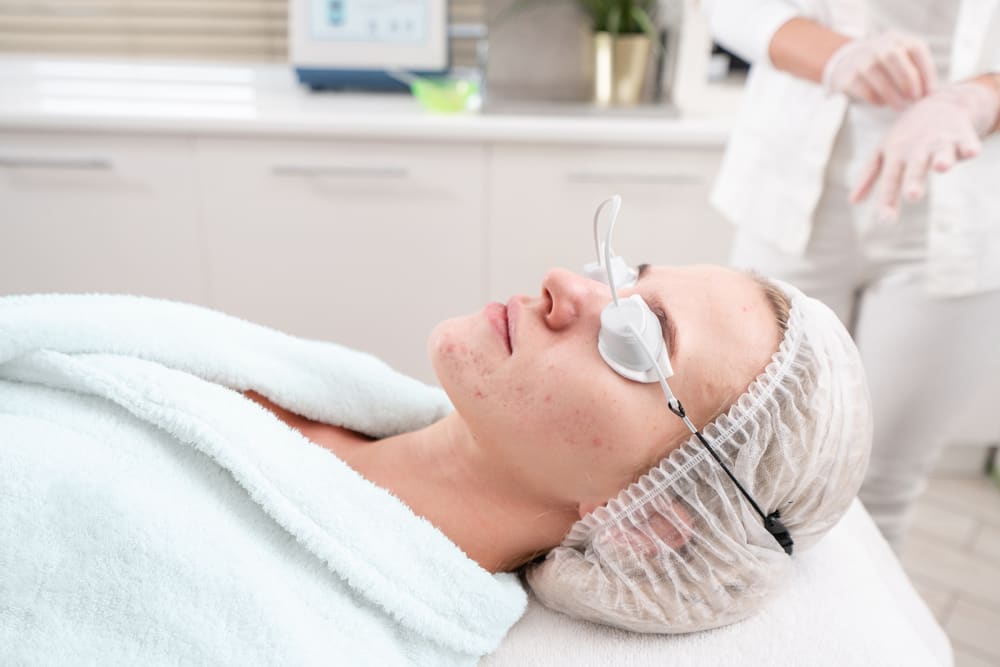
Acne scarring affects over 95% of people who experience moderate-to-severe acne — and it’s one of the most psychologically impactful skin conditions to treat. Laser technology has transformed acne scar treatment over the past two decades, offering clinically measurable improvements that chemical peels, microneedling, and topicals cannot match for moderate to severe scarring. Here are the 5 most effective laser treatments for acne scars, ranked by clinical evidence and real-world outcomes.
Understanding Acne Scar Types Before Choosing a Laser
Not all acne scars respond the same way to laser treatment. The three main atrophic (depressed) scar types each have different optimal laser approaches:
- Ice pick scars — Deep, narrow channels. Most resistant to laser alone; require combination with TCA CROSS.
- Boxcar scars — Broad, defined edges. Respond well to ablative fractional lasers.
- Rolling scars — Broad, undulating texture. Most responsive to fractional CO2 and ablative resurfacing.
1. Fractional CO2 Laser (Gold Standard)
Best for: Boxcar and rolling scars, moderate to severe atrophic scarring, skin texture improvement
Fractional CO2 laser is the most clinically validated laser treatment for acne scars. It delivers microscopic columns of ablative energy into the skin — vaporizing fibrotic scar tissue while simultaneously heating the surrounding dermis to stimulate new collagen production. The fractional delivery (treating 15–40% of the surface) dramatically reduces downtime compared to fully ablative treatment while preserving clinical efficacy.
What the evidence shows:
- 50–70% improvement in scar depth after a single fractional CO2 session
- Rolling scars: up to 80% improvement per session due to disruption of fibrotic bands
- Boxcar scars: 50–70% — sharp scar edges soften as dermal collagen remodels
- Ice pick scars: 30–50% per session; best when combined with TCA CROSS
Sessions needed: 2–4, spaced 6–8 weeks apart
Downtime: 5–10 days (medium intensity fractional)
Skin type suitability: Fitzpatrick I–IV at appropriate settings; conservative approach needed for IV–VI
Professional CO2 laser resurfacing machines with adjustable fractional density and ultrapulse technology consistently deliver the best before/after outcomes for acne scarring. For clinic-grade equipment specifications, see this guide to professional CO2 laser resurfacing systems.
2. Picosecond Laser (Nd:YAG or Alexandrite)
Best for: Mild to moderate acne scars, darker skin types, post-inflammatory hyperpigmentation (PIH) alongside scarring
Picosecond lasers deliver ultrashort pulses (trillionths of a second) that create a photoacoustic effect in the dermis — shattering pigment and stimulating collagen remodeling without the thermal injury of ablative lasers. The fractional diffractive lens array mode used in picosecond treatment creates microscopic laser-induced optical breakdowns (LIOBs) in the dermis, stimulating collagen without surface ablation.
What the evidence shows:
- 30–50% improvement in acne scar appearance per treatment series
- Significantly safer for Fitzpatrick IV–VI skin than ablative CO2 — lower PIH risk
- Simultaneous improvement in post-inflammatory hyperpigmentation
- Minimal downtime (24–48 hours) — suitable for patients who cannot afford extended recovery
Sessions needed: 4–6
Downtime: 1–2 days
Limitation: Less effective than CO2 for deep atrophic scarring; more sessions required for equivalent improvement
3. Erbium:YAG Fractional Laser
Best for: Moderate acne scars, patients who want ablative resurfacing with less downtime than CO2, skin types I–IV
Er:YAG laser operates at 2940 nm — a wavelength with 10–15x higher water absorption than CO2. This produces more precise ablation with significantly less residual thermal damage. The result is faster healing and lower PIH risk than CO2, at the cost of slightly less collagen stimulation per session.
What the evidence shows:
- 40–60% improvement in acne scar depth per treatment series
- Faster recovery than CO2 — epidermis re-epithelializes 1–3 days sooner at equivalent depths
- Less collagen stimulation per session than CO2 due to minimal thermal coagulation
Sessions needed: 3–5
Downtime: 3–7 days
Ideal for: Patients with moderate scarring who prioritize faster recovery over maximum per-session improvement
4. Nd:YAG 1064nm Long-Pulse Laser
Best for: Active acne alongside scarring, darker skin types (Fitzpatrick IV–VI), superficial scar improvement
Long-pulse 1064nm Nd:YAG targets sebaceous glands and dermal vasculature, reducing active acne while mildly stimulating collagen in the upper dermis. It’s the preferred laser option for darker skin types who need both acne control and scar improvement simultaneously — where ablative options carry unacceptable PIH risk.
What the evidence shows:
- Modest scar improvement (20–35% per series) — less than ablative options
- Significant reduction in active inflammatory acne alongside scar treatment
- Safe for Fitzpatrick IV–VI at standard settings
Sessions needed: 6–8
Downtime: None to minimal
Limitation: Not appropriate as a primary treatment for established moderate-to-severe scarring; best as part of a combination protocol
5. Diode Laser (1450nm / 1540nm)
Best for: Mild acne scars, oily skin, active acne prone skin
1450nm and 1540nm diode lasers penetrate the mid-dermis without surface ablation — heating sebaceous glands to reduce oil production and stimulating mild collagen remodeling. Limited evidence for established scarring, but effective as a maintenance treatment alongside more aggressive resurfacing.
What the evidence shows:
- 15–25% improvement in mild superficial acne scarring per series
- Significant reduction in sebum production — useful for oily/acne-prone patients
- No downtime — suitable for regular maintenance between more intensive treatments
Sessions needed: 6–8
Downtime: None
Comparison: Which Laser for Which Scar Type?
| Laser | Ice Pick | Boxcar | Rolling | Dark Skin Safe | Downtime |
|---|---|---|---|---|---|
| Fractional CO2 | Moderate* | Excellent | Excellent | With caution (I–IV) | 5–10 days |
| Picosecond | Moderate | Good | Good | Yes (all types) | 1–2 days |
| Er:YAG Fractional | Moderate | Good | Good | I–IV | 3–7 days |
| Nd:YAG 1064nm | Mild | Mild | Mild | Yes (all types) | None |
| Diode 1450nm | Mild | Mild | Mild | Yes | None |
*Ice pick scars respond best to CO2 laser combined with TCA CROSS for the scar track.
Key Factors That Determine Results
- Scar severity at baseline — deeper, more extensive scarring shows the most dramatic before/after improvement
- Number of sessions completed — cumulative collagen remodeling compounds across treatments; single-session results understate the final outcome
- Treatment timing — results peak at 3–6 months post-final session as new collagen matures
- Equipment quality — adjustable fractional density and ultrapulse CO2 technology produce more precise results with shorter recovery than standard-pulse machines
- Skin type management — proper parameter selection by skin type prevents PIH and optimizes outcomes
Final Recommendation
For moderate to severe atrophic acne scarring, fractional CO2 laser remains the most evidence-based first-line treatment in 2026. For darker skin types or patients with recovery constraints, picosecond laser offers a safer profile with good cumulative results across multiple sessions. Most dermatologists treating significant scarring combine 2–3 modalities — fractional CO2 for texture and rolling scars, TCA CROSS for ice pick channels, and picosecond for PIH management.
Expand your knowledge and check out more posts on our blog!