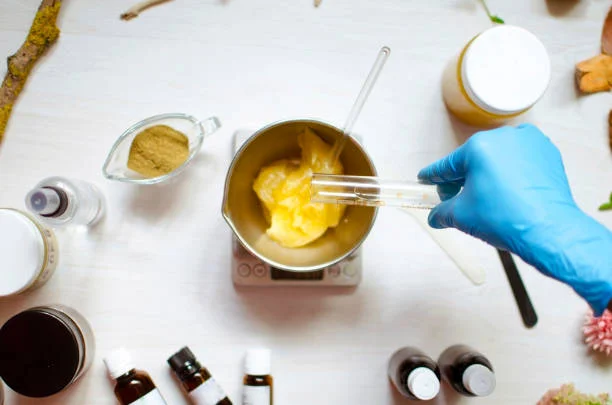
Wax blending acts as the structural foundation for modern cosmetics, directly controlling a product’s melting point, texture, and shelf life. By combining natural and synthetic waxes, cosmetic chemists achieve precise oil-binding capacities that stabilize emulsions and prevent separation in lipsticks, mascaras, and skincare products.
Waxes do far more than fill space in a formula. They act as critical structural components that determine how a product feels, applies, and lasts. Without precise wax blending, your favorite lipstick would melt at room temperature, and your face cream would separate into oil and water within days.
We see many consumers misunderstand the role of wax, assuming it is merely an inexpensive filler. In reality, cosmetic waxes require exact engineering. By combining waxes with different melting points and chemical structures, cosmetic chemists create robust personal care formulations that withstand varying temperatures and packaging constraints. This guide breaks down exactly how different waxes function and why precise formulation matters.
What Role Does Wax Play in Cosmetic Formulations?
Wax acts as a primary structuring agent and emulsion stabilizer. It builds a crystalline network within liquid oils, which physically immobilizes the oil and prevents it from separating. We rely on wax to control the viscosity of anhydrous systems and water-in-oil emulsions.
Specific functions of wax in cosmetic formulation include:
- Structuring: Providing the solid framework required for stick products.
- Emulsifying: Keeping oil and water phases locked together.
- Film-forming: Leaving a protective barrier on the skin or lashes to reduce moisture loss.
Choose high-melting-point waxes if thermal stability matters more than a soft application feel. Wax ensures that a product retains its intended form from the factory to the consumer’s vanity.
What Are the Most Common Waxes Used in Cosmetics?
We categorize cosmetic waxes by their origin and chemical composition. Each type brings specific structural benefits to a formula.
- Beeswax: A natural wax melting between 62°C and 65°C. We use beeswax in cosmetics for its unmatched oil-binding capacity (nearly 99.9%), which prevents syneresis (oil bleeding) in balms.
- Carnauba Wax: Derived from Brazilian palm leaves, this is the hardest natural wax, melting at 82°C to 86°C. It provides high gloss and heat resistance.
- Candelilla Wax: Extracted from Mexican shrubs, candelilla melts between 68°C and 73°C. It offers a vegan alternative to beeswax with excellent hardness.
- Paraffin Wax: A purified mixture of solid saturated hydrocarbons. It melts between 48°C and 66°C and provides a highly predictable, stable moisture barrier.
- Synthetic Waxes: Engineered from petroleum derivatives or chemical polymerization. Synthetic waxes provide absolute consistency and high melting points without the batch-to-batch variation found in natural crops.
How Does Wax Affect Texture and Consistency?
The ratio of wax esters to hydrocarbons directly governs a product’s hardness, drag, and skin feel. We adjust these ratios to formulate everything from a stiff lip pencil to a soft, spreadable body butter.
If a formula requires a rigid structure that applies smoothly, we combine a hard wax like carnauba with a softer wax or liquid oil. A high concentration of carnauba increases drag, making a product feel protective and heavy. Conversely, candelilla at lower concentrations delivers a lighter, less tacky finish.
Cooling rates during manufacturing also dictate texture. Rapid cooling produces smaller crystals for a smooth finish, while slow cooling can cause graininess.
How Do Waxes Ensure Beauty Product Stability?
Beauty product stability depends entirely on the strength of the wax crystal network. Oil-binding capacity (OBC) measures how well this network retains liquid oil. If the OBC is too low, the product will sweat oils at room temperature.
We test product stability by exposing wax-based cosmetics to elevated temperatures (often 40°C for 12 weeks). Waxes prevent the coalescence of water droplets in emulsions, ensuring long-term shelf life. They also protect liquid oils rich in polyunsaturated fatty acids from rapid oxidative rancidity by locking them within a stable matrix.
Why Does Wax Matter in Lipsticks and Lip Balms?
Lipstick ingredients face a unique functional challenge. They must remain perfectly solid in a purse on a hot day, yet melt seamlessly the moment they touch the skin (which is around 32°C).
We achieve this narrow operational window by layering different waxes. For example, a standard vegan lip balm often uses candelilla wax (3–6%) for structure and gloss, paired with a small amount of carnauba wax (0.5–2%) to boost the overall melting point. This precise balance ensures a clean wear-off without leaving a sticky residue.
What Is the Role of Wax in Mascaras and Eye Products?
Mascara formulas rely heavily on waxes to build volume and lengthen lashes. The wax creates a flexible, thickening film that adheres pigment directly to the eyelash hair.
Waxes like carnauba and synthetic wax increase the thickness of the mascara film without causing it to become brittle. If the wax film is too rigid, the mascara will flake off into the eyes. If it is too soft, the mascara will smudge. We use carefully blended waxes to ensure the film dries quickly, contracts slightly to lift the lash, and resists water degradation throughout the day.
How Manufacturers Select Combinations for Wax Blending in Cosmetic Manufacturing
No single wax delivers every required functional property simultaneously. That is why cosmetic manufacturing relies entirely on creating precise composite mixtures.
Suppliers like IGI Wax offer tailored solutions for the personal care industry, engineering specific wax profiles that meet exact melting point and viscosity requirements. To learn more about how manufacturers achieve these precise specifications, you can explore the technical parameters of wax blending directly.
Looking ahead, future trends in cosmetic ingredient formulation point toward hybrid blends that pair engineered synthetic waxes with sustainable plant-based waxes. This approach lowers raw material costs while maintaining strict stability standards.
The Bottom Line on Formulating With Wax
The success of any solid or emulsified personal care product hinges on its structural matrix. Wax blending is not a matter of simply melting ingredients together; it is a calculated process of balancing melting points, crystal structures, and oil-binding capacities.
Whether we are structuring a high-gloss lipstick or stabilizing a complex skin cream, we rely on specific wax combinations to guarantee performance. By understanding the chemical properties of beeswax, carnauba, candelilla, and synthetic options, formulators can build cosmetics that survive rigorous stability testing. Mastering wax blending ensures your beauty products deliver the exact sensory experience and reliability consumers expect.