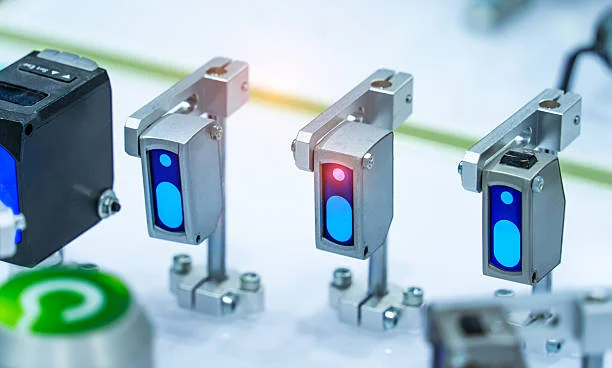
In modern industrial manufacturing and industrial automation, industrial sensors are devices that form the foundation of monitoring and control systems, enabling factories and process plants to operate with precision, safety and efficiency. This article surveys different types of industrial sensor technologies, explaining how sensors work, what they detect, how to select the right sensor for a control system, and how sensor solutions support predictive maintenance, quality control and industrial IoT applications. The following sections address common types, functional principles, selection criteria and integration approaches so engineers and maintenance professionals can match sensor types to real-world process control challenges.
For more in-depth information you should view from Industrial Sensor Supplier – itrustbot
What are the common types of industrial sensors used in automation and industrial sensor applications?
View Industrial Sensor Supplier – itrustbot details to get into the details
Industrial automation relies on a broad portfolio of sensor types to measure physical properties and provide inputs to a control system; among the common types found in industrial settings are temperature sensor families such as thermocouple and RTD devices, pressure sensors and transducers for hydraulic, pneumatic and process lines, proximity sensors and photoelectric or ultrasonic motion sensors for object detection, and level sensors and flow sensors for liquids and gases.
In addition, safety systems incorporate specialized sensors are used for machine and personnel protection, including light curtains, safety interlocks and force sensors, while vibration sensors, acoustic sensors and current monitors serve condition monitoring and predictive maintenance roles. Industrial sensors are devices designed for rugged environments and are selected based on the application’s requirements—accuracy, range, response time and environmental rating—so that the right type of industrial sensor can deliver reliable measurements for manufacturing, HVAC systems, and critical process control applications.
Which sensor types are most common in manufacturing (temperature, pressure, proximity)?
Among different types of industrial sensors, temperature sensors such as thermocouple probes and RTDs are ubiquitous in industrial manufacturing because they detect thermal conditions that directly affect product quality and process efficiency; pressure sensors are equally pervasive where steam, compressed air, hydraulic and pneumatic systems require precise pressure monitoring and control, often implemented as pressure transducers providing an electrical signal to a PLC or DCS.
Proximity sensors, including inductive, capacitive and magnetic variants, are common on production lines to detect the presence or absence of components, to trigger motion sensors for robotic pick-and-place operations, and to interlock machines for safety. These sensor types form the backbone of many control system architectures: temperature sensor feedback stabilizes thermal setpoints, pressure sensors regulate flow and force in hydraulic circuits, and proximity sensors ensure parts are correctly positioned for automated assembly, illustrating how sensors help maintain throughput and quality control across manufacturing operations.
How do flow sensors and level sensors fit into process control and industrial automation?
Flow sensors and level sensors are central to process control strategies because they provide continuous real-time data about material movement and storage that controllers use to maintain setpoints and ensure safety; flow sensors measure volumetric or mass flow of liquids and gases, enabling control of feed rates, chemical dosing and energy consumption, while level sensors monitor tank and silo contents to prevent overflow, maintain inventory and support batch sequencing.
In industrial automation architectures, flow sensors and level sensors often interface with PLCs and supervisory systems to implement closed-loop control, alarm generation and batching operations, and they are integral to industrial IoT sensors deployments where real-time monitoring and analytics drive efficiency improvements and predictive maintenance. When selecting these sensors, engineers must consider the medium being measured, the required accuracy and the need for hygienic or explosion-proof construction, since sensors are used in diverse environments from food processing to petrochemical plants.
What safety systems sensors are used for machine and personnel protection?
Safety systems rely on sensors that are certified and designed to reduce risk to personnel and equipment, including safety light curtains and area scanners that detect intrusion into hazardous zones, safety-rated proximity sensors and interlock switches that prevent unsafe machine operation, and emergency stop systems that sense manual activation. Force sensors and torque sensors may be integrated into collaborative robot cells to sense unexpected contact and trigger safe braking, while pressure-sensitive mats and laser scanners provide presence detection in guarded areas.
These sensors monitor conditions in real-time and interface with safety PLCs to enforce stop, slow or safe-state operations; because industrial sensors are devices that contribute to life safety, selection emphasizes compliance with standards, redundancy, diagnostic coverage and environmental durability so safety systems perform reliably in industrial settings.
How do sensors work in industrial automation and what do different types of industrial sensors detect?
Understanding how sensors work is essential to choosing the appropriate sensor type for any automation task: broadly, sensors sense physical properties and convert them into an electrical signal that a control system can interpret, whether that signal is analog, digital or frequency-based. Temperature sensors exploit thermoelectric effects or resistance changes to detect thermal energy, pressure transducers convert mechanical force into a proportional voltage or current, and flow sensors may use differential pressure, turbine, magnetic or ultrasonic techniques to detect movement of a fluid.
Proximity and photoelectric sensors detect objects and motion through changes in electromagnetic fields, capacitance, reflected light or ultrasonic echo, while level sensors may use float mechanisms, capacitive sensing, radar or ultrasonic measurement to monitor fluid height. Across these methods, the core function is the same: sensors detect a physical phenomenon and condition it into a reliable electrical output suitable for processing by PLCs, DCS or industrial IoT gateways, thereby enabling automated decision-making and monitoring and control strategies in manufacturing and process industries.
How do temperature sensors, pressure sensors and transducers sense physical properties?
Temperature sensors detect thermal energy by exploiting material responses to heat: thermocouple sensors generate a voltage from the thermoelectric effect between two dissimilar metals, while resistance temperature detectors (RTDs) change electrical resistance in a predictable way as temperature varies, and thermistors offer high sensitivity in specific ranges.
Pressure sensors and transducers sense mechanical stress caused by fluid or gas pressure and convert that stress into an electrical signal via strain gauges, piezoelectric elements or capacitive diaphragms; the transducer serves as the conversion element that produces an electrical output, often standardized as 4-20 mA or 0-10 V analog signals for direct integration with a control system.
These sensors are calibrated to ensure the electrical signal faithfully represents the physical property over the specified range, enabling closed-loop control, alarm thresholds and data logging for quality control and process optimization in industrial manufacturing.
How do proximity sensors and photoelectric sensors detect objects and motion?
Proximity sensors and photoelectric sensors detect object presence and motion by leveraging electromagnetic interactions and optical reflections: inductive proximity sensors generate an oscillating electromagnetic field and sense changes when a metallic object enters that field, while capacitive proximity sensors detect changes in capacitance caused by nearby conductive or dielectric materials, enabling detection of non-metallic parts.
Photoelectric sensors project a light beam and detect reflections or beam interruptions to sense objects at a distance, and retro-reflective or diffuse modes offer flexibility for varying target characteristics. Ultrasonic sensors emit high-frequency sound and measure the time-of-flight of echoes to determine distance and motion for both solid objects and fluid levels, making them well suited for harsh environments where dust or light conditions limit optical methods. Motion sensors thus provide reliable presence detection, counting and position feedback necessary for automation tasks and machine interlocks in industrial settings.
How do flow sensors and level sensors detect and monitor fluids in real-time?
Flow sensors and level sensors use a mix of mechanical, electromagnetic and acoustic principles to detect and monitor fluids in real-time: differential pressure flowmeters measure pressure drop across an orifice or venturi and infer flow rate, turbine meters count rotations proportional to volumetric flow, electromagnetic flowmeters measure induced voltage proportional to fluid velocity in conductive liquids, and ultrasonic flowmeters calculate transit time differences of acoustic pulses to determine flow without direct contact.
Level sensors include float switches for simple discrete detection, hydrostatic pressure sensors that derive level from fluid head pressure, capacitance probes sensitive to dielectric changes across fluid interfaces, and radar sensors that use microwave reflections to measure distance to a surface. These sensors provide continuous or discrete data streams that feed into the control system for inventory management, pump sequencing and leak detection, supporting real-time monitoring and automated responses to changing process conditions.
Which type of industrial sensor is right for my control system and industrial manufacturing process?
Picking the right sensor is mostly about taking the process control needs and matching them to what the sensor can really do, like mapping capabilities to requirements. In practice engineers should think about accuracy, measurement band, repeatability, response speed and environmental endurance, then pair the right sensor type to hydraulic, pneumatic, thermal, or chemical systems. They also need to check if the sensors have to deliver analog outputs for older PLC connections, or instead use digital communication for modern industrial IoT devices. A good sensor choice balances cost with outcome , because high precision transducers and thermocouples, with extended measurement ranges, are required when the process control has to stay tight.
For basic presence detection, simpler proximity switches are often enough. Also sensors are not just “plug and measure” parts, they are devices that must be integrated mechanically and electrically into what already exists, including mounting choices , suitable process connections, and signal conditioning. So the final result is that the chosen sensors deliver dependable data for closed loop control and quality control work in industrial manufacturing.
How to match sensor types to process control needs (accuracy, range, response time)?
Matching the kind of sensor to what the process control actually needs starts with writing down the control objective and then adding tolerances, because accuracy decides if you go with a premium pressure sensor or a thermocouple, while range tells you which sensor model can handle the highest expected values without hitting saturation. Response time is what usually separates a fast-acting transducer from a slower mechanical level switch .
For feedback loops that have strict stability requirements you want sensors that show low hysteresis and a quick response, but when you are doing monitoring, predictive maintenance, or trend watching, you care more about repeatability and long term stability, so the sensor keeps observing changes in a consistent way. Also, the signal format, analog, digital, or frequency, has to match what the control system can accept , and the environmental ratings like IP protection, vibration resilience , and temperature limits need to be specified so the sensor survives real industrial conditions, where the sensors help keep uptime and safety steady during demanding processes.
What factors determine choosing the right sensor for HVAC, hydraulic or pneumatic systems?
In HVAC systems, how accurate the thermal and airflow readings are, plus how fast the sensors respond and whether they play well with building automation protocols , affects what you pick for temperature sensors, flow sensors and pressure sensors. Meanwhile, in hydraulic and pneumatic systems you really have to watch compatibility with the actual fluid, pressure ranges , contamination levels and also the response speed.
For hydraulic systems, you should choose pressure transducers with the right pressure rating, make sure overpressure protection is in place, and double check the hydraulic fittings. You might also include force sensors or load cells for actuators, because that helps with the working load picture. For pneumatic systems, pick pressure and flow sensors that are tuned for compressible fluids , and expect quick response behavior.
Then there are the environment bits, like temperature extremes, vibration, and the requirement for explosion-proof enclosures or hygienic designs, which can make one sensor type fit, while another won’t. These selection criteria, put together, help the sensors track system health and integrate into the control system so the whole setup stays efficient and safe.
Which sensors are best for predictive maintenance and monitoring in industrial automation?
Predictive maintenance depends on sensors that pick up early signals of equipment degradation and the usual candidates are vibration sensors, acoustic emission sensors, plus current and power monitoring units. You also often see temperature sensors aimed at bearing and motor hot spots, and then ultrasonic sensors for leaks or lubrication issues. In general these devices track distinctive patterns that show up before failure actually happens, so the whole point is early warning not after-the-fact reaction.
When vibration sensors are paired with temperature readings and electrical measurements inside a multisensor setup, fault identification gets better and the number of false positives decreases. Then condition monitoring platforms can ingest real time information, run analysis, and trigger maintenance steps before a catastrophic failure occurs. Industrial IoT sensors that output digital, time-stamped streams are especially useful because they support trend analysis, machine learning, and remote diagnostics too. Overall this helps uptime rise while lifecycle expenses fall across industrial manufacturing lines.
How to select sensors used in industrial automation: practical criteria and best practices?
Choosing sensors for industrial automation in practice tends to follow a steady but not always obvious routine: you start by defining what you are actually trying to measure, then you spell out both physical constraints and electrical requirements. After that, you look at several sensor types and compare them for precision, operating span, and how quickly they respond, while also checking that the mechanical fit and the ambient conditions, like heat or dust, will behave nicely.
You also need to match the sensor output format to what the control system expects, for example analog current loops versus digital fieldbus links, and you should think about calibration effort, plus ongoing upkeep and replacement cost before you commit. Good practice usually means standardizing sensor interfaces so inventory stays manageable, picking sensors with built in diagnostic indicators so uptime stays higher, and arranging the signal conditioning steps, amplification or filtering for instance, ahead of time.
Finally, you implement grounding and shielding properly, because that helps keep the measured signal clean in noisy industrial spaces. When these points are followed, engineers end up with sensors that provide steady, trustworthy data for controllers and monitoring platforms.
Choosing the right sensor output (analog, digital, frequency) for your control system and PLC really is dependent on what inputs the PLC actually provides, and also how detailed the measurement has to be. In practice, analog outputs like 4-20 mA or 0-10 V are often picked for continuous readings, because they give steady resolution and they keep working well even with some electrical noise, especially over longer cable runs . Digital outputs, like discrete switching signals, are usually reserved for binary decisions, where you only need true/false information. Then there’s frequency, which can be a good fit for flowmeters or speed sensors, because pulse trains make it easier to count events accurately.
Also, many modern systems do not stop at basic hardwired I/O. Fieldbus options, Modbus, IO-Link and similar networked links let sensors send near real-time values plus health or diagnostic details, and sometimes configuration data. So when you connect sensors to a PLC, check that the PLC and its input modules match the sensor signal type, if they do not, use the right transducers or interface hardware so the signal becomes a clean, usable input for automation, monitoring and control.
How to evaluate environmental ratings, durability, and safety for industrial sensors used on the plant floor?
First you look at environmental ratings, meaning you check IP and NEMA numbers for dust, water, and splash resistance . Then also verify ATEX or IECEx certification when explosive atmospheres can appear, plus you confirm shock and vibration tolerance for what happens on the plant floor . Beyond that you should review material compatibility, chemical resistance and the operating temperature window , because those details influence how the sensor behaves over time.
For durability, you evaluate MTBF and expected maintenance intervals, and you also judge practical serviceability. Like, how quickly a technician can clean the sensor or recalibrate it, and whether the installation makes swap outs a painful task. If safety related sensors are involved, then you confirm functional safety compliance and ensure the device integrates with the safety PLC. You also want redundancy and built in diagnostics where it makes sense, so that failures are detected instead of quietly drifting. Choosing robust sensors reduces downtime and keeps industrial sensing dependable, for control loops as well as safety applications.
How to integrate sensors into real time data and monitoring systems for manufacturing?
Getting sensors integrated into real time data systems means, on the practical side, making sure the sensors output what is needed plus that the communication rules match. In many setups you also have to set up signal conditioning, and do the analog-to-digital conversion where it makes sense, then physically link the sensors to PLCs, SCADA systems, or an industrial IoT platform that collects and displays live measurements.
After that, people usually rely on gateways, edge controllers, and a set of standardized protocols like Modbus, ProfiNet, EtherNet/IP or IO-Link so the raw sensor feed can reach higher level analytics and even predictive maintenance tools. You also implement time synchronization and data validation, so historical trending stays reliable and quality control does not drift. With proper integration the sensors can support automated control loops, alarm systems and maintenance workflows, letting manufacturing use sensor-driven guidance to raise efficiency, safety, and uptime.
What are the sensor output types and communication options for industrial sensors?
Industrial sensors give a bunch of output types and communication options, that match up with different control architectures. For instance, analog outputs like 4-20 mA and 0-10 V are still very common because they are simple and they play well with older PLC setups. At the same time digital discrete outputs, plus frequency or pulse outputs, get used for counting, and for speed related tasks as well.
Lately, more sensors are coming with connected, networked communications, where industrial IoT sensors using IO-Link, Modbus RTU or TCP, Profinet, EtherCAT, or other fieldbus protocols let you configure the unit, review diagnostics and push real-time information straight to control and analytics systems. In practice, the specific output format and the communication method will influence latency and bandwidth, and also whether remote calibration and diagnostics are possible, so engineers should align the sensor communication capabilities with what their monitoring and control setup really needs.
What analog and digital sensor output formats are commonly used in industrial automation?
Common analog formats include 4-20 mA current loops, often valued for noise resistance and the ease with wiring, and 0-10 V voltage outputs for short runs plus multi channel systems. Digital formats run from plain open collector outputs or relay switching, to serial protocols like RS-485, which support Modbus, and then to ethernet fieldbus types that allow fast, time predictable data exchange.
Frequency outputs, coming from flow sensors or tachometers, offer accurate counting abilities. Choosing analog versus digital output is really tied to the amount of information you need, the cable reach, what PLC input types already exist, and whether you want enhanced capabilities such as embedded diagnostics. Those factors shape how sensors support sturdier automation systems and monitoring approaches.
How do modern sensors provide real-time data and networked communication (IO-Link, Modbus, fieldbus)?
Modern industrial sensors, integrate onboard electronics and standardized communication stacks , to deliver real time data , parameterization , and diagnostics across networks like IO-Link Modbus ProfiNet and EtherNet/IP. This setup enables centralized monitoring, remote configuration and generally improved asset stewardship. IO-Link is particularly useful, it supports point to point digital exchange with field devices, so process readings and device health cues are visible to PLCs and asset managers.
Meanwhile Modbus and fieldbus protocols support multi drop arrangements, which makes it easier to plug into SCADA dashboards and historian archives. In practice these capabilities make the sensor act like a smart node inside the industrial IoT landscape, passing live data streams to predictive maintenance methods , process optimization routines , and remote troubleshooting workflows, which help keep continuous operations in industrial manufacturing.
How should you manage signal conditioning calibration and transducer interfaces when building control systems?
Handling signal conditioning and transducer links involves amplification, filtering, electrical isolation and conversion so the sensor outputs line up with what the control system expects. A lot of sensors already bring in some conditioning, yet for long cables, noisy zones, or very specific measurement scenarios external units can be required. Regular calibration against traceable references helps keep measurement accuracy steady, and it also ensures the transducers still output electrical signals that are meaningful.
In addition, diagnostic checks, plus a clear calibration timetable that is documented, backs compliance and supports ongoing quality control. When these steps are put in place correctly, sensors can notice process variables reliably, and the control system gets data that is accurate, usable and actionable, for keeping industrial operations safe and running efficiently.
How do specialized industrial sensors support process control and predictive maintenance?
Specialized sensors extend the capabilities of standard measurement devices by enabling early detection of faults, enhanced process optimization and integrated multisensor analytics: vibration sensors detect bearing wear and imbalance, acoustic sensors identify leaks or cavitation, and thermal sensors locate hotspots indicative of electrical or mechanical issues.
By combining data from vibration sensors, temperature sensors and current monitors into multisensor frameworks, engineers can create richer models of equipment health and process performance that support more accurate predictive maintenance and reduce unplanned downtime. These sensor solutions, when integrated with industrial IoT analytics and control systems, help manufacturing facilities improve efficiency, safety and uptime while delivering measurable returns through reduced maintenance costs and improved product quality.
How do vibration and acoustic sensors detect early equipment faults for predictive maintenance?
Vibration sensors, usually accelerometers or velocity transducers, detect moving dynamics in rotating equipment and turn mechanical motion into electrical outputs, that show frequency pieces linked to imbalance, misalignment, bearing defects , and looseness. When these signals are inspected in both time and frequency perspectives, they can flag early stage faults before catastrophic failure happens. Acoustic sensors, along with ultrasonic detectors , then work as a complement , they pick up airborne or structure transmitted sounds from leaks, electrical discharge, or cavitation.
Often this gives earlier warning where vibration readings are less effective. In practical terms, all these sensors watch machine health in real time and send the data into predictive maintenance platforms, that stitch together several data feeds to rank interventions, set up repair timing, and improve the spare parts stock levels for industrial manufacturing operations.
Multisensor systems take temperature pressure flow, and a few other signals and they mash them together to get this wide picture of what the process is doing right now. Instead of letting one lonely measurement steer the whole controller, the system fuses these values so the control logic can act with more context, sometimes using model predictive control, adaptive setpoints, and feedforward compensation.
In practice, a controller might align a flow sensor reading with pressure sensor behavior, while also bringing in temperature context so it can handle coupled effects that would otherwise stay hidden. For instance in a heat exchanger, or during chemical dosing, or when checking batch quality, combining those measurements helps because the system can cross-check what it sees against an expected process model, and it can notice when a sensor reading is off in a way that still fits the overall physics.
When done well, this fusion also makes the process more steady, it reduces false alarms and supports predictive maintenance that is more granular. By correlating anomalies across different physical properties, the system can distinguish real deterioration from noise. That means the overall process control becomes more accurate and the plant can keep improving continuously over time.
Sensors in industrial manufacturing help a lot, in a real practical way, by letting machines keep process variables steady. They use tight feedback loops for faster adjustments so less material gets wasted, and energy usage drops, since the system can correct deviations right away. This also feeds real-time optimization, so output stays high without pushing equipment beyond what it should handle. On top of that, sensors make predictive maintenance possible, because they track changes in vibration, temperature, pressure, and other signals before a failure happens, so unplanned downtime is minimized.
On the safety side, sensors provide dependable signals to safety systems, interlocks, and monitoring dashboards. When those inputs are trustworthy they protect workers and equipment by triggering safe actions when conditions get risky. Sensors also support quality control, making sure key product parameters stay within specification instead of drifting over time.
If you deploy sensors as an integrated sensing suite with solid communication, careful calibration routines and analytics, they can watch both asset condition and process performance continuously. The result is meaningful real-time data you can act on, which strengthens day to day operations and supports long term reliability in industrial automation and manufacturing settings.
Become the expert: Browse our ultimate resource hub at 2A Magazine.