Foundation Settlement vs. Structural Failure: What’s the Difference?
Not every crack in your wall means your house is falling apart.
But… not every crack is harmless either.
That’s where people get stuck. You notice something small — maybe a door that suddenly sticks, or a hairline crack creeping along the drywall — and your brain goes straight to worst-case scenario. Is my foundation failing? Is this going to cost a fortune for foundation repair Virginia Beach VA? Should I panic?
Take a breath. Seriously.
Because there’s a big difference between foundation settlement and structural failure — and understanding that difference can save you a lot of stress (and maybe a lot of money too).
So, What Is Foundation Settlement?
Foundation settlement is… normal. To a degree.
All homes settle over time. Soil shifts. Moisture levels change. The ground compresses slightly under the weight of your house. It’s part of the natural aging process of a structure.
In places like Virginia Beach, where you’ve got sandy soil and fluctuating moisture levels, settlement happens more than people expect.
You might notice:
- Small cracks in drywall
- Doors or windows that stick occasionally
- Slightly uneven floors
- Gaps around window frames
Annoying? Yes. Dangerous? Usually not.
Most settlement is minor and stabilizes over time. It’s your home adjusting to its environment.
When Settlement Becomes a Problem?
Here’s where things get a little more serious.
Not all settlement is equal.
If the movement is uneven — meaning one part of the house is sinking more than another — that’s called differential settlement. And that’s when you start seeing more noticeable signs:
- Cracks that widen over time
- Stair-step cracks in brickwork
- Sloping floors that feel… off
- Doors that won’t close at all
At this stage, it’s not something to ignore.
This is usually when homeowners start searching for foundation repair Virginia Beach VA because they realize something isn’t just “cosmetic” anymore.
Still, even here, we’re not necessarily talking about structural failure yet.
What Is Structural Failure?
Structural failure is the point where the integrity of the home is compromised.
Not just cosmetic damage. Not just minor shifting.
We’re talking about actual weakening of the structure’s ability to support itself.
This can include:
- Major foundation cracks (wide, deep, or horizontal)
- Bowing or leaning walls
- Significant floor sagging
- Separation between walls, ceilings, or floors
- Support beams or joists showing damage or rot
At this stage, things have progressed beyond normal settling.
Something has failed — or is in the process of failing — and it needs immediate attention.
This isn’t the “wait and see” phase.
Why This Happens in Virginia Beach Homes?
Virginia Beach homes deal with a unique mix of conditions:
- Sandy, loose soil that shifts easily
- High humidity affecting moisture levels in the ground
- Occasional heavy rains and storms
- Crawl spaces that trap moisture if not properly sealed
All of these factors can contribute to both settlement and structural issues.
Here’s the connection most people miss:
Moisture is often the root cause.
Too much moisture can weaken soil, causing it to shift or compress. It can also affect wooden supports in crawl spaces, leading to rot and weakening over time.
That’s why people often end up searching for crawl space specialists near me — because the problem isn’t just the foundation itself, it’s what’s happening underneath it.
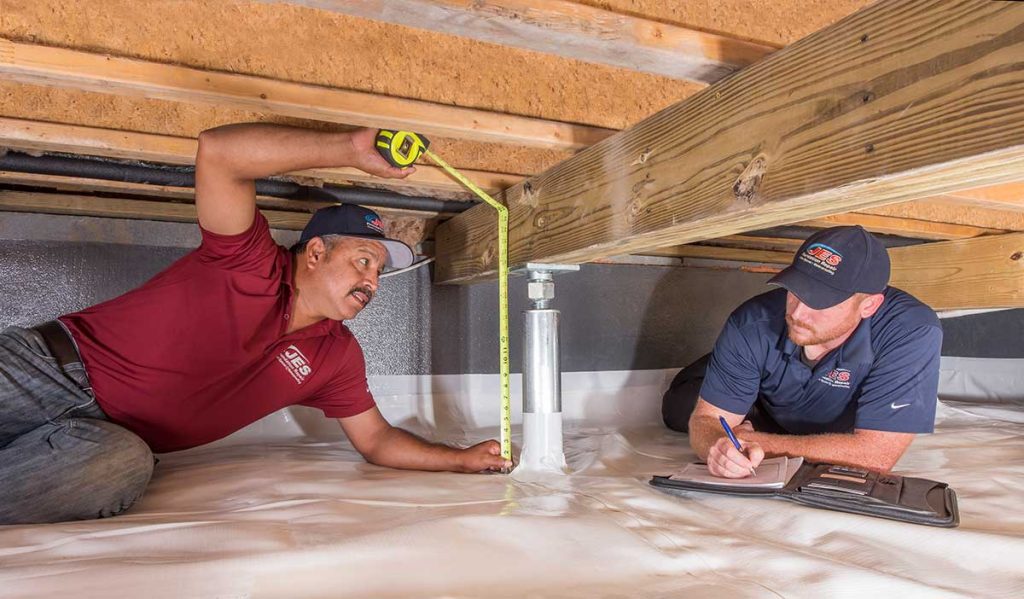
The Role of Crawl Spaces in Structural Health
If your home has a crawl space, it plays a bigger role than you might think.
A damp, unsealed crawl space can lead to:
- Wood rot in support beams
- Mold growth
- Increased humidity affecting structural materials
- Weakened subflooring
Over time, that can contribute to sagging floors and even structural instability.
So sometimes what looks like “foundation failure” is actually a crawl space issue that’s been ignored for too long.
That’s why proper inspection matters. You need to understand the source before jumping to conclusions.
The Key Difference
Here’s the simplest way to think about it:
- Foundation settlement = movement that is often slow, minor, and sometimes expected
- Structural failure = damage that affects the safety and stability of the home
One is often manageable.
The other requires immediate action.
And yeah… there’s a gray area in between. That’s where professionals come in.
When You Should Actually Be Concerned?
If you’re noticing any of the following, it’s time to stop guessing and get it checked:
- Cracks wider than 1/4 inch
- Horizontal cracks in foundation walls
- Rapidly worsening symptoms
- Floors that feel noticeably sloped
- Gaps forming between walls and ceilings
At that point, bringing in an expert for foundation repair Virginia Beach VA isn’t overreacting — it’s being smart.
FAQs
1. Is foundation settlement always a bad thing?
No. Minor settlement is normal in most homes. The concern comes when the movement is uneven or continues over time.
2. How can I tell if it’s structural failure or just settling?
It can be hard to tell without a professional inspection. Generally, small cracks and minor sticking doors point to settlement, while large cracks, bowing walls, and sagging floors suggest structural issues.
3. Can crawl space problems cause structural damage?
Yes, absolutely. Moisture in crawl spaces can weaken wooden supports and contribute to sagging floors or long-term structural problems.
4. When should I call a professional?
If you notice worsening cracks, uneven floors, or anything that seems to be getting worse over time, it’s best to have it evaluated sooner rather than later.
5. Is foundation repair expensive?
It depends on the severity of the issue. Minor repairs are far less costly than major structural fixes — which is why early detection matters.
6. Should I search for crawl space specialists or foundation experts?
Honestly, both can be relevant. Many issues overlap, especially in homes with crawl spaces. Searching for crawl space specialists near me is a good starting point if moisture is involved.