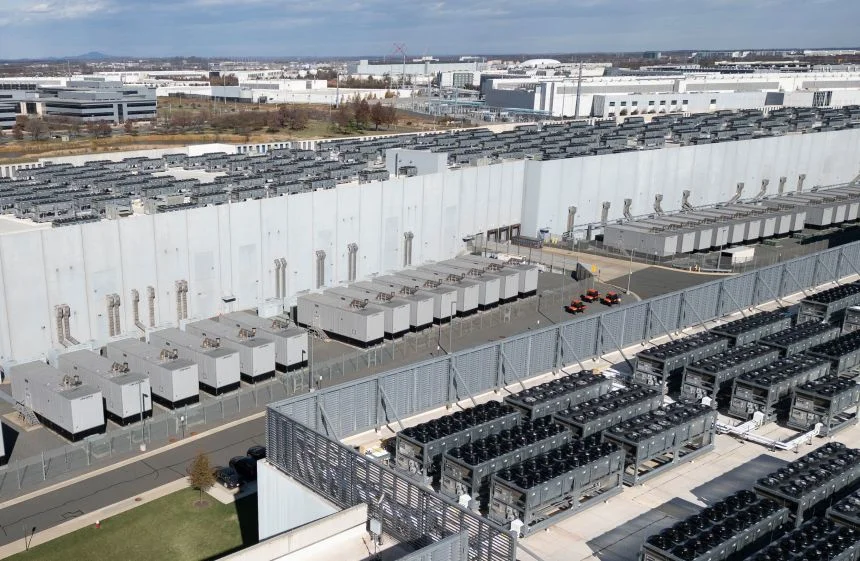
Most conversations about connectivity focus on the visible side of technology, faster networks, AI tools, cloud platforms, and smart devices that seem to integrate into daily life almost instantly.
What gets less attention is the infrastructure supporting all of it.
Every connected system depends on physical networks, power distribution, equipment deployment, cooling capacity, transportation logistics, and long-term planning that most users never see. As digital demand keeps growing, Technology Infrastructure is becoming less about simply supporting systems and more about building environments that can scale without interruption.
The challenge is that connectivity expectations continue increasing faster than infrastructure can adapt casually.
Connectivity Depends on Physical Coordination
There’s a common assumption that digital infrastructure is mostly software-driven. In reality, many of the biggest challenges are physical.
Large-scale facilities rely on coordinated equipment delivery, installation sequencing, structural planning, and supply chain management before systems ever go live. Delays involving a single infrastructure component can affect deployment schedules across multiple teams.
That’s especially true for projects involving critical systems like generators, switchgear, cooling assemblies, and prefabricated power infrastructure. These components are often oversized, highly specialized, and tied to strict installation windows.
In large data center supply environments, planning becomes just as important as the technology itself because so many systems depend on each other during deployment.
The more connected facilities become, the less flexibility there is for reactive decision-making during construction.
Modern Infrastructure Has to Be Designed for Constant Growth
A few years ago, many facilities were built around expected usage patterns that stayed relatively stable over time. Today, infrastructure planning has to account for rapid expansion almost from the beginning.
Cloud adoption, AI processing, streaming demand, and edge computing have changed how quickly systems scale. Facilities that seemed oversized during planning stages can reach capacity much faster than expected once operations begin.
That pressure affects more than server deployment.
Power systems need additional redundancy. Cooling requirements increase as equipment density rises. Network pathways have to support larger workloads without creating bottlenecks later. Even the physical layout of a facility now has to account for future expansion possibilities much earlier in the process.
Designing for current demand alone is no longer enough.
Infrastructure Planning Is Becoming More Integrated
One noticeable shift across the industry is how early infrastructure coordination now begins.
Supply chain teams, logistics specialists, engineers, procurement groups, and construction managers are working together earlier in project development because timelines have become too compressed to separate those functions later.
This isn’t just about efficiency. It’s about reducing risk.
If transportation schedules are delayed, installation sequences may need to change. If manufacturing lead times shift unexpectedly, construction phases can become misaligned. In high-density environments, even site access planning can affect how quickly infrastructure is deployed once equipment arrives.
Companies operating in infrastructure coordination spaces, including groups like BluePrint Supply Chain, are often involved long before deployment begins because the movement of infrastructure now affects the broader project strategy itself.
That level of coordination has become part of infrastructure design, not just execution.
The Future Is Pushing Infrastructure Beyond Traditional Models
The demand for connected systems is continuing to increase, but infrastructure models are evolving at the same time.
AI workloads are changing power consumption patterns. Edge computing is shifting infrastructure closer to users. Sustainability goals are influencing cooling strategies and energy planning. Facilities are also being asked to scale faster while maintaining reliability under heavier workloads.
These pressures are forcing infrastructure teams to think differently about flexibility.
Instead of designing around fixed conditions, many projects are now built with adaptability in mind. Expansion pathways, modular systems, and phased deployment strategies are becoming more common because long-term technology requirements are harder to predict than they used to be.
The connected future is creating infrastructure demands that are both larger and less predictable at the same time.
Why Infrastructure Decisions Matter More Than Ever
When technology works well, the infrastructure behind it tends to disappear into the background. Users expect fast connections, uninterrupted access, and systems that respond instantly.
What they rarely see is how much planning is required to make that experience possible.
Technology infrastructure now supports nearly every part of modern business and communication, but its success still depends on physical coordination, supply chain visibility, engineering precision, and long-term scalability.
As connectivity continues expanding across industries, infrastructure decisions made today will shape how effectively systems perform years from now.
The future may feel digital, but it still depends heavily on how well the physical foundation is designed.