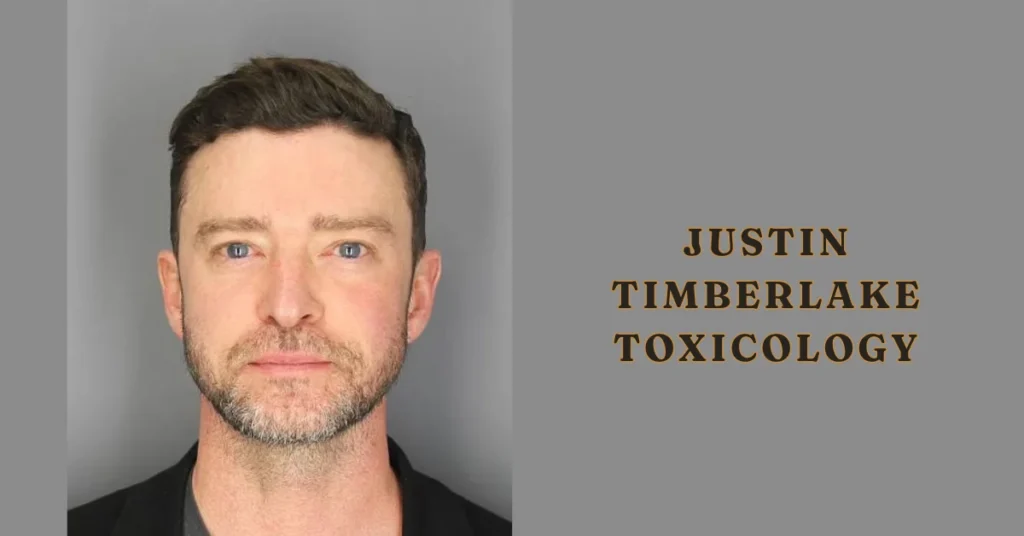
Picture this. It’s just past midnight on June 18, 2024. A police officer in Sag Harbor, New York, notices a car drifting between lanes and running a stop sign. The driver? One of the most recognizable names in pop music. Justin Timberlake.
What followed became one of 2024’s most viral celebrity stories — and the phrase Justin Timberlake toxicology quickly flooded search engines as fans, critics, and legal commentators scrambled to understand what actually happened that night. Two years on, thanks to released bodycam footage and court records, we finally have a much clearer picture.
Let’s break it all down.
What Happened the Night of the Arrest?
When officers pulled Timberlake over in the early hours of June 18, he reportedly “performed poorly on all standardized field sobriety tests,” according to the arresting officer’s documents. Police noted he had “bloodshot and glossy” eyes, a “strong odor of an alcoholic beverage” on his breath, “slowed speech,” and appeared “unsteady afoot.”
Timberlake was detained in the Hamptons — a wealthy enclave on Long Island — after officers suspected he was driving while intoxicated.
It’s worth remembering the context here. Timberlake was in the middle of his Forget Tomorrow World Tour at the time. He’d been out with friends and, by his own account, was simply trying to follow them back to his house.
When authorities pulled his car over, he told them he was following his friends and was driving a rental car for a few days. When pressed for clarification, he struggled to explain himself clearly.
The Toxicology Question: What Did the Tests Actually Show?
This is where a lot of online confusion has swirled — and honestly, much of it has been manufactured.
No official toxicology report was ever released publicly confirming or suggesting Timberlake was under the influence of drugs. The only confirmed factor in the case was alcohol, based on the arresting officer’s observations. Timberlake refused the breathalyzer, so no blood alcohol concentration reading was officially recorded on the scene. There was no mention of drugs in the police report or court filings.
So what about all those articles claiming to reveal shocking “toxicology findings”? Most are speculative at best, fabricated at worst. The confirmed facts are simpler — and in some ways, more interesting — than the rumor mill suggests.
His attorney, Edward Burke Jr., told USA Today in July 2024 that Timberlake “was not actually intoxicated when pulled over,” adding that he had consumed “one drink in two hours.” Burke stated clearly: “The most important fact to know about this case is that Justin was not intoxicated and should not have been arrested for DWI,” and claimed police “made a number of very significant errors.”
The Plea Deal and Legal Outcome
Despite his legal team’s pushback, the case didn’t go to trial.
Timberlake pleaded guilty to a lesser charge of driving while ability impaired (DWAI) — a noncriminal traffic violation — in September 2024. Unlike a full DWI, which requires a blood alcohol level above the legal limit of 0.08%, DWAI typically applies when a driver shows impairment but tests below that threshold. He agreed to pay a fine and complete 25 to 40 hours of community service at a nonprofit of his choosing.
That’s a meaningful legal distinction. A DWAI is not a criminal conviction. But it’s also not nothing.
Legal commentators noted this outcome was fairly typical for a first-time offense in New York. The plea allowed Timberlake to avoid a criminal record while still facing consequences.
The Bodycam Footage: March 2026 Update
Fast forward to 2026, and the story took another unexpected turn.
Local police released body camera footage from the June 2024 arrest in March 2026, after Timberlake had previously taken legal action to prevent its public release. The nearly eight-hour video captured him telling officers, “Guys, I’m just following my friends back to my house.”
The footage shows Timberlake attempting to walk in a straight line during sobriety tests. “These are, like, hard tests,” he said, before adding, “Sorry, my heart is racing.”
At one point, his friend Estee Stanley and her husband Bryan Furst arrived at the scene — and one of them tried invoking the NSYNC connection to speak with Timberlake before he was taken in.
The footage went viral almost immediately. And honestly? Watching it, Timberlake comes across as anxious and confused — not belligerent. That human moment actually softened public opinion for some viewers, even as it reignited debates about celebrity privilege and the media’s handling of high-profile arrests.
Why Does This Story Keep Trending?
Three key reasons:
- Toxicology is a charged word. When people search “Justin Timberlake toxicology,” they expect dramatic drug revelations. The reality — alcohol impairment with no confirmed drug involvement — is less sensational. But the word itself drives clicks, and dozens of low-quality sites have exploited that gap.
- His image made it jarring. The arrest shocked many because it clashed with everything people thought they knew about him — his clean image, family life, and health-focused lifestyle. When someone who projects wellness and control is arrested for impaired driving, the cognitive dissonance is real.
- The bodycam release gave it new life. The 2024 DWI arrest footage from 2024 became viral in March 2026, nearly two full years after the incident — which is rare. Most celebrity legal stories fade within weeks.
What Toxicology Actually Measures — And Why It Matters Here
Since the term is central to this story, it’s worth a quick, clear explanation.
A toxicology report is a scientific analysis of a person’s blood, urine, or other bodily fluids to detect the presence of alcohol, drugs, medications, or other substances. In DWI cases, toxicology evidence is often the backbone of prosecution — or defense.
According to the National Highway Traffic Safety Administration (NHTSA), alcohol impairs reaction time, judgment, and coordination — even before a driver reaches the 0.08% legal BAC threshold. This is precisely why DWAI charges exist: impairment isn’t binary.
In Timberlake’s case, the absence of a breathalyzer result — because he declined the test — meant that toxicological evidence was limited. His decision to refuse testing is itself legally significant, as refusal typically results in automatic license suspension in New York.
The Broader Lesson Nobody Talks About
Here’s an observation that often gets lost in the tabloid noise: this case is a near-perfect illustration of how celebrity toxicology rumors work online.
A real arrest happens. Official documentation is limited. Speculation fills the gap. Low-credibility sites publish “reports” citing unnamed sources or outright fabrications. Those articles rank on Google. People read them and assume they’re factual.
As of 2026, the confirmed facts are still straightforward. Alcohol was involved. No drugs were confirmed. He pleaded to a lesser charge. Paid a fine. Did community service. The bodycam footage is now public.
That’s the story. Everything else is noise.
Conclusion
The Justin Timberlake toxicology saga is, at its core, a story about the gap between celebrity perception and reality — and about how the internet fills that gap with speculation when hard facts are scarce.
What’s confirmed: an alcohol-related DWAI plea, a fine, community service, and bodycam footage that’s been seen by millions. What’s not confirmed: any drug involvement, any dramatic toxicology revelations, or any of the more lurid rumors that have been recycled across gossip sites since mid-2024.
If you searched this topic looking for shocking revelations, you may feel slightly let down. But if you searched it looking for the truth — this is it. And sometimes the truth is less dramatic, more human, and ultimately more interesting than anything manufactured.
FAQs
Q1: Was Justin Timberlake found to have drugs in his system?
No. According to all confirmed court documents and police reports, there was no mention of drugs. The incident involved suspected alcohol impairment only.
Q2: Did Justin Timberlake take a breathalyzer test?
No. He declined the breathalyzer at the scene, which under New York law typically results in automatic license suspension.
Q3: What happened legally? Did he go to jail?
He pleaded guilty to DWAI — a lesser, noncriminal charge — in September 2024. He was fined and assigned 25 to 40 hours of community service. No jail time was served.
Q4: Why was the bodycam footage released in 2026?
Timberlake had taken legal action to prevent its release, but the Sag Harbor Police Department released it in March 2026 after the legal challenge was resolved.
Q5: What’s the difference between DWI and DWAI?
DWI (Driving While Intoxicated) requires a BAC of 0.08% or higher — a criminal charge. DWAI (Driving While Ability Impaired) applies when impairment exists below that threshold and is classified as a noncriminal traffic violation in New York.