Account-Based Marketing (ABM) has always focused on one simple idea, i.e., target the right accounts instead of just trying to attract everyone. For account based marketing agency who have longer sales cycles and high-value deals, this approach often works better than broad marketing campaigns.
However, buyer behavior is something that has changed over the years. Decision-makers now research products across multiple channels, compare competitors quickly, and interact with brands long before talking to a sales representative. This system creates a huge amount of data that marketers struggle to manage manually.
This is where AI starts changing the way ABM works.
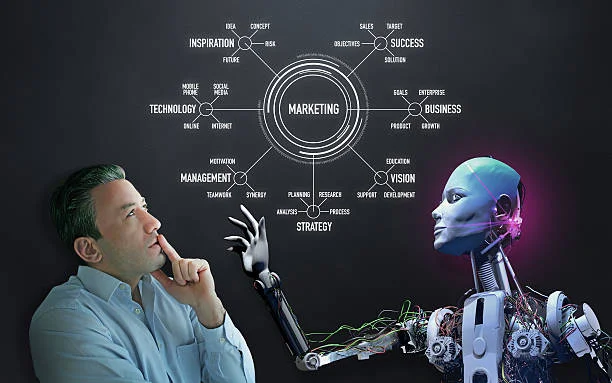
AI is not replacing account-based marketing. Instead, it is improving how marketers identify accounts, understand buyer behavior, personalize communication, and prioritize opportunities. At the same time, many businesses misunderstand what AI can realistically do inside an ABM strategy.
The real impact of AI is not about removing humans from the process, but it’s about helping teams make faster and smarter decisions.
Why Traditional ABM Has Limitations
Traditional ABM strategies often depend heavily on manual research and assumptions. Marketing teams usually create target account lists using firmographics such as company size, revenue, or industry. Even though this method still matters but it does not always reveal buying intent.
For example, two companies may fit the same ideal customer profile, but only one of them may actually be looking for a solution right now.
Another challenge in traditional ABM is personalization. Creating custom messaging for hundreds of accounts takes significant time and effort. Many teams use generalized messaging that feels less relevant to buyers.
Another limitation is that sales and marketing alignment can also become difficult as teams may disagree on which accounts deserve attention or where prospects currently stand in the buying journey.
As ABM campaigns grow bigger, these manual processes become harder to scale efficiently.
How AI Improves Account Identification
One of the biggest ways AI improves ABM is through smarter account targeting.
Instead of relying only on a static company idea, these AI tools can analyze behavioral signals across websites, search activity, content engagement, and third-party intent platforms. This helps marketers to identify which companies are actively researching related solutions.
For example, if several employees from the same organization repeatedly visit pricing pages, download industry reports, or search for specific software categories, AI systems can recognize those patterns and flag the account as high intent.
This allows teams to focus their energy on accounts that are more likely to convert instead of spending resources equally across every prospect.
Many companies working with an account-based marketing agency are now using AI-driven intent signals to improve targeting accuracy and reduce wasted outreach.
AI-Powered Personalization at Scale
Personalization has always been one of the strongest parts of ABM because buyers respond better when messaging feels relevant to their industry, pain points, and business goals. However, the problem is that deep personalization takes time.
AI helps by speeding up content customization without completely removing human input. It can analyze account data, customer behavior, and previous engagement patterns to suggest personalized email copy, ad messaging, content recommendations, and outreach timing.
For example, a SaaS company that is targeting healthcare businesses may use AI tools to automatically adjust messaging around compliance, security, and operational efficiency based on the prospect’s industry.
This does not mean marketers should blindly trust automated content generation. Human review still matters because messaging needs strategic thinking, emotional understanding, and brand consistency.
AI works best when it supports personalization rather than fully controlling it.
Predictive Analytics and Intent Data
One of the most practical uses of AI in ABM is predictive analytics.
Predictive models analyze large amounts of historical and behavioral data to estimate which accounts are more likely to move forward in the buying process. Instead of relying on guesswork, teams can prioritize accounts using measurable patterns.
For example, AI can evaluate factors such as:
- Website visits
- Email engagement
- Webinar attendance
- Content downloads
- Search behavior
- CRM activity
Based on these signals, marketers can rank accounts according to buying readiness.
This helps sales teams focus on warm opportunities rather than just spending time equally across cold prospects.
Companies that are offering B2B account-based marketing services are heavily relying on predictive scoring because it improves efficiency across both sales and marketing operations.
Better Sales and Marketing Alignment
Sales and marketing alignment has always been a major challenge in ABM. Marketing teams often focus on engagement metrics, while sales teams care about the pipeline and revenue. AI helps in bridging this gap by creating a shared data-driven view of account activity.
When both teams can see which accounts show strong buying signals, then conversations become more aligned. Sales representatives know when to reach out, while marketers understand which campaigns influence engagement.
AI can also automate account updates and alerts for example, sales teams may receive notifications when a target account suddenly increases research activity or revisits product pages multiple times. This improves timing and reduces missed opportunities.
At the same time, AI also makes reporting more transparent. Teams can better understand which channels contribute to pipeline growth instead of relying on assumptions.
Common Mistakes Companies Make With AI in ABM
Many businesses rush into AI adoption without solving foundational problems first. One common mistake that businesses often make is relying on poor-quality data. AI systems are only effective when the information they receive is effective. Inaccurate CRM records or incomplete customer data can lead to poor recommendations.
Another mistake is over-automation. Some brands automate every interaction and end up creating robotic experiences that feel impersonal for clients.
Sometimes businesses also expect instant results, but AI improves performance gradually through continuous learning and optimization. It is not a shortcut for a weak strategy or unclear messaging.
Another mistake is using multiple disconnected tools. When platforms fail to integrate properly, teams struggle to maintain consistent workflows and reporting.
Several account-based marketing service agencies now focus heavily on simplifying AI workflows because complexity often reduces campaign effectiveness instead of improving it.
The Future of AI-Driven ABM
The future of ABM will likely involve deeper integration between AI, customer data, and human decision-making.
Now, AI systems are becoming better at identifying subtle buying signals, predicting customer needs, and recommending next steps in real time. As technology improves, marketers will spend less time on repetitive tasks and more time on strategic planning.
We may also see stronger personalization across entire buying committees rather than individual leads. Since B2B decisions often involve multiple stakeholders, AI can help to tailor messaging for different job roles within the same account.
However, the companies that succeed will not necessarily be the ones using the most advanced AI tools.
The real advantage will come from businesses that combine technology with strong strategy, clear communication, and genuine customer understanding.
Even companies like DemandZEN recognize that technology alone cannot build meaningful B2B relationships. That’s why they implement AI with human decision making to offer a precise and impactful results.
FAQs
Q: How does AI help in account-based marketing?
A: AI helps marketers analyze buyer behavior, identify high-intent accounts, and personalize campaigns more efficiently using real-time data insights.
Q: Can AI fully automate ABM campaigns?
A: No, AI can automate repetitive tasks and improve targeting, but human strategy and relationship-building are still essential for successful ABM.
Q: What is the biggest benefit of AI in ABM?
A: One major benefit is better lead prioritization, which helps sales teams focus on accounts that are more likely to convert.
Q: Does AI improve personalization in B2B marketing?
A: Yes, AI helps create more relevant messaging by analyzing customer behavior, industry data, and engagement patterns at scale.
Q: Is AI useful for small B2B businesses using ABM?
A: Yes, even smaller businesses can use AI tools to improve targeting, reduce manual work, and make smarter marketing decisions.