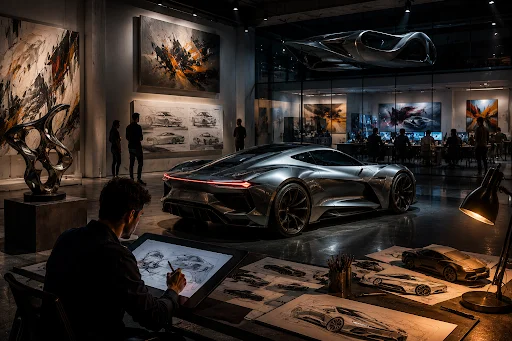
Automotive design has long existed at the intersection of engineering and aesthetics, but in recent years its cultural influence has expanded far beyond the automotive industry itself. Cars are no longer viewed simply as functional machines or luxury products. Increasingly, they are treated as expressions of contemporary design thinking — objects shaped by architecture, fashion, technology, and visual culture Modern industrial art.
This shift reflects broader changes in how people engage with products. In an era dominated by social media, digital branding, and image-driven identity, the appearance of objects often carries as much meaning as their functionality. Vehicles have become highly visible lifestyle artefacts, influencing and reflecting trends across multiple creative industries.
As a result, automotive design now occupies a unique position within modern industrial art: commercially produced, technologically complex, and culturally symbolic all at once.
Cars Have Become Rolling Design Statements
Historically, automotive styling was heavily constrained by mechanical limitations. Vehicle proportions, interiors, and materials were largely dictated by engineering requirements. While iconic designs certainly emerged, form often followed function in very literal ways.
Contemporary vehicle design operates differently.
Advances in manufacturing, electric platforms, software integration, and lightweight materials have given designers far greater freedom. Electric vehicles in particular have removed many of the packaging constraints associated with traditional combustion engines, allowing for cleaner silhouettes, minimalist interiors, and unconventional proportions.
This freedom has elevated automotive styling into something closer to conceptual product design. Vehicles are now designed not only for physical performance but also for visual identity, emotional response, and digital visibility and Modern industrial art.
Some modern interiors resemble contemporary architecture more than traditional car cabins. Open layouts, ambient lighting, floating displays, sustainable materials, and restrained surfaces borrow heavily from luxury residential and hospitality design trends.
At the same time, exterior styling increasingly reflects the principles of fashion and consumer technology. Sharp lighting signatures, sculptural bodywork, matte finishes, and minimalist detailing are often designed to appear instantly recognisable in photographs and video content.
In many ways, the modern vehicle functions as a moving piece of industrial sculpture.
Social Media Has Amplified Automotive Aesthetics
The rise of image-led platforms has accelerated the cultural importance of automotive design.
Cars are now constantly photographed, filmed, edited, and shared online. A vehicle’s visual impact matters not only in person but also through screens, where lighting, colour, shape, and detail become central to audience engagement.
This environment rewards strong design language. Manufacturers increasingly develop distinctive styling cues that remain recognisable even in short-form digital content. Lighting elements, wheel designs, grilles, and body proportions all contribute to a car’s visual identity across online platforms.
The influence extends beyond manufacturers themselves. Independent photographers, content creators, and automotive designers have built substantial audiences around the artistic presentation of vehicles. Automotive imagery now regularly appears alongside fashion, architecture, and contemporary art content rather than existing solely within enthusiast media.
This crossover has broadened the audience for automotive design considerably. Many people who would not traditionally identify as “car enthusiasts” still engage with vehicle aesthetics through visual culture.
The Influence of Fashion and Architecture
Automotive designers increasingly collaborate with disciplines outside engineering.
Luxury brands frequently reference fashion trends in colour palettes, textures, and interior materials. Matte finishes, monochromatic themes, sustainable fabrics, and minimalist detailing often mirror broader shifts in high-end consumer design.
Architecture also plays a growing role in shaping automotive aesthetics. Contemporary buildings prioritise clean geometry, lighting integration, and fluid spatial experiences — principles now visible in many vehicle interiors and exteriors.
Even dealership spaces and automotive showrooms increasingly resemble curated galleries rather than conventional retail environments. The presentation of vehicles has become part of the design narrative itself.
This artistic crossover reflects a larger truth about modern vehicles: consumers increasingly choose cars based not only on practicality or performance but on how they align with personal identity and lifestyle aesthetics.
For many drivers, subtle details matter. Wheel design, lighting accents, trim finishes, and carefully considered exterior presentation all contribute to how a vehicle is perceived. Brands such as Number 1 Plates reflect this broader interest in automotive presentation, where even small finishing touches are viewed as part of an overall visual identity rather than simple functional additions.
Electric Vehicles Have Changed Design Priorities
The transition towards electric mobility has also accelerated the artistic evolution of automotive design.
Without the need for large front grilles, exhaust systems, or bulky engine layouts, designers can rethink vehicle proportions entirely. Many EVs embrace cleaner surfaces, uninterrupted lines, and simplified interfaces that align closely with contemporary industrial design trends.
This shift has encouraged a more restrained visual language across the industry. Rather than aggressive styling and excessive ornamentation, many newer vehicles prioritise calmness, minimalism, and technological sophistication.
The influence of consumer electronics is particularly visible here. Some EV interiors feel intentionally closer to premium technology products than traditional cars. Touch interfaces, hidden controls, and software-focused ecosystems reinforce this perception.
These design choices are not accidental. Younger consumers increasingly associate simplicity and digital integration with modernity, making minimalist automotive design culturally influential beyond the automotive sector itself.
Cars Reflect Cultural Identity More Than Ever
Automotive design has become influential partly because vehicles now serve as highly visible markers of identity.
People increasingly use cars to communicate taste, values, and lifestyle preferences. A vehicle’s design can signal environmental awareness, technological interest, nostalgia, luxury, or creative individuality depending on its styling and presentation.
This symbolic role places automotive design alongside fashion, furniture, and architecture as a meaningful form of cultural expression.
Unlike static objects, however, cars move through public space daily. They interact with urban environments, social media culture, and personal branding simultaneously. Few forms of industrial design occupy such a visible role in modern life.
As the automotive industry continues evolving through electrification, connectivity, and digital culture, design will likely become even more influential. Performance and engineering remain important, but increasingly it is visual language, emotional resonance, and cultural relevance that define which vehicles leave lasting impressions.
In that sense, modern automotive design is no longer simply about transportation. It has become one of the clearest reflections of how contemporary society blends technology, creativity, and identity into the objects people choose to live with every day.
If you found this helpful, our guide on the next steps is a must-read at 2A Magazine.