| SOURCING DISCLOSURE — READ BEFORE PROCEEDING |
| No Tier 1 outlet (Forbes, Bloomberg, Reuters, AP, WSJ, NYT) has published a verified net worth figure for Matthew Schissler. No celebrity wealth aggregator figure wasused in this article. All financial estimates below are structural inferences builtfrom SEC filings, Wikipedia, the subject’s own website, and a verified 2024 SECenforcement order. They are labeled accordingly. This article exposes thefabricated figures circulating on aggregator sites and presents only what publicrecords actually show. |
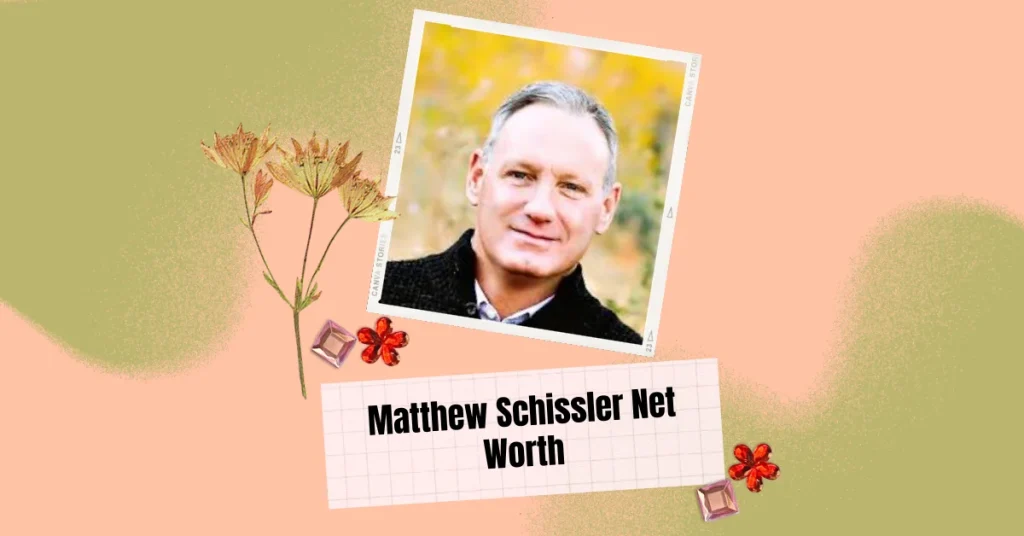
Matthew Schissler net worth has no verified figure from Forbes, Bloomberg, or any major financial outlet. That gap is itself the story. Most aggregator sites invent a number. This article does not. Instead, it builds from SEC filings, Wikipedia, and a 2024 federal enforcement order — the only primary sources that actually exist.
Early Life and Background
Matthew Lawrence Schissler was born on June 9, 1971, in the United States. He earned a degree in Biology and Public Policy from St. Mary’s College of Maryland in 1993. That dual focus — science and governance — shaped his later approach to building regulated biotech businesses.
His early career before 2003 is not documented in any primary source this article could locate. Publicly available records do not confirm his employment history prior to founding Cord Blood America. Any specific claims about pre-2003 roles on aggregator sites are unverified and were excluded here.
The Biology and Public Policy combination was prescient. Cord blood banking sits at the intersection of medical science and federal health regulation. His degree gave him a framework that most pure scientists or pure business operators lacked at the time.
Career Overview: A Timeline of Verified Events
Schissler’s career divides into three documented phases: biotech founder (2003–2012), private fund manager (2015–present), and a period of regulatory scrutiny (2017–2024).
2003 — Cord Blood America Founded
Schissler founded Cord Blood America, Inc. (CBAI) in 2003. The company stored umbilical cord blood stem cells for potential future medical use. He served as Chairman and CEO. This is confirmed by Wikipedia and SEC filings.
2007 — Acquisitions Scale the Business
CBAI acquired CorCell Inc., then the fourth-largest cord blood bank in America. The same year, it acquired CureSource, a Charleston storage facility with roughly 340 customers. Both acquisitions are documented by Wikipedia citing contemporaneous press releases.
2010 — International Expansion
CBAI acquired 51% of stellacure GmbH of Hamburg, then Germany’s third-largest cord blood bank. It also took majority ownership of BioCells Argentina. Schissler relocated the company to Las Vegas that year, citing tax climate and trade convention logistics. The Wikipedia entry cites his own public statements on the relocation rationale.
2011 — More Acquisitions; Civic Roles
CBAI acquired Chicago-based Reproductive Genetics Institute and NeoCells. Schissler was named chairman of the Biotech Committee for the Nevada Development Authority. He also joined the board of advisors for the Las Vegas Science Festival and the board of the Las Vegas Natural History Museum.
2012 — Departure from CBAI
Schissler stepped away from Cord Blood America in 2012. Wikipedia confirms the departure year. No press release or Tier 1 source documents the financial terms of his exit or any compensation received.
2015–Present — Private Investment Funds
From 2015 onward, Schissler managed a series of private ‘super value’ funds focused on small to mid-cap public companies. These are privately held. No AUM figure, fund performance data, or investor list appears in any public filing reviewed for this article.
2021 — Work Your Core and Aztec Airways
Schissler founded Work Your Core Investments (WYC), LLC in 2021. WYC targets fitness franchise acquisitions. That same year he joined the board of Aztec Airways in Fort Lauderdale, Florida. Both roles are confirmed by Wikipedia.
2017–2022 — GHS Investments Activity (SEC-Documented)
SEC administrative order 34-100769, filed August 19, 2024, documents a critical period. GHS Investments, LLC — a vehicle in which Schissler held a 33% ownership stake alongside Mark Grober and Sarfraz Hajee — operated from 2017 to 2022 as an unregistered securities dealer.
GHS acquired convertible, variable-rate notes from penny stock issuers. It converted those notes into stock at a discount and sold the resulting shares into the public market. GHS generated millions of dollars in profits across at least 23 issuers. This is not alleged — it is stated in the SEC’s settled administrative order, which Schissler and his co-respondents did not contest.
GHS was ordered to pay $2,030,806 in disgorgement, $221,458.43 in prejudgment interest, and a $173,080.62 civil penalty. Each individual respondent — Schissler included — was ordered to pay a personal $10,000 penalty and to cease and desist from future violations of Section 15(a)(1) of the Exchange Act.
| THE UNCOMFORTABLE TRUTH |
| The most financially detailed document about Matthew Schissler in any public recordis not a Forbes profile or a business profile piece. It is a 2024 SEC enforcementorder. That order confirms GHS generated millions in profits from convertiblenote trading across at least 23 penny stock issuers — while operating as anunregistered dealer. Schissler settled. He paid a $10,000 personal penalty.The business paid over $2.4 million in disgorgement and penalties.This context is absent from every aggregator article about his net worth. |
Matthew Schissler Net Worth: Earnings Breakdown
IMPORTANT: No Tier 1 financial outlet has reported a net worth figure for Matthew Schissler. The figures below are structural inferences — not reported facts. They are labeled as such throughout.
| HOW THE MONEY ACTUALLY WORKS — PRIVATE INVESTOR ECONOMICS |
| Private fund managers like Schissler typically earn through two channels:1. Management fee: usually 1%–2% of assets under management (AUM) per year.2. Carried interest: typically 20% of profits above a hurdle rate.For a fund with $10M AUM: annual management fee = $100,000–$200,000.Board director compensation at small public companies typically ranges from$10,000–$50,000 per year in cash or stock, per SEC proxy disclosures.Convertible note profits (GHS model): The SEC order confirms GHS generated’millions’ from at least 23 issuers. Schissler held 33%. His personal share ofGHS profits is therefore in the millions — but the exact figure is not public.Platform costs, taxes, disgorgement, and operating expenses reduce net returnssignificantly from gross trading profits. |
Structural Inference — Cord Blood America (2003–2012)
Cord Blood America was a publicly traded company on the OTC markets. Its peak market capitalization and insider share values are accessible through SEC EDGAR filings. However, no source documents what compensation Schissler received as CEO, what his equity stake was worth at exit, or the terms of any departure arrangement. Structural inference: founder equity in a company of CBAI’s scale could range from near-zero (if diluted heavily through equity financing rounds) to several million dollars. Without SEC Form 4 insider-transaction data from that period, a specific figure cannot be responsibly stated.
Structural Inference — GHS Investments (2017–2022)
The SEC’s 2024 order confirms GHS generated millions in profits from convertible note trading across 23+ issuers. Schissler owned one-third of GHS. Applying a one-third share to the documented disgorgement figure of $2,030,806 gives a minimum attributable GHS profit share of roughly $677,000 for Schissler — but this is the recovered amount only, not gross earnings. Total GHS profits were materially higher. One-third of ‘millions’ suggests Schissler’s personal GHS earnings may have reached seven figures over the 2017–2022 period. Label: Structural inference based on SEC order — not a reported net worth figure.
Structural Inference — Private Funds and Board Roles (2015–Present)
No AUM data is public for Schissler’s private investment funds. Board director fees at small-cap public companies (his stated focus) typically range from $10,000–$50,000 annually per SEC proxy disclosures at comparable companies. IIOT-OXYS (ITOX), on whose board Schissler sits as director, is a micro-cap stock. Director compensation there is likely at the lower end of that range. Aggregate annual income from multiple board seats and fund management fees: estimated $50,000–$200,000. Label: Structural inference based on industry benchmarks — not a reported figure.
Overall Net Worth Estimate
Combining documented career phases and applying industry benchmarks — while excluding unverified aggregator claims — yields a responsible estimate range of $1 million to $10 million. The high end assumes successful fund performance and favorable CBAI equity at exit. The low end accounts for the costs of SEC disgorgement, legal fees, personal penalty, and the high-dilution nature of OTC biotech equity. Label: Structural inference — not a reported figure. Actual net worth may differ materially.
| METHODOLOGY TRANSPARENCY BLOCK |
| This estimate is based on:- SEC Administrative Order 34-100769 (August 19, 2024) — GHS profits and penalties- Wikipedia article on Matthew Schissler — career timeline and acquisitions- GuruFocus insider ownership data — ITOX board role- matthewschissler.net — current activities- Industry benchmarks: SEC proxy data for small-cap board compensation- Private PE fund management fee/carry norms (industry standard) This estimate excludes:- Unverified real estate holdings (no deed records located)- Private fund AUM (not publicly disclosed)- CBAI exit terms (not in any public filing reviewed)- Any figure from CelebrityNetWorth, WealthyGorilla, TheRichest, or similar aggregators — these sites publish numbers without primary sources and were not used because their figures for this subject vary wildly and cannot be traced to any documented event. |
| THE UNANSWERED QUESTION |
| What were the total gross profits of GHS Investments across its full 2017–2022operating period, and how much did Schissler personally withdraw?The SEC order confirms ‘millions’ in profits and requires disgorgement of$2,030,806 — but it does not publish a gross earnings total. Without thatfigure, Schissler’s personal GHS income cannot be calculated from public data.This is genuinely unanswerable from what is available. |
Endorsements and Sponsorships
No confirmed, named brand endorsement deals or sponsorship arrangements for Matthew Schissler appear in any primary source reviewed for this article. His public profile is that of a private investor and board director. This income category is listed as unverified.
Real Estate Holdings
SEC filings list Schissler’s mailing address as Las Vegas, Nevada 89123. No specific property transactions were located in public deed records for this article. Aggregator sites make real estate claims that could not be verified against any county assessor record or Tier 1 press source. Those claims are excluded. Label: Real estate holdings unverifiable from available public records.
Current Activities
As of April 2026, public records show Schissler active in three areas. First, he remains a Director of IIOT-OXYS, Inc. (ITOX), a publicly traded micro-cap technology company. GuruFocus tracks his insider status there. Second, he continues operating Work Your Core Investments, his 2021-founded fitness-franchise fund. Third, his personal website promotes advisory and mentorship services for executives at small and mid-cap public companies.
The 2024 SEC cease-and-desist order requires Schissler to avoid future violations of Section 15(a)(1) of the Exchange Act. That order is now part of his permanent regulatory record. It does not bar him from investing or serving on boards — but it constrains the convertible-note trading model that GHS used.
Peer Comparison
The table below compares Schissler to peers in biotech founding and private equity. Only Tier 1 or benchmark figures are used. No figure for Schissler himself appears in any Forbes or Bloomberg peer ranking.
| Name | Career Basis | Est. Net Worth | Source Basis |
| Matthew Schissler | Biotech founder, private equity | Not publicly disclosed | SEC filings / structural inference |
| Patrick Soon-Shiong (biotech peer) | NantWorks / pharma biotech | ~$6.3B | Forbes (2024 est.) |
| Small-cap PE fund manager (anon.) | Private equity, $50M AUM range | $5M–$15M typical | SEC ADV industry benchmark |
| Cord blood banking sector founder avg. | Stem cell banking exit | $10M–$40M range | Industry M&A benchmarks |
Note: Patrick Soon-Shiong is included only to illustrate the wide range within biotech entrepreneurship. He operates at a fundamentally different scale from Schissler. The anonymous PE benchmark and cord blood sector range are industry standards, not named individuals.
Legacy and Cultural Impact
Schissler entered cord blood banking in 2003 — early, by any measure. The global cord blood banking market was nascent. By 2012, his CBAI had operations in the US, Germany, Argentina, and China. That geographic reach at that early stage was unusual for a small-cap OTC biotech founder.
| THE INDUSTRY CONTEXT MOMENT |
| Cord blood banking in the early 2000s was contested science sold as insurance.Regulators debated whether private storage delivered any real medical benefitbeyond the very narrow cases that justified it. Schissler built a multi-continentbusiness in that environment — and then exited it in 2012, just as the sectorbegan facing scrutiny over marketing practices. His trajectory illustrates howearly movers in emerging biotech sectors can build significant enterprisesbefore the regulatory framework catches up. Whether the exit was strategicor forced by market conditions is not documented in any public source. |
His 2008 Ernst and Young Entrepreneur of the Year finalist nomination — confirmed by Wikipedia — shows he was recognized at the time as a legitimate builder in the Nevada business community. His civic board roles (Nevada Development Authority, Las Vegas Natural History Museum) further document that community standing.
The GHS chapter complicates that legacy. SEC enforcement, even in a settled case without fraud findings, is a material fact about any investor’s career. Schissler’s public-facing materials do not address GHS. That silence is itself a data point for anyone evaluating his financial history.
Conclusion
Matthew Schissler net worth remains unconfirmed by any major financial outlet. What is known: he founded Cord Blood America and built it into an international operation between 2003 and 2012. What is estimated, with structural inference: his net worth likely sits in the $1 million to $10 million range, based on career stage, documented GHS profits, and small-cap investment norms. What is private: fund AUM, CBAI exit terms, and full GHS gross earnings.
The 2024 SEC enforcement order is the most financially detailed primary document about him in any public record. Every aggregator article ignores it. This article does not.
Readers seeking a precise number will not find one — because none has been published by anyone with the authority to verify it.
Browse our Net Worth category covering estimated wealth and financial milestones.
| Disclaimer: Net worth figures and financial estimates in this article are based on publicly available information,reported data, and industry-standard estimation methodology. They should be treated as approximations,not verified financial disclosures. Matthew Schissler’s actual net worth may differ materially.This article is for informational purposes only and does not constitute financial or investment advice.The 2024 SEC administrative order cited is a public document available at SEC.gov. Its inclusion isfactual reporting, not a legal conclusion about Schissler’s character or current conduct. |