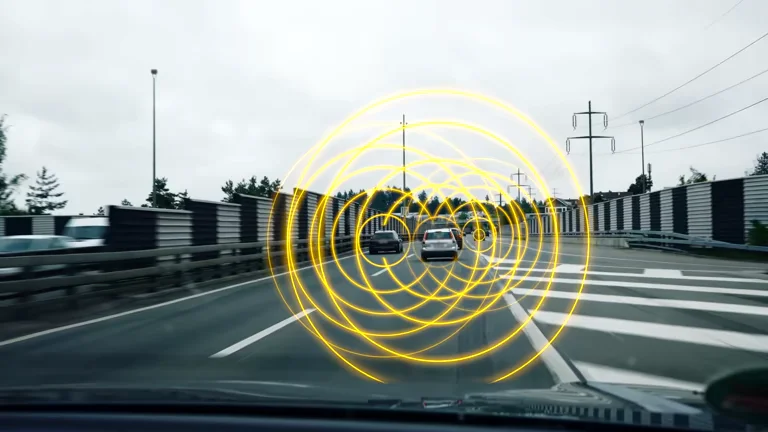
Several factors influence how fast a driver is going. They include roadway features, such as speed limits and curves, and driver behaviors. Most drivers have passed the scene of a wreck and seen the extensive damage that vehicle crashes can cause, even on roads where people are driving more slowly, such as city streets. One of the primary drivers of crash severity is speed variability, a factor that affects crashes regardless of road type. A car accident lawyer investigating liability in a vehicle crash assesses all factors that could have contributed to the collision, including speed variability and the related concept of speed differential.
Understanding Speed Variability
Speed differential and speed variability are distinct concepts, but they are closely related in the context of traffic and car accidents. The difference in speed between two objects is called the speed differential. The objects could be a truck and a car, two cars or a vehicle and a stationary object. The differential is the speed gap. A key principle of speed differential is closing speed, the rate at which two vehicles are approaching each other.
Speed variability is the difference in speeds among all the traveling vehicles. Some vehicles travel faster than the average traffic flow, and some travel slower. Either way, there is an increase in interactions between cars, such as lane changes.
There are two major types of speed differential to consider. One is vehicle-to-vehicle. For example, a car is going 65 miles an hour, and another is going 55 miles an hour. There is a 10-mile-per-hour closing speed. The wider the speed gap, the more dangerous the situation.
The second type of speed differential is vehicle-to-environment, in which one vehicle has zero velocity. For example, you are going 65 miles an hour and suddenly crash into a stalled vehicle. The speed differential is the full 65 miles per hour. The entire force of the impact is absorbed by the moving vehicle.
Reaction time is a major factor in crashes. If you are going 30 miles an hour, you are closing the distance between your vehicle and another vehicle by 44 feet every second. It takes approximately an average of three-quarters of a second to recognize the situation, process it and react. So, at the average 44 feet per second, you have already covered 33 feet before you even start braking. It takes time for the brake to engage, so you are left with little room to avoid hitting another vehicle.
Impact of the Collapsing Speed Safety Gap
So a crash is affected by the distance between two vehicles, the speed of each vehicle, how fast a vehicle is going relative to other vehicles in traffic and how quickly the driver reacts. The speed at which the safety distance closes matters. There are three potential impacts of speed variability.
One is the increased risk of rear-end collisions. In areas where the distance is choppy due to things like construction zones, on ramps, heavy traffic or coming over the crest of a hill, a collision is more likely. The faster driver may not be able to see the slower driver in time to avoid a crash.
A slow driver can cause an issue by trying to get out of the way. For example, the slow driver starts braking or accelerating erratically, confusing other drivers with speed variability and forcing them to take action, such as passing or changing lanes. The speed variability and safety gap are changed, significantly increasing the risk of a collision.
The second issue concerns merging and sideswipe accidents. If someone is merging onto a 70-mile-per-hour highway at 40 miles per hour, a 30-mile-per-hour speed difference is created. The highway driver forced to swerve around a merging vehicle or take other evasive action increases the likelihood of an accident. If the highway driver has to brake to avoid a merging vehicle, the braking creates a speed variance with the rest of the traffic, which can easily lead to a crash. A person merging too slowly onto a highway can easily cause an accident involving multiple cars due to speed differential and speed variability.
The third issue is unsafe passing. When trying to get around a slow vehicle on a two-lane road, the risk of a head-on collision increases. The crash is severe because the closing differential, or the collision force, is the sum of the forces of both moving vehicles.
A vehicle disrupting the expected flow of traffic creates frustration or stress among other drivers. It is treated like a personal affront, a source of road rage. Other factors can also come into play. Wet roads, stop-and-go traffic and oily roads all affect the amount of speed variability created in various situations.
Releasing Kinetic Energy at the Moment of Impact
We have all wondered why some crashes are so much worse than others. The extent of crash damage is determined by kinetic energy, the energy the vehicle has due to its motion. Scientifically, kinetic energy is proportional to the square of velocity. What this means is that what really matters is the vehicle’s speed at the moment of impact, not just the vehicle’s speed while cruising. It is at the moment the crash occurs that kinetic energy is released.
A speed differential of 20 miles per hour quadruples the energy released in a crash compared to a speed differential of 10 miles per hour. That is why even a small increase in the speed differential can make such a big difference in the amount of crash damage. Speed variability confuses the situation even more.
If you are involved in a car collision and believe the other driver or road conditions are the cause, a car accident lawyer can determine how the various factors, like speed differential and speed variability within the context of road conditions, are involved. If necessary, the lawyer will consult an accident reconstructionist expert to apply the principles involved in a vehicle crash. Experts can convert physical evidence into the amount of kinetic energy released at the moment of impact.
Many people are not truthful about the speed they were driving or their driving behaviors. This is why it is important to consult an attorney with expertise in vehicle crashes to ensure the truth is told and you receive fair compensation. If you are have been wronged by your insurance company after an accident, you may also be able to fight back with the help of an experienced attorney who holds insurers accountable.