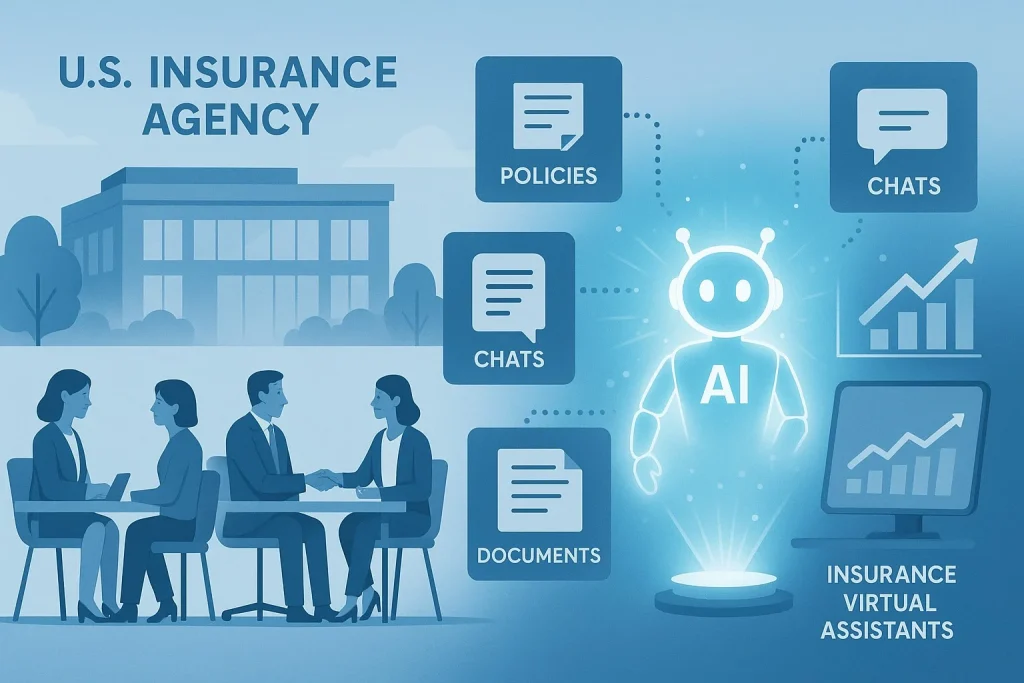
Distribution in the US insurance market is changing quickly. Consumers have gotten used to the “Amazon effect,” or the level of service on demand. Customers expect to have their questions answered when it is most convenient for them, not necessarily when the business is open. According to industry specialists, this pressure is especially strong for insurance agencies as today’s consumer expects to be able to ask questions, and receive service, at any time, via any method (phone, web chat), which is where insurance virtual assistants come in handy.
However, many agencies are not able to keep up with demand using customary staffing practices, leading to a growing number of agencies in the U.S. and Canada utilizing insurance virtual assistants (IVAs). These virtual assistants have an automation component driven by AI, and another component of human expertise, carried out by remote contractors who can perform advanced back-office operations. North America is 37% of total global revenues in the space, a larger share than any other region due to the strong maturity of the insurance ecosystem and rapid investments in AI.
As more carriers and agencies seek automation solutions for claims, endorsements in insurance, policy servicing, quoting, and other communications, virtual assistants have progressed from a “nice-to-have” to a must-have in future insurance operations. This article explores the growing role of IVAs in the insurance sector and how they are driving the industry’s future.
Explore what others are reading—related post with valuable takeaways.
What is an Insurance Virtual Assistant (IVA)?
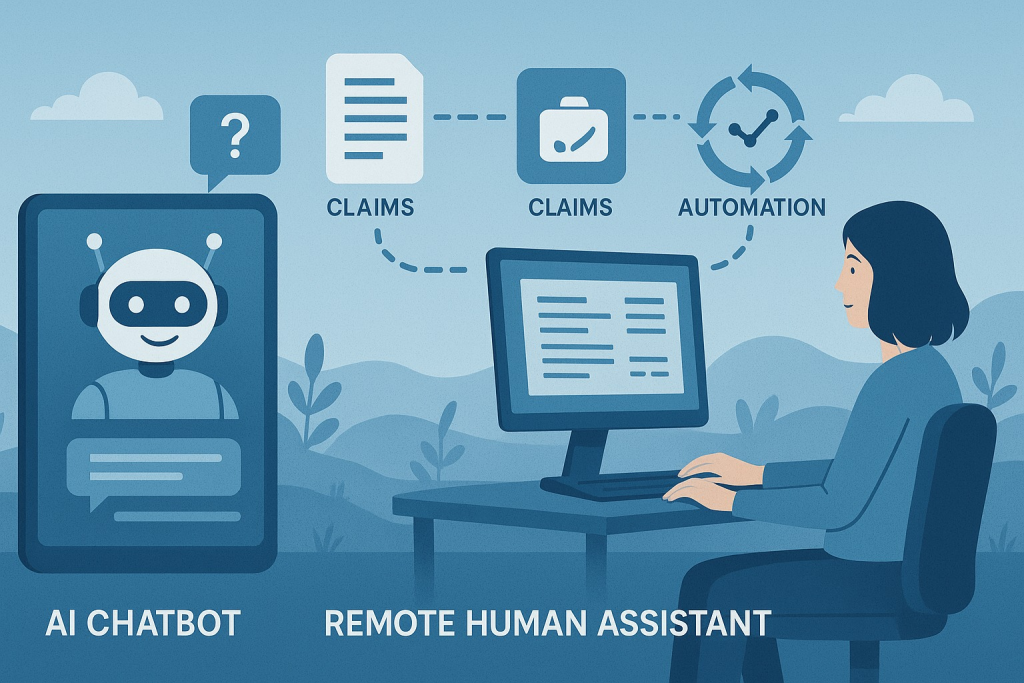
An insurance virtual assistant (IVA) is an AI-based or human virtual assistant (VA) that has been trained on and has wide-ranging knowledge of industry terminology, compliance, and Agency Management System (AMS) or Customer Relationship Management (CRM) workflows. Insurance virtual assistant help agents and brokers with their day-to-day activities, as opposed to general work.
The assistant, whether an advanced AI algorithm or a trained remote person, is employed to assist agencies with daily information-intensive tasks, including the following:
- Answering client questions
- Guiding users through filling out intake forms
- Updating policy information
- Handling claims support
- Providing instant coverage details
The results are typically impressive: AI-powered insurance virtual assistants are available 24/7 and can handle huge volumes of queries without needing a break. Industry reports show that one system managed to handle over 60% of incoming calls. Remote human VAs brings a “human touch” to more complex tasks, such as generating quotes, entering documentation, and occasionally handling endorsements in insurance.
While either way ultimately gets the job done, the goal is to minimize the amount of administrative work your in-house team has to do, leaving your licensed agents to build relationships, improve the customer onboarding process in insurance, and make sales.
Core Benefits of Insurance Virtual Assistants
The effectiveness of IVAs is reflected in business metrics: agencies that adopt these technologies see immediate increases in efficiency and profitability.
1. Huge Time Savings & Operational Efficiency
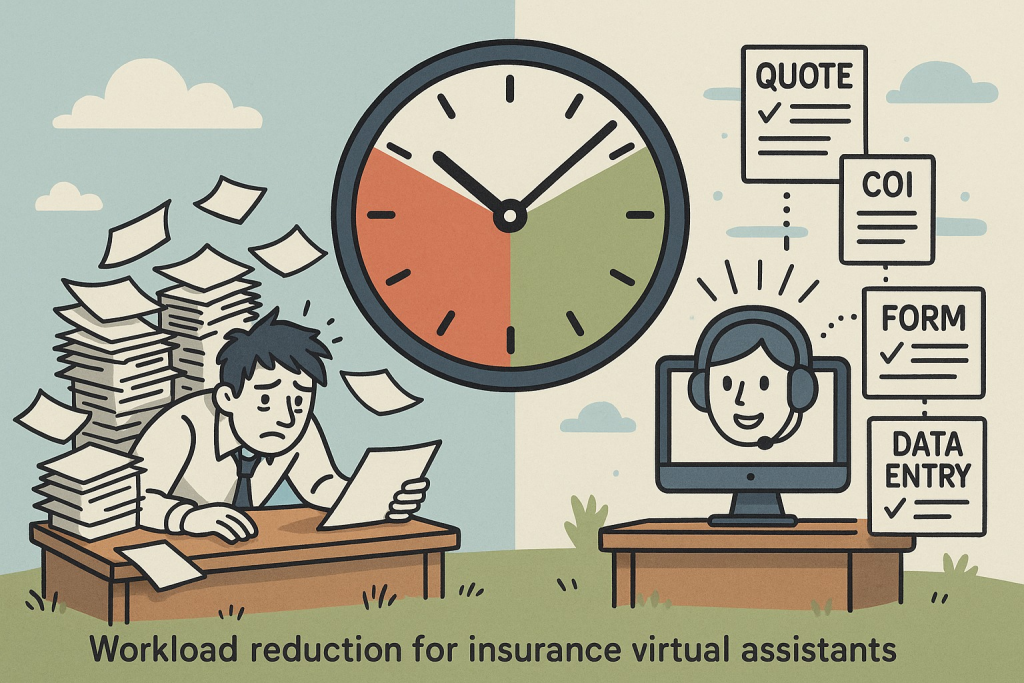
Administrative work is one of the biggest thieves of time in an insurance agency. Insurance virtual assistants can take care of repetitive, low-value tasks like data entry, quotes, Certificates of Insurance (COIs), and checking up on outstanding claims.
Agencies such as CoverDesk and Assuretrac have reported that by offloading this task, they are saving hours each week and getting more productivity and less employee burnout back, letting the core team focus on more valuable work.
2. 24/7 Customer Service
In an on-demand world, if a client has a question about their policy at 8:00 PM, that client expects a reply. According to industry specialists, 51% of consumers expect 24/7 support. A seamless customer experience in insurance depends on agencies being available at any time.
A virtual assistant can also work in real-time, meaning your agency will never have a call drop-off outside of business hours, resulting in an increase in CSAT scores. With insurance virtual assistants, your agency can be “open for business” 24/7.
3. Significant Cost Reduction
In-house, full-time staff are expensive, as salaries, benefits, renting office space, and training employees all cost money. This outsourcing is more economical than finding local employees. Proponents of insurance virtual assistants claim that they allow many agencies to cut back-office expenditures by 50 to 70 percent to spend such money on marketing or technology.
4. Easy Scaling During Peak Seasons
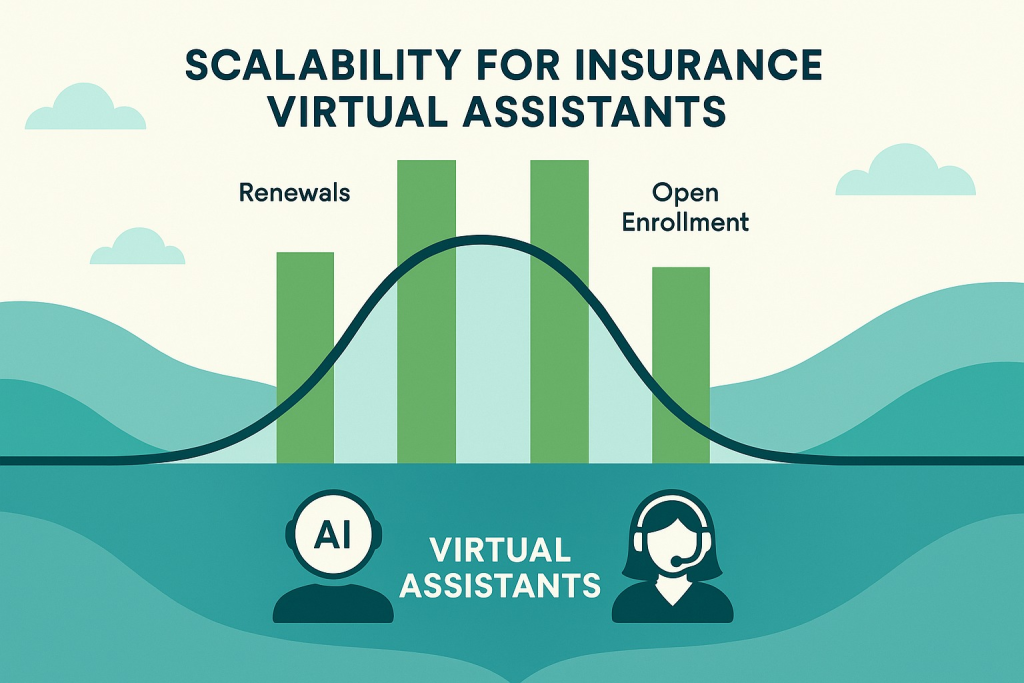
Work in the insurance industry is often seasonal, during open enrollment or renewals, so virtual assistants allow agencies to respond to business fluctuations and staffing needs. This saves the time of recruiting workers and bringing them to the project site, as well as the problems of downsizing.
Market Growth and Adoption
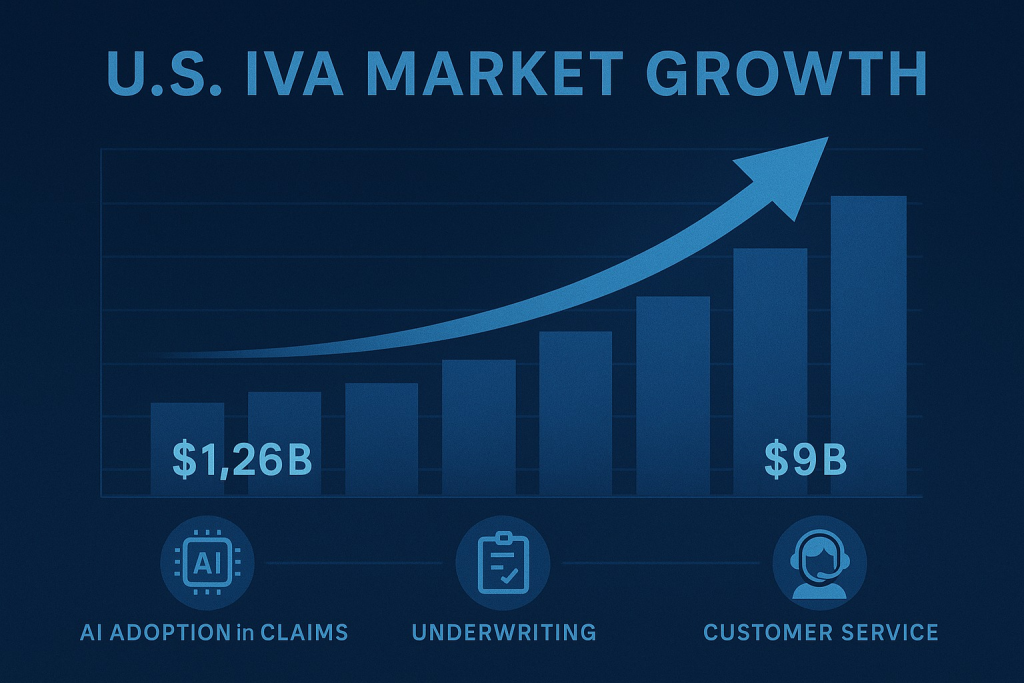
In its 2024 BCG report, the insurance industry is reported to have bet strongly on automation and to have outdone all but a few industries in the adoption of AI functions, especially in customer service, underwriting, and claims.
According to market research, the insurance virtual assistants’ market was worth $1.26 billion in 2024, growing at a CAGR of 24.1% and projected to be $9 billion by 2033. The United States has the largest IVA market in the world, due to customers expecting more, rising costs, and the need for speed and digital service.
It’s not only small startups focused on tech that are deploying virtual assistants at scale: Major U.S. carriers are also on board. For example, Elevance Health (Anthem) deployed an AI assistant to its 22 million members, and Aetna embedded a generative AI assistant in its member app. Generative AI is also used by independent agencies.
Real-World Examples: Tasks an IVA Can Handle
The value of an IVA can be understood in several circumstances where they have specific advantages or benefits.
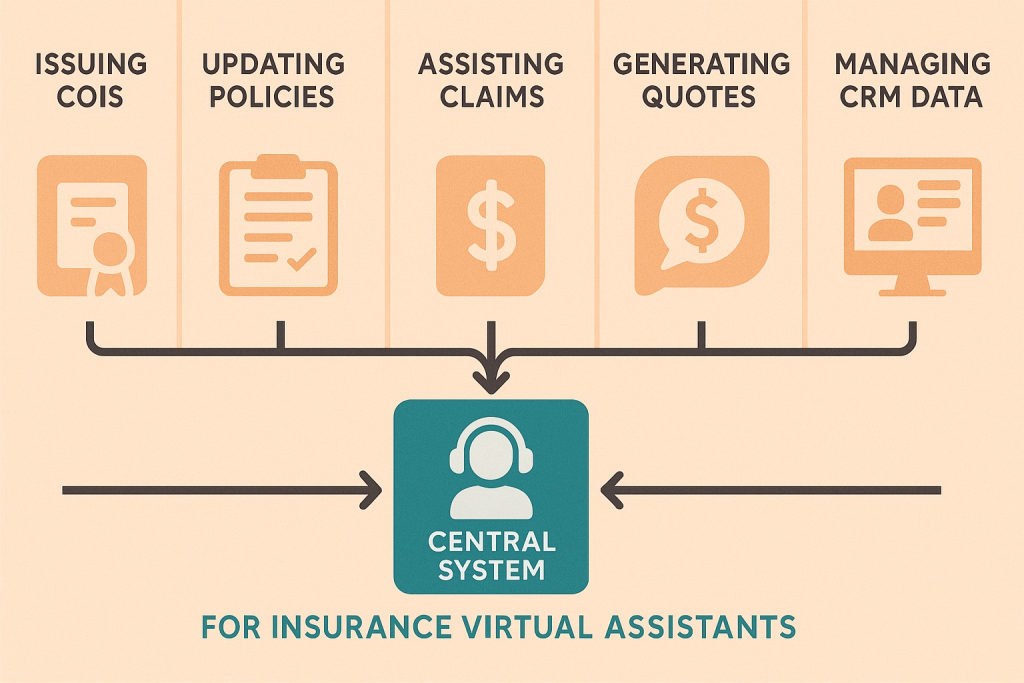
- Policy & Document Management: VAs accurately and compliantly input policy data, endorse policies, and issue Certificates of Insurance (COIs).
- Claims Support: IVAs can aid in moving claims through different stages, from FNOL intake to documentation and status updates, increasing policyholder trust during stressful claims situations.
- Sales & Quoting Assistance: Lead capture, quote generation, and lead routing are priorities for sales teams. Insurance virtual assistants can manage lead information and route leads to agents to expedite quoting and increase close ratios.
- AMS & CRM Maintenance: Data accuracy is important to any agency, and VAs can easily take on the drudgery of recording call notes, updating contact information, and documenting follow-up tasks to aid management’s decision-making.
- Marketing & Outreach: Keeping the agency in the public eye can be time consuming. VAs can assist with scheduling social media, newsletters, and all sorts of outreach.
Frequently Asked Questions
What tasks can insurance virtual assistants perform?
They handle back-office admin work such as policy entry, issuing/updates of COIs, quoting, claims support, billing follow-ups, CRM/AMS entry, and client-facing communications, allowing your licensed team to focus on revenue-producing activities such as selling and consulting with clients.
Are insurance virtual assistants cost-effective?
They are inexpensive: none of the costs of salary increases, training, employee benefits, taxes, and office space that would be incurred for a full-time employee are necessary for an outsourcing specialist. Agencies have claimed their back offices cost 50% to 70% less than full-time employees doing equivalent work.
Will a virtual assistant replace my team?
No, and that’s a fallacy. IVAs are meant to work with your team, not replace them. This frees your agents and Customer Service Representatives (CSRs) to focus on the more complex, relationship-building, revenue-generating tasks. A recent poll of Applied Client Network (ACN) members found that agencies view insurance virtual assistants as being “a great addition to our team” rather than a replacement.
The Future of Insurance Management
As a result, insurance virtual assistants have gone from a differentiator in the market to an industry standard for agencies looking to save time, money, and improve the customer experience in insurance.
U.S.-based insurers are leading the pack in AI adoption, and the market for insurance virtual assistants is expected to grow by almost $9 billion in the coming years. They’re no longer a ‘nice to have’ so much as a ‘need to have’ for major carriers and thousands of independent agencies.
Using a virtual assistant “improves client experience, reduces costs, and ensures your team never misses a revenue opportunity,” according to industry specialists. Agencies that want to effectively compete in this next generation of insurance management cannot afford to wait to implement an IVA strategy.
Feed your curiosity—click to explore more content crafted just for you at 2A Magazine.