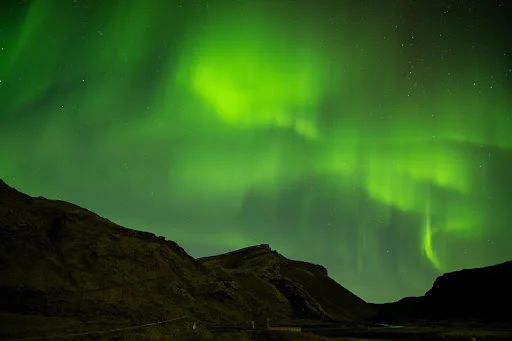
There are few winter experiences as mesmerising as standing beneath Iceland’s dark sky while ribbons of green, blue and violet dance overhead. The Northern Lights don’t simply glow — they move, swirl and shimmer with a life of their own, turning the landscape below into a backdrop for one of nature’s most unpredictable performances.
Iceland in winter is a land of contrasts: icy waterfalls roar between frozen cliffs, geothermal pools steam beneath snow-dusted hills, and tiny fishing towns glow warmly against the long Arctic nights. This is a season made for adventure, reflection and quiet awe, and for many travellers, it is the Northern Lights that complete the story.
Preparing for Your Icelandic Winter Escape
Before setting off, it helps to understand what makes Iceland one of the world’s most reliable aurora destinations.
The country’s position near the Arctic Circle gives it excellent geomagnetic activity, while its sparse population ensures low light pollution outside the capital.
Add in expansive open landscapes — from black-sand beaches to volcanic plateaus — and you have an ideal environment for spotting the aurora, provided the skies cooperate.
Winter travel here isn’t about controlling everything; it’s about embracing the elements, adapting to weather shifts and letting Iceland work its magic in its own time.
Choosing Guided Northern Lights Adventures
Travellers who want expert insight and local knowledge often join Iceland Northern Lights tours, which offer structured outings designed to maximise your chances of seeing the aurora.
These guided experiences typically include meteorological updates, photography advice and transportation to remote viewing spots where the sky is clearest.
The guides know when to wait, when to chase clearer skies and when to head toward less windy valleys or coastal plains. Their ability to read the island’s unpredictable weather patterns makes the experience far more relaxing, allowing you to focus on the spectacle instead of road conditions or cloud cover.
While no tour can ever guarantee a sighting, these guided excursions give travellers the confidence of knowing they’re in good hands — and that every moment of the chase is part of the adventure.
Reykjavík: A Cosy Base for Winter Explorations
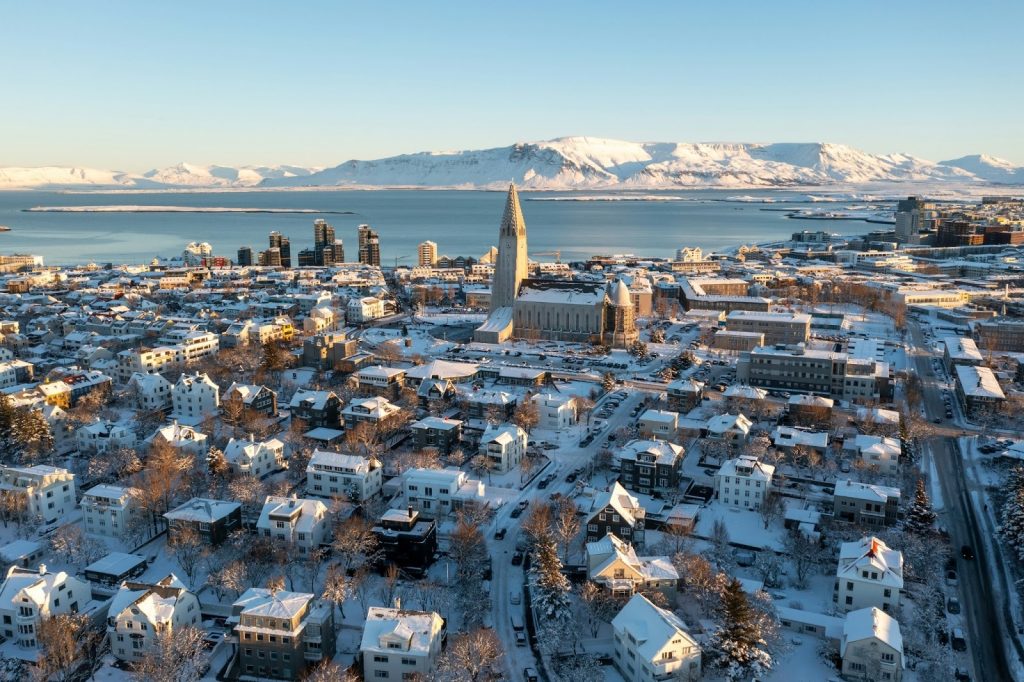
Most visitors begin in Reykjavík, a compact and colourful city that blends Nordic cool with creative warmth.
The capital’s cafés are a haven on cold days, serving cinnamon-rich pastries and strong coffee, while the harbour area offers views of snowy mountains rising across the water.
In the evenings, locals and visitors gather in geothermal pools where hot mineral water contrasts beautifully with icy air.
Reykjavík also makes for an excellent launchpad for winter day trips. Nearby, you’ll find the Golden Circle’s trio of natural wonders — Gullfoss waterfall, Geysir hot spring and Þingvellir National Park — each transformed into a glittering winter wonderland during the colder months.
Chasing the Aurora Beyond the Capital
Once you leave Reykjavík’s cosy glow, Iceland’s landscapes open up into something vast and otherworldly.
On clear nights, even short drives away from the city can reveal skies full of stars and faint aurora streaks beginning to form.
Whether you travel north toward Hvalfjörður’s quiet fjord or south toward the Reykjanes Peninsula, winter brings a strong sense of stillness, interrupted only by the occasional gust of wind or the crunch of snow under your boots.
The thrill of aurora-chasing lies partly in this uncertainty. You may find yourself parked beside a frozen lake, staring upward as the colours intensify and begin to pulse. Or you might wait in silence on a darkened hillside until, without warning, the lights sweep across the sky in a graceful arc.
Independent Travellers and Aurora Seekers
Those who prefer to explore at their own pace often opt for a more flexible Iceland Northern Lights tour, travelling by rental car or staying in countryside cabins near dark-sky areas.
This DIY approach suits travellers who enjoy slow evenings by a fire, waiting for cloud cover to thin while checking the aurora forecast.
Remote farms, boutique lodges and rustic guesthouses offer ideal settings for independent aurora watching, especially near regions like Þórsmörk, Hella or the Westfjords.
Just remember: winter driving in Iceland requires caution. Roads may be icy, winds can be strong and darkness lasts long hours. If you’re inexperienced, guided tours remain the safest choice.
Snowy Trails and Remote Landscapes in the North
Northern Iceland offers some of the most dramatic winter scenery in the country.
Places like Akureyri, Mývatn and Húsavík have long nights and wide-open skies, making them natural aurora hotspots.
Around Lake Mývatn, geothermal vents rise like ghostly pillars of steam, and the snow-covered pseudocraters create an almost lunar setting for watching the lights.
Travellers who venture deeper into the North may find icy coastal villages where fishing boats sit frozen along the docks, or geothermal lagoons steaming beside snowfields.
Winter hikes, snowshoe walks and guided super-jeep excursions give access to starkly beautiful viewpoints unreachable in warmer seasons.
Glaciers, Ice Caves and Other Winter Wonders
Of course, the Northern Lights are only part of the winter appeal.
Iceland’s glaciers feel particularly powerful in the colder months, with brilliant blue ice caves forming deep within the ice caps. Guided tours allow visitors to step inside these frozen chambers, where swirling patterns of ice curve above your head like glass sculptures.
Nearby, on Iceland’s south coast, the Jökulsárlón Glacier Lagoon dazzles with floating icebergs, while its neighbouring Diamond Beach sparkles with ice fragments washed ashore by the North Atlantic.
Travelling in winter reveals the country’s raw, elemental nature — a landscape defined as much by its silence as its spectacular beauty.
Venturing West for Aurora and Adventure
The Snæfellsnes Peninsula is another unforgettable winter escape. Often described as “Iceland in miniature,” it offers volcanoes, black beaches, cliffs and fishing villages all within a compact area.
Under winter skies, the peninsula becomes a painter’s palette of deep blues and icy whites, making it a favourite location for aurora photography.
Here, the lava fields, lonely lighthouses and open fjords create stunning foregrounds for aurora displays. Even on cloudy nights, the atmosphere remains enchanting — winds swirl through the moss-covered rocks and waves crash against basalt columns, lending the landscape a mythic quality.
Final Thoughts
Winter in Iceland is a season of magic — quiet roads, frozen waterfalls, star-crowded skies and nights illuminated by otherworldly light.
Whether you join guided excursions, choose a flexible independent adventure or mix both approaches, you’ll find that Iceland in winter offers a rare blend of peace and exhilaration.
The Northern Lights may be unpredictable, but that’s part of the joy. Each sighting feels like a gift, a fleeting moment when nature puts on a performance unlike anything else in the world.
And long after you’ve left Iceland, it’s the memory of standing beneath that shimmering celestial curtain — breath held, heart full — that stays with you.