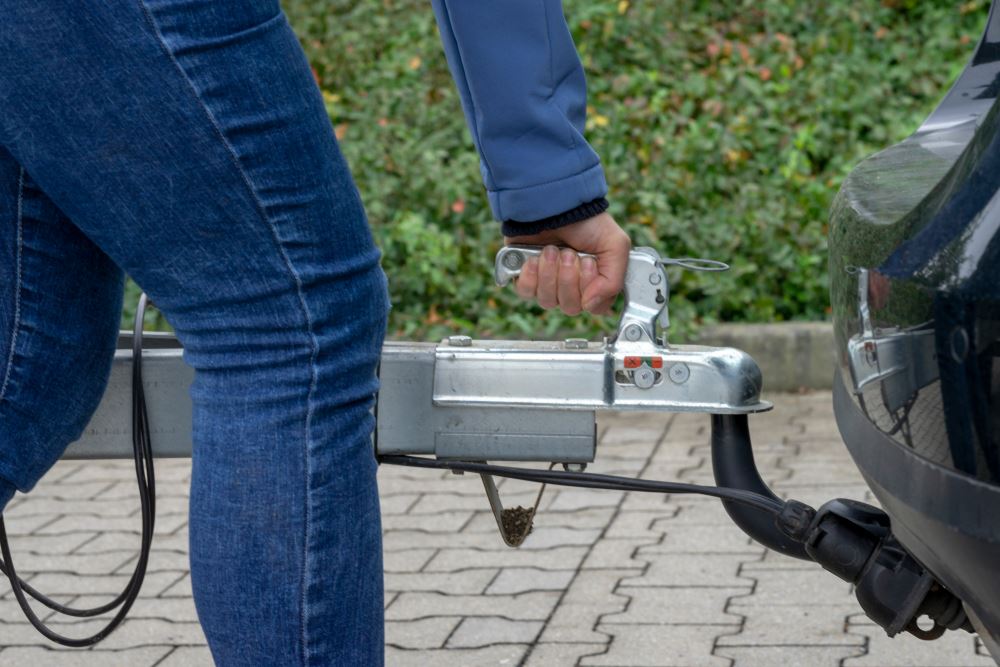
An articulating hitch is basically a necessity for rugged travel because it gives you a full 360-degree range of motion between your vehicle and the trailer. This setup stops the mechanical binding you usually run into with a standard ball hitch when the ground gets rough. When you’re pulling through deep ruts, steep inclines, or rocky washouts, the trailer has to move on its own across three different axes—pitch, roll, and yaw. For anyone pulling off road campers, this specialised connection is often the most important piece of gear for making sure a trip into the backcountry doesn’t end in a total breakdown.
The Limitations of Traditional Towing Hardware
Standard ball hitches are fine for highways or smooth boat ramps, but they aren’t built for anything beyond that. They work perfectly when your truck and trailer are on the same flat surface, but they have very little “tilt” to them. If you’re out on a rough trail and your truck starts climbing a ledge while the trailer is still stuck in a dip, a basic hitch can actually bind up and lock.
Why Three Axes of Movement Matter
An articulating hitch—often called a multi-axis or “drop-and-roll” hitch—gets rid of the physical limits you find with a ball-and-socket joint. It lets the trailer twist and lean without dragging the tow vehicle down with it.
- Pitch and Yaw: This setup handles “”V”-shaped gullies or sharp crests easily. It keeps the trailer tongue from digging into the ground or putting too much vertical pressure on your rear axle.
- Rotational Roll: If the trailer tips to one side on a sloped trail, the hitch lets it lean over without trying to twist the frame of your truck along with it.
By isolating the movement of the trailer, you keep your centre of gravity where it belongs. This is a huge deal when your rig is loaded down with heavy gear, water, and batteries, as it keeps the weight from shifting in ways you can’t predict during a technical crawl.
Enhancing Durability and Reliability
Beyond just staying mobile, these hitches protect the long-term health of your rig. Constant jarring on a rigid hitch causes metal fatigue in the frame and the mounting points. Over time, that leads to tiny cracks that are almost impossible to see until something major fails far from help.
1. Reduced Vibration: High-quality joints usually have internal bushings that dampen the “clunking” and jerking you’d otherwise feel in the cabin.
2. Safety in Extremes: In the rare event of a trailer rollover, an articulating hitch can allow the trailer to flip without rolling the tow vehicle, which can be a life-saver.
Investing in a high-strength, greaseable coupling ensures the most vulnerable point of your setup becomes its strongest asset. It makes the driving experience much more relaxed because you aren’t constantly worried about the mechanical limits of your tow bar.
Your Next Step in Trail Preparation
To make sure your setup is actually ready for the dirt, take a close look at your current coupling and consider switching to a multi-axis system before your next trip. Checking your hitch capacity against your trailer’s total weight is the best way to make sure your hardware can actually handle the stress of the road.
If you found this helpful, explore our blog for more simple guides on other topics.