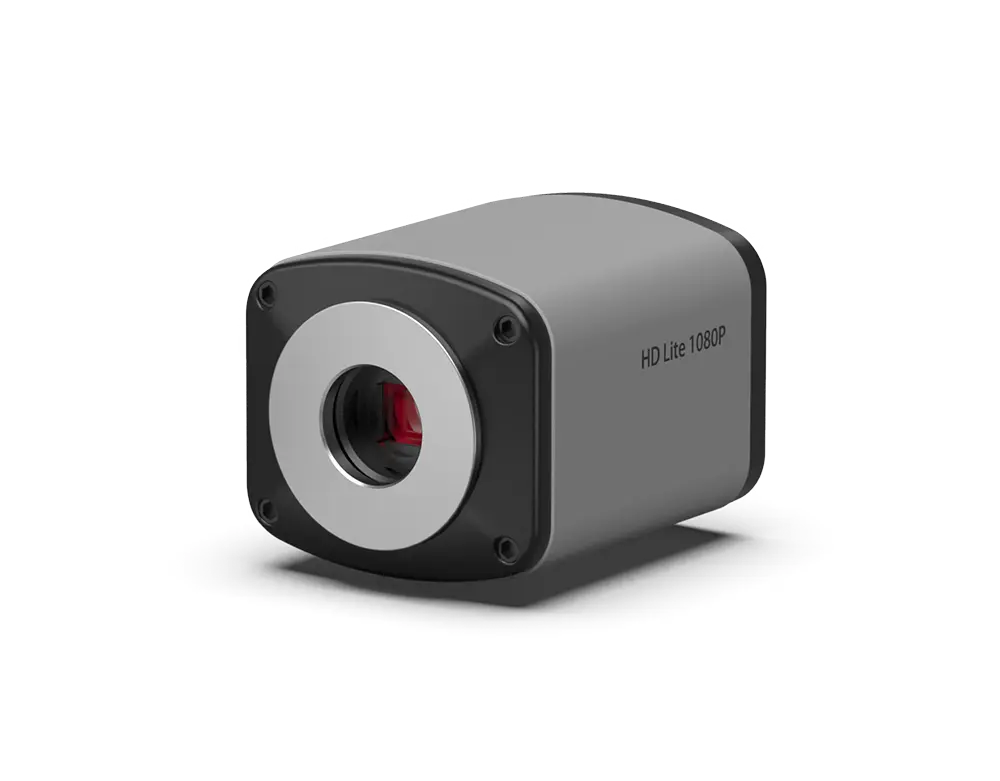
Scientists rely on clear images to study samples at the microscopic level. A Tucsen CMOS camera delivers the resolution, speed, and sensitivity needed for work in life sciences, materials analysis, and industrial checks. These cameras help capture details in low light, record fast events, and maintain image quality over long sessions.
Demand for such tools continues to rise as research moves toward live-cell observation, high-throughput screening, and precise defect detection. The Tucsen CMOS camera line from Tucsen addresses these needs with a range of models built for real laboratory conditions.
What Defines a Tucsen CMOS Camera
Tucsen CMOS cameras use modern sensors that read out data quickly and with low noise. Key series include the Libra, FL, TrueChrome, and MIchrome lines.
- Libra models offer global shutter sensors with 5 MP to 12 MP resolution, frame rates up to 164 fps, and sensitivity across UV, visible, and NIR wavelengths.
- FL series cameras add deep cooling to reach dark current below 0.0005 e-/p/s, matching older CCD performance while keeping CMOS advantages.
- TrueChrome and MIchrome units provide HDMI or USB output with features such as live stitching and extended depth of field for routine microscopy tasks.
All models support multiple interfaces including USB 3.0, 10 GigE, and trigger options for easy integration into existing setups.
Main Benefits of Tucsen CMOS Cameras
Researchers choose these cameras because they solve common imaging problems.
- Global shutter prevents distortion when samples move, unlike rolling shutter designs.
- High quantum efficiency (up to 92% in cooled models) gathers more light from weak signals.
- Low readout noise (down to 1.0 e⁻ or better in cooled units) reduces grain in low-light images.
- Deep cooling options keep dark current low during exposures of seconds or minutes.
- Cost-effective design allows labs to deploy multiple cameras without high expense.
- Compact size and flexible mounting fit both upright and inverted microscopes.
These features support fluorescence work, brightfield observation, phase contrast, and differential interference contrast without frequent adjustments.
Applications Across Research Areas
Tucsen CMOS cameras serve many fields.
In fluorescence microscopy, FL series units capture faint signals from labeled proteins or calcium indicators. The low noise and cooling allow exposures long enough to track single molecules or monitor slow cellular processes.
Live-cell imaging benefits from Libra global shutter models. High frame rates record fast events such as vesicle transport or cell division without motion blur.
In materials science and semiconductor inspection, high-resolution models with broad spectral response check defects or measure thin films. TDI options in related lines increase throughput for production lines.
Educational labs use TrueChrome and MIchrome cameras for teaching. HDMI output connects directly to screens, and measurement tools help students quantify features in real time.
Astronomy groups select cooled Libra models for planetary and deep-sky imaging where low noise and high sensitivity matter.
Challenges in CMOS-Based Scientific Imaging
No camera solves every problem. Common issues include the following.
- Higher dark current than some specialized sensors when uncooled, though Tucsen cooling technology reduces this gap.
- Data volume from high-resolution, high-speed capture requires fast storage and processing.
- Balancing frame rate against bit depth and dynamic range in brightfield versus low-light modes.
- Calibration for quantitative work, such as fluorescence intensity measurement, needs careful setup.
Tucsen addresses these points through hardware triggering, on-board processing in some models, and software that simplifies workflow.
Current Trends Shaping Tucsen CMOS Camera Use
The market for scientific CMOS cameras grows steadily. Projections show the sector expanding at over 16% annually through the next decade, driven by life science research and semiconductor needs.
Labs shift from CCD to CMOS for faster readout and lower power use. Back-illuminated sensors gain share for better low-light performance.
Global shutter CMOS becomes standard for dynamic samples. Cooling technology improves, allowing longer exposures without excessive noise.
Integration with AI tools for image enhancement and automated stitching appears in newer workflows. Multi-camera systems for simultaneous multi-wavelength capture increase in high-content screening.
Tucsen responds with models that support these directions, including higher frame rates, broader wavelength coverage, and stable cooling platforms.
Final Thoughts
A Tucsen CMOS camera offers a practical balance of performance, reliability, and value for microscopy and scientific imaging. From basic documentation to advanced low-light experiments, the available models cover most laboratory requirements.