The phrase “chat image” has gone from niche jargon to a genuine product category in the span of a single year. It refers to AI tools that let you create and edit images through natural conversation — no prompt engineering, no dropdown menus, just language. And the catalyst behind this shift is GPT Image 2, OpenAI’s latest image model with native reasoning, 4K resolution, and text-rendering accuracy that makes earlier models look primitive by comparison Chat Image Platforms.
This article reviews nine chat image platforms built on or around GPT Image 2. Each one is evaluated across the same five criteria: what it is, what it does, real user feedback, pricing, and who it suits best. The goal is simple — to help you find the chat image tool that fits your actual workflow, not just the one with the best marketing.
TL;DR — Quick Comparison Table
| Platform | Type | Starting Price | Credit Rollover | User Sentiment |
| ChatImage | Conversational chat image generator | Free tier available | ✅ Flexible / pay-as-you-go | ⭐ Highly rated for ease of use and output quality |
| Imagine.art | Community creative platform | $9/month (annual) | ❌ No rollover | ⭐ Praised for versatility; some support complaints |
| Higgsfield | Multi-model video + image platform | $15/month (annual) | ❌ No rollover | ⭐ Strong among creators; UI can feel cluttered |
| OpenArt | Multi-model art platform | $7/month (annual) | ❌ No rollover | ⭐ Great value; mixed billing/support reviews |
| LitMedia | All-in-one image + video subscription | Subscription tiers | ❌ No rollover | Limited public review data; strong feature set |
| Lovart | AI design agent | $16/month (annual) | ❌ Subscription resets; top-ups never expire | ⚠️ Creative output praised; billing issues flagged |
| fal.ai | API-first inference platform | $0.01/image (pay-as-you-go) | ✅ No subscription needed | ⭐ Developer favourite for speed and cost control |
| Replicate | Developer API platform | Pay-per-compute | ✅ No subscription needed | ⭐ Trusted by developers for model breadth |
| OpenRouter | API aggregation gateway | Token-based (pay-as-you-go) | ✅ No subscription needed | ⭐ Rated 8/10 for multi-model routing convenience |
1. ChatImage — Best Overall Chat Image Generator
Introduction
ChatImage is the most straightforward answer to the question “what’s the best chat image generator right now?” It puts GPT Image 2’s full capabilities behind a conversational interface, so you generate, refine, and edit images by talking — not by fighting with parameter sliders or wrestling with prompt syntax. You describe what you need, iterate in plain language, and get professional-quality outputs without a learning curve.
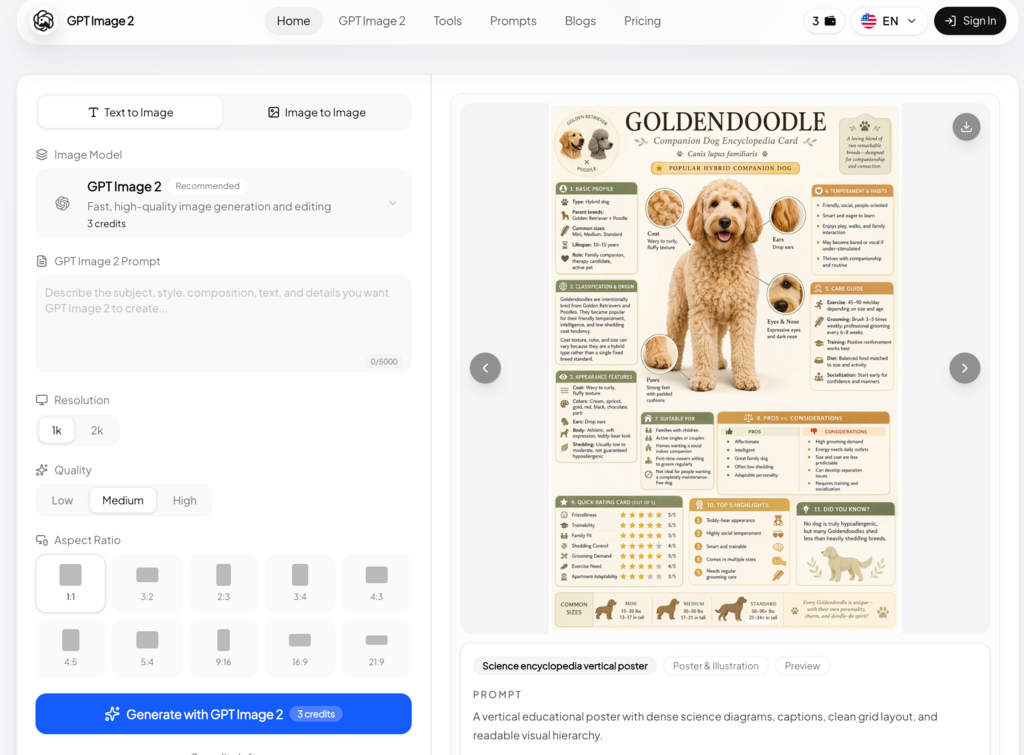
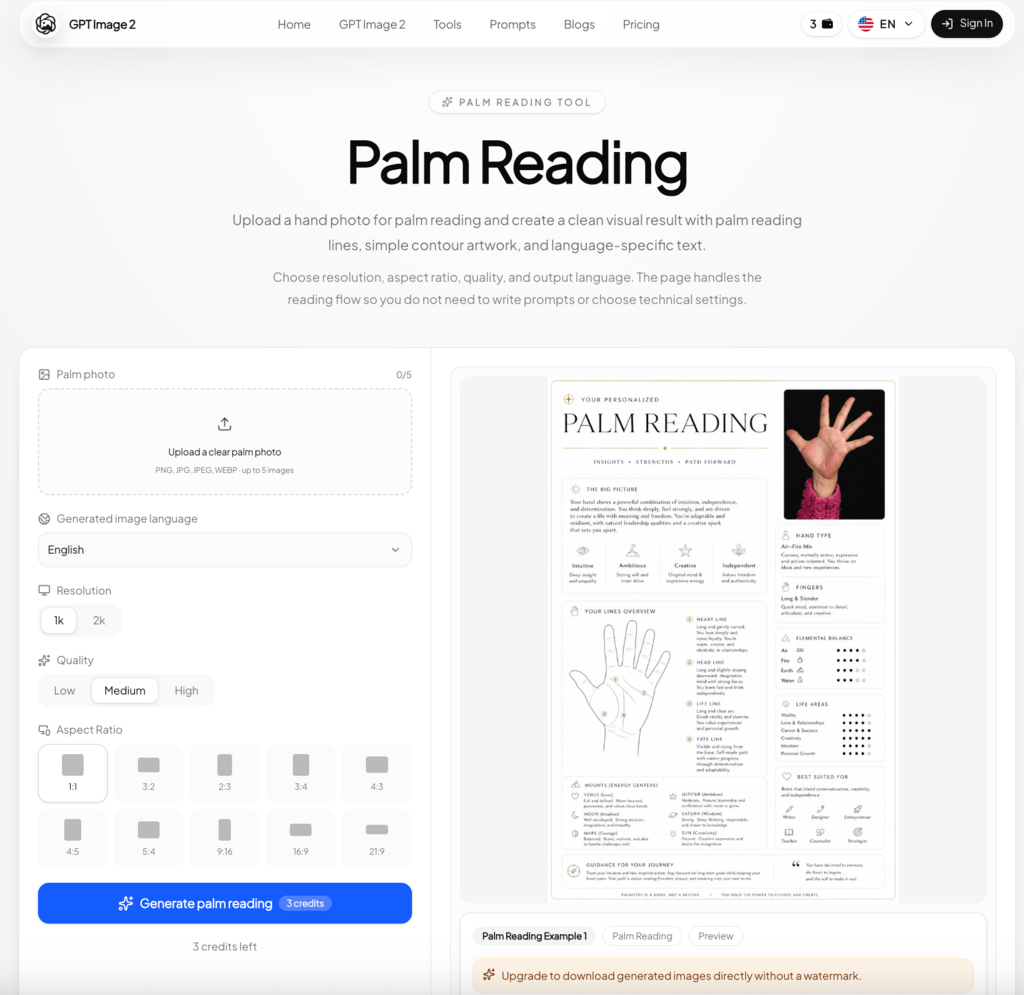
What sets ChatImage apart from the growing pack of GPT Image 2 wrappers is how it treats the conversation as the creative workspace itself. The image and the dialogue live together, making the editing process feel natural and iterative rather than transactional. Beyond core image generation, ChatImage also offers a broader suite of AI-powered tools — including creative applications like its Palm Reading feature — which demonstrates the platform’s commitment to exploring what conversational AI can do beyond the expected.
Key Features
- Conversational image generation — natural language input and refinement throughout the entire creative process
- Full GPT Image 2 integration — photorealistic output with ~95% text rendering accuracy, strong instruction-following, and removal of the warm color cast of earlier models
- High-resolution output — suitable for commercial production across marketing, product, and social formats
- Broad creative toolset — AI tools extending beyond image generation, including Palm Reading and other exploratory features
- Flexible credit model — credits carry forward rather than resetting monthly, giving genuine cost control
- Free tier — accessible entry point for testing before committing
Pros & Cons
Pros
- Conversational UX is the lowest-friction path to high-quality GPT Image 2 outputs available today
- Flexible, non-expiring credits eliminate the “use it or lose it” pressure that burdens most subscription platforms
- Works for marketers, designers, and non-technical creators equally well
- Free tier allows meaningful testing without a payment commitment
- Scope extends beyond image generation, positioning it as a broader creative AI platform
Cons
- Focused on GPT Image 2 specifically; not a multi-model platform for those who want to compare across different AI engines
- Not API-first, so developers building fully automated pipelines will need to look elsewhere
Pricing
ChatImage offers a free tier for initial use, with paid plans scaling from individual creators to production teams. The key differentiator is its flexible credit structure: unused credits roll forward rather than expiring at the monthly billing date, which means you’re paying for actual usage rather than losing allocation you didn’t get around to spending.
Best For
Anyone who wants high-quality chat image generation through natural conversation, without the overhead of prompt engineering, expiring credits, or platform complexity.
2. Imagine.art — Best for Community-Driven Chat Image Discovery
Introduction
Imagine.art has built its platform around two things: GPT Image 2–quality output and an active creator community. With over 30 million registered users and more than 100 million app downloads, it’s one of the most-used chat image platforms on this list. The social layer is genuine — users share generations, browse community output for inspiration, and refine their prompts based on what they see working for others.
Key Features
- GPT Image 2 access — available free with 100 daily credits, with paid tiers unlocking higher volumes
- 100+ generation models — including Gemini, Flux, Ideogram V3, Grok Imagine, and Nano Banana alongside GPT Image 2
- Community discovery — browse, share, and co-create with an active user base
- Multi-turn editing — refine specific elements of a generated image in plain language across turns
- Cross-device access — web browser, iOS, and Android apps
- Complimentary AI model access — paid plans include access to GPT, Gemini, and Claude language models
Pros & Cons
Pros
- GPT Image 2 is available free with 100 daily credits — one of the most accessible entry points in this comparison
- 100+ model selection means one subscription covers a wide range of creative styles and engines
- Community features are substantive and actively used, not decorative
- Mobile apps make it practical for on-the-go creation
Cons
- User reviews on Trustpilot flag front-line customer support as inconsistent — one reviewer described needing to escalate publicly before a billing issue was resolved, noting the “front-line support process needs work”
- Monthly subscription credits do not roll over; unused allocation expires at cycle end
- The community-oriented interface can feel less efficient for pure production workflows
What Real Users Say
G2 reviewers consistently praise the interface’s versatility and accessibility: users highlight that the platform helps them generate something closer to their specific vision within minutes, testing different styles and backgrounds before finalizing. On Trustpilot, the picture is more mixed: one reviewer noted that “the product itself is genuinely capable” but that the front-line support process needs structural improvement — customers who don’t escalate publicly may not reach resolution. The consensus is that Imagine.art works well as long as everything goes smoothly; the gaps show when billing or access issues arise.
Pricing
Annual billing with ~30% discount: Basic at $9/month (~600 image generations/month), Standard at $20/month (~1,600 generations/month). GPT Image 2 is available on the free tier at 100 credits per day. Subscription credits reset monthly and unused allocation does not carry over.
Best For
Creators and artists who value a large, active community alongside strong GPT Image 2 chat image generation, and who generate consistently enough to make monthly credit cycles work in their favor.
3. Higgsfield — Best for Multi-Model Video + Chat Image Production
Introduction
Higgsfield is the go-to choice for creators who need both cinematic video and high-quality chat image generation from a single platform. Since raising an $80 million Series A extension in January 2026 at a $1.3 billion valuation, the platform has aggressively expanded its model roster — now covering Sora 2, Veo 3.1, Kling 3.0, and GPT Image alongside its own Soul video model. Social media marketers make up the majority of its user base, according to Reuters’ coverage of the funding round.
Key Features
- 15+ AI models — video (Sora 2, Veo 3.1, Kling 3.0) and image (GPT Image, Nano Banana Pro, Flux.2 Pro) in one subscription
- 365-day unlimited GPT Image access — included on Plus and above
- Cinema Studio — cinematic camera controls, motion physics, scene editing for professional video
- Soul ID — character consistency engine for maintaining subject identity across generations
- 50+ pre-built creative apps — meme generators, AI headshots, commercial templates
- Parallel processing — up to 8 image and 8 video jobs simultaneously on higher tiers
Pros & Cons
Pros
- One subscription replaces multiple separate platform accounts for video and image
- Rated 4/5 on G2 (18 reviews); one G2 reviewer called it “all you need in one place” for AI image and video
- Marketing agencies report strong results — Trustpilot reviewers describe clients being “blown away at the product photography and ads”
- Business plan supports team collaboration and shared credit pools
Cons
- Monthly credits do not roll over — unused allocation expires
- Interface can feel overwhelming; some Trustpilot reviewers describe it as a “headache of a mess” and call for better categorization
- Some users report image generation times increasing significantly (20+ minutes per image) during peak periods
- Annual billing is a lump sum upfront
What Real Users Say
Higgsfield has changed the game for marketing agencies, with clients impressed by the product photography and ad creative the platform produces — and video generations are increasingly being used in client deliverables. The flip side comes through in UI feedback: experienced users push for a cleaner, more universally searchable interface organized from a single page, describing the current layout as difficult to navigate. On G2, one entrepreneur praised the platform for bringing together all top AI image and video generators with a wide range of custom workflows, saying it makes it possible to achieve anything you can imagine regardless of format.
Pricing
Annual billing: Starter at $15/month (200 credits/month), Plus at $39/month (1,000 credits/month), Ultra at $99/month (3,000 credits/month). Business from $62/seat/month with a 5-seat minimum and shared credit pools. Top-up credit packs expire after 90 days. Subscription credits reset monthly with no carryover.
Best For
Content creators, social media marketers, and studios that need cinematic video and high-quality chat image generation from a single subscription.
4. OpenArt — Best Multi-Model Chat Image Platform for the Price
Introduction
OpenArt’s value proposition is model breadth at an accessible price. At $7/month (billed annually), the Essential plan gives access to over 100 premium AI models — including GPT Image 2, Flux, Ideogram V3, Sora 2, and Kling — plus a full image editing suite, community discovery features, and AI-assisted prompt enhancement. It’s described by independent reviewers as a “Swiss Army knife for workflow” — versatile enough for most creative needs, affordable enough to justify alongside other tools.
Key Features
- 100+ premium models — GPT Image 2, Stable Diffusion XL, Flux, Ideogram V3, Sora 2, Kling in one platform
- Magic Prompt — AI-assisted prompt enhancement for users without prompt engineering expertise
- Image editing suite — inpainting, background removal, upscaling, detail enhancement
- Parallel generation — up to 8 simultaneous jobs on Essential, scaling to 32 on higher tiers
- Community discovery — explore community-generated work as creative reference
- Custom model training — fine-tune on specific styles or brand assets (credits apply)
Pros & Cons
Pros
- Exceptional value at $7/month for the breadth of model access provided
- Interface praised as clean and approachable even for users new to AI image generation
- Customer support has responded well in documented cases — Trustpilot reviews note quick credit reinstatement for technical issues
- Trustpilot average of 4.5/5 stars; independent reviewers rate it as one of the most versatile all-in-one platforms available
Cons
- Monthly subscription credits do not roll over — a recurring complaint in user reviews
- Credit cost per action is not published as a static table, making budget forecasting difficult before subscribing
- Some users have reported frustration with model quality inconsistency and unclear credit consumption per model
- Support responsiveness appears inconsistent across different contact channels
What Real Users Say
One long-term user described OpenArt as a “stellar choice” after testing 30+ platforms, while a Reddit user noted it was “the first tool that made me feel like a creative director instead of a prompt guesser.” The credit system generates the most friction: one reviewer bluntly noted that credits are deleted at monthly renewal without clear communication, and another described spending a significant credit balance on model outputs that were unusable. Independent analysis from 2025/2026 characterizes OpenArt as one of the most versatile all-in-one platforms for generative AI, particularly strong as a workflow hub for teams that need to blend AI styles and models.
Pricing
Annual billing with ~50% discount: Essential at $7/seat/month (4,000 credits/month, 100+ premium models, 8 parallel generations). Advanced at a higher tier with 12,000 credits/month, 16 parallel generations, and commercial rights. Subscription credits reset monthly; add-on credits purchased separately roll over between cycles.
Best For
Creators and teams who want access to the widest range of AI models — including GPT Image 2 chat image generation — under the most affordable multi-model subscription available.
5. LitMedia — Best for Integrated Chat Image and Video in One Plan
Introduction
LitMedia is an all-in-one platform that puts text-to-image and text-to-video under a single subscription. For content teams that produce both static assets and short-form video, it eliminates the friction of managing separate tool accounts, separate credit pools, and separate billing cycles for different asset types.
Key Features
- Integrated image and video generation — text-to-image and text-to-video from a single account
- AI editing tools — image and video editing capabilities alongside generation
- Tiered subscription plans — monthly credit allocation scales with usage volume
- Single-account management — one billing account for the full visual content production cycle
Pros & Cons
Pros
- Single subscription covers both still image and video output
- Streamlined onboarding with no API configuration required
- Practical for content teams running predictable monthly production volumes
Cons
- Monthly subscription credits reset and do not carry over
- Less model variety than multi-model aggregators like OpenArt or Higgsfield
- Limited public user review volume makes independent community sentiment harder to assess
What Real Users Say
LitMedia has less public review coverage than the more established platforms in this comparison, which is consistent with its narrower positioning as a production tool rather than a community platform. User feedback that does exist highlights its utility as a consolidated workspace for teams that need both image and video — particularly those who found managing separate tools for each asset type inefficient.
Pricing
Tiered subscription plans based on monthly credit allocation. Specific pricing is listed on the LitMedia subscription page. Credits reset monthly and unused allocation does not carry over to the following cycle.
Best For
Content teams who produce both still images and video and want a single subscription to cover their full visual production workflow.
6. Lovart — Best Chat Image Platform for Brand Design Workflows
Introduction
Lovart positions itself as an “AI design agent” — not just a generator, but a conversational creative partner that handles entire brand design workflows from concept to finished asset. The platform covers brand identity, social posts, pitch decks, posters, and video under one canvas interface, with AI agents that ask clarifying brand questions before generating rather than just rendering whatever the prompt describes. It’s a meaningfully different workflow from traditional chat image tools.
Key Features
- AI design agent — conversational workflow with brand-context questions before generation
- Infinite canvas — tap to edit specific elements in plain language, with layer-level control
- Brand kit management — store and apply brand assets across generations
- Commercial license — included from the Starter plan
- Daily refresh credits — 100 supplemental credits per day in addition to monthly allocation
- Top-up credits that never expire — unlike subscription credits, purchased add-ons persist indefinitely
Pros & Cons
Pros
- The design agent workflow produces more on-brand results than standard prompt-and-generate tools
- Product Hunt reviewers describe completing full brand identities and pitch decks faster than with Canva or Figma equivalents
- Commercial license included from the lowest paid tier
- Top-up credits never expire, providing budget control for supplemental use
Cons
- Trustpilot score is notably low (1.7/5 across 48 reviews) — the majority of negative reviews cite billing disputes, refund difficulties, and unresponsive support
- Subscription credits reset monthly with no carryover
- Fine-edit control is limited; users report the canvas interface works well for broad changes but struggles with precise detailed adjustments
- Early-stage reliability issues have been flagged by multiple independent reviewers
What Real Users Say
The split between creative capability and operational reliability is sharper here than on any other platform in this list. On Product Hunt, users consistently describe Lovart as fast and designer-friendly, with the conversational canvas making it possible to move from rough ideas to brand visuals, pitch decks, mockups, and social posts without relying on Figma or rigid templates. One Product Hunt reviewer completed an entire brand identity in 30 minutes and subsequently cancelled their Canva subscription. On Trustpilot, the picture is more complicated: some users report the platform delivering impressive results inconsistently — delivering strong outputs in some sessions while ignoring specific instructions and wasting credits in others. Independent analysis notes that while early adopters describe Lovart as game-changing, user reviews on service platforms show friction with signup, perceived pricing inconsistencies, and support issues leading to low overall service scores.
Pricing
Annual billing: Starter at $16/month (2,000 credits/month, 5 brand kits, 2 concurrent tasks, commercial license), Basic at $27/month (3,500 credits/month, 10 brand kits). Monthly subscription credits reset at the billing date; top-up credits never expire.
Best For
Brand teams and marketing designers who want a conversational design agent for brand-consistent visual production — and who can tolerate an early-stage platform with real creative upside and real operational roughness.
7. fal.ai — Best API-First Chat Image Infrastructure
Introduction
fal.ai is purpose-built for developers who need production-grade GPT Image 2 access without a subscription. It hosts GPT Image 2 alongside 1,000+ other models on custom CUDA infrastructure with near-zero cold starts, pay-per-output billing, and streaming support. For engineering teams building chat image applications, fal is consistently cited as the fastest and most cost-predictable option in this space.
Key Features
- Pay-per-output pricing — no monthly fees; pay per image by quality tier and resolution
- Quality tier system — low, medium, or high quality lets you control the cost-quality tradeoff per generation
- Near-zero cold starts — 5–10 seconds versus 20–60+ seconds on competing platforms
- Text-to-image and image-to-image — both generation and editing endpoints
- Streaming support — partial results in real time
- 1,000+ model access — single API key covers image, video, audio, and 3D models
Pros & Cons
Pros
- No wasted spend — pay only for what you actually generate
- Fastest GPT Image 2 inference available for production workloads
- Developer community consistently rates it as the clearest choice for media generation pipelines
- Quality tier lever provides precise cost control — low-quality outputs can be upscaled separately for significant savings
Cons
- No visual interface for non-technical users; the playground is functional but not creative-workflow-oriented
- LLM access is proxied through OpenRouter rather than hosted natively — less ideal for mixed media + language workloads
- High-quality 4K generation costs can accumulate quickly without careful tier management
What Real Users Say
Developer community feedback on fal.ai is consistently positive for media generation workloads. Independent technical analysis notes that fal remains one of the clearest fits for generative media applications — especially when image, video, audio, or generative media infrastructure are central to the product — citing its output-based pricing, near-zero cold starts, and custom CUDA optimizations as making it the fastest and most cost-effective option for generative media at scale. The main limitation flagged by developers is that fal doesn’t host LLMs natively, proxying those requests through OpenRouter instead — meaning teams needing both media generation and strong LLM capabilities require a secondary service.
Pricing
Pay-per-output: $0.01/image at low quality (1024×768) up to $0.41/image at high quality native 4K. Standard high quality at 1024×1024 runs $0.211/image. Token charges apply separately for text and image processing. No monthly fees or subscription plans required.
Best For
Developers and engineering teams building production chat image applications who need maximum cost control, infrastructure reliability, and transparent per-output pricing.
8. Replicate — Best for Developer Exploration and Chat Image Prototyping
Introduction
Replicate runs GPT Image 2 on a serverless, pay-per-compute model with no subscription, no credit management, and no monthly commitment. It was acquired by Cloudflare in November 2025, and its model library — now exceeding 50,000 Cog-packaged models — is the largest community model ecosystem in the industry by a wide margin. For developers in the prototyping phase, Replicate provides frictionless access to GPT Image 2 alongside a breadth of model comparison that no other platform matches.
Key Features
- 50,000+ models — the largest community model library available, covering GPT Image 2, open-source, and niche fine-tuned variants
- Serverless pay-per-compute — no subscription; pay for GPU seconds consumed
- Cloudflare edge network — global edge inference improving latency post-acquisition
- API-first — simple REST API with OpenAI-compatible patterns
- Webhook support — asynchronous job submission with callbacks for production integration
- Cog packaging — publish and run custom model pipelines
Pros & Cons
Pros
- Largest model library in the industry — if a niche model exists, Replicate likely has it
- No upfront commitment; ideal for testing and comparing models before infrastructure decisions
- Cloudflare acquisition adds edge inference and potential ecosystem integration with Workers, R2, and Vectorize
- LLM support is broader than fal.ai, making it more suitable for mixed media + language workloads
Cons
- Compute-based pricing is less predictable than flat per-image pricing — costs vary by resolution and quality
- Less optimized for high-throughput production media workloads compared to fal.ai’s custom CUDA infrastructure
- OpenAI API compatibility is weaker than fal.ai or OpenRouter for teams already on OpenAI SDKs
What Real Users Say
Replicate’s 50,000+ Cog-packaged models dwarf fal.ai’s 1,000+ curated endpoints — if a specific fine-tuned model, research model, or community-published pipeline is needed, Replicate is far more likely to have it. Developer community consensus positions Replicate as the right choice when model breadth and experimental flexibility matter more than raw inference speed — particularly for prototyping phases before a production infrastructure decision is made.
Pricing
Pay-per-compute: billing based on GPU seconds consumed per generation rather than a flat per-image rate. Costs vary by model, resolution, and quality. No monthly fees or subscription tiers. Free trial credits available for new accounts.
Best For
Developers prototyping chat image integrations, comparing model outputs across 50,000+ options, or building MVPs who need maximum model variety with zero subscription commitment.
9. OpenRouter — Best API Gateway for Multi-Provider Chat Image Routing
Introduction
OpenRouter is not a chat image platform in the consumer sense — it’s a unified API gateway that routes requests across 300+ models from 60+ providers, GPT Image 2 included, through a single endpoint and a single API key. For engineering teams that maintain integrations with multiple AI providers, OpenRouter eliminates the overhead of separate accounts, separate billing, and separate SDK management.
Key Features
- 300+ models from 60+ providers — GPT Image 2, Claude, Gemini, Grok, Llama, Mistral, and more through one API key
- OpenAI-compatible endpoint — drop-in for teams already using the OpenAI SDK
- Automatic fallback routing — route to backup providers when primary providers go down
- Provider preferences — optimize routing by cost, speed, or quality with variant suffixes (:free, :nitro, :floor)
- 5.5% fee on credit purchases — passes through provider pricing with a modest routing overhead
- Free tier — 200 requests/day for testing
Pros & Cons
Pros
- Single integration unlocks 300+ models across dozens of providers
- Drop-in replacement for OpenAI SDK with minimal code changes
- Automatic fallback routing provides production resilience without additional engineering
- Rated 8/10 by independent reviewers for multi-model products and rapid model iteration
Cons
- The 5.5% credit fee and ~100ms routing overhead add up at scale; direct provider access may be more cost-efficient for single-model production workloads
- Image generation is available; video support is experimental; audio is not supported — weaker than fal.ai for pure media generation
- No model hosting, fine-tuning, or dedicated compute — it’s a routing layer, not infrastructure
What Real Users Say
An independent technical reviewer gave OpenRouter 8/10 for multi-model use cases, noting it delivers what it promises: one integration, many models, and working fallbacks — with the ~100ms overhead and modest markup being fair prices for the convenience it provides. The caveat is equally direct: for single-model production at scale, the math often favors direct provider access; OpenRouter’s value is clearest when multi-model flexibility and rapid iteration are genuinely required.
Pricing
Token-based pay-as-you-go with a 5.5% fee on credit purchases. Provider pricing is passed through at cost. Free tier: 200 requests/day for testing. No monthly subscription plans.
Best For
Engineering teams building multi-model applications that need a single API abstraction across 60+ providers, with automatic fallback routing and unified billing — without taking on infrastructure ownership.
How to Choose the Right Chat Image Platform
The right chat image tool comes down to three variables: are you a creator or a developer, do you need images only or a full media production stack, and do you generate consistently month over month or in bursts?
For most individual creators and small teams, ChatImage is the clearest starting point. The conversational interface removes the friction of prompt engineering, the non-expiring credit model avoids the waste that plagues most subscription platforms, and GPT Image 2’s output quality covers the full range of marketing, product, and social imagery needs.
For developers building production pipelines, fal.ai offers the best combination of speed, cost control, and transparent per-output pricing. Replicate is the stronger choice for prototyping and model exploration — particularly after the Cloudflare acquisition expanded its edge network.
For teams needing video alongside chat image generation, Higgsfield is the most comprehensive multi-model suite. LitMedia is the simpler alternative for teams that want a single subscription without the complexity of Higgsfield’s model roster and credit system.
For brand-consistent commercial production, Lovart’s design agent workflow and brand kit management make it the most purpose-built option in this list — with the caveat that its operational reliability reviews are mixed, and users should approach billing with caution. For sheer model breadth at the lowest price point, OpenArt’s Essential plan delivers more per dollar than any comparable subscription.
For API aggregation, OpenRouter is the obvious choice for engineering teams already maintaining multiple provider integrations who want to consolidate under one endpoint without changing underlying tooling.
Whatever your volume and use case, the chat image ecosystem has matured to the point where there’s a purpose-built platform for every type of creator and developer — and the quality floor across all of them is higher than it’s ever been.
If you liked this, you’ll love where we go next at 2A Magazine.