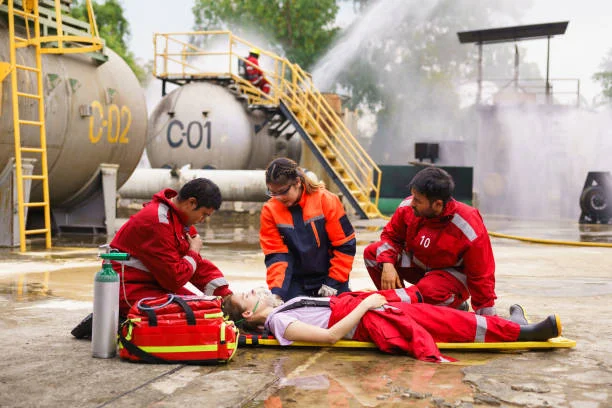
In a world where accidents can happen in the blink of an eye, the difference between a tragedy and a recovery often rests on the shoulders of those standing nearby. Whether it’s a choking incident at a dinner party, a cardiac arrest at the gym Emergency Response Training, or a medical crisis in a high-stakes clinical environment, immediate intervention is the most critical factor in the chain of survival.
This article explores why comprehensive training—specifically STANDARD FIRST AID and CPR-C/ AED—is not just a workplace requirement, but a fundamental life skill that empowers individuals to act when every second counts. Furthermore, for those in specialized fields, we will examine how this foundation evolves into BASIC LIFE SUPPORT (BLS).
Understanding the Triple Threat: First Aid, CPR, and AED
To understand the value of training, we must first break down the three pillars of emergency response:
First Aid: This covers a broad spectrum of medical emergencies, from minor burns and fractures to life-threatening allergic reactions (anaphylaxis) and severe bleeding.
Cardiopulmonary Resuscitation (CPR): This is an emergency procedure used when the heart stops beating. By performing chest compressions, a rescuer manually pumps blood to the brain and vital organs, keeping the person alive until professional help arrives.
Automated External Defibrillator (AED): An AED is a portable device that analyzes the heart’s rhythm and, if necessary, delivers an electrical Emergency Response Training shock (defibrillation) to help the heart re-establish an effective rhythm.
See a related read that adds clarity, context, and practical insight.
Why “Level C” Matters
In the world of first aid, you will often see various “levels” of CPR. Level C is considered the gold standard for the general public and most workplace environments because it covers techniques for adults, children, and infants.
While Level A focuses only on adults, Level C ensures you are prepared for any victim, regardless of age. This is particularly vital for parents, teachers, and fitness professionals who interact with diverse age groups daily. Those who hold a STANDARD FIRST AID and CPR-C/ AED certification are viewed as versatile first responders capable of handling nearly any community-based emergency.
Elevating the Standard: What is BASIC LIFE SUPPORT (BLS)?
While Level C is designed for the “lay rescuer,” certain professions require a higher tier of training. This is where BASIC LIFE SUPPORT (BLS) comes into play. Formerly known as “CPR for Healthcare Providers,” BLS is the industry standard for nurses, doctors, paramedics, and firefighters.
While the fundamentals remain the same Emergency Response Training, BLS introduces advanced concepts that are critical in a clinical or multi-rescuer setting:
Team Dynamics: Learning how to work in a high-pressure team, where roles (compressor, ventilator, AED lead) are switched seamlessly to prevent fatigue.
Bag-Valve-Mask (BVM) Ventilation: Moving beyond mouth-to-mouth or pocket masks to use professional medical equipment for oxygenation.
Pulse Checks and Rapid Assessment: A more clinical approach to identifying cardiac arrest, often including the check of a carotid or brachial pulse.
High-Performance CPR: A focus on the “fraction” of compressions, ensuring that interruptions to chest compressions are kept to an absolute minimum.
The Science of Survival: Why Minutes Matter
When a person suffers from Sudden Cardiac Arrest (SCA), their chance of survival drops by approximately 7% to 10% for every minute that passes without CPR and defibrillation.
By the time emergency medical services (EMS) arrive—which takes an average of 8 to 12 minutes in urban areas—the window for a positive outcome has often closed unless a bystander intervened. Those trained in professional protocols are taught to bridge this gap Emergency Response Training, maintaining oxygen flow to the brain and significantly increasing the victim’s chances of survival.
Key Components of a Comprehensive Training Program
A certified course doesn’t just teach you how to push on a chest; it provides a systemic approach to emergencies. Here is what participants typically learn:
1. Scene Assessment and Safety
Before helping others, a rescuer must ensure they aren’t putting themselves in danger. Training teaches you to look for hazards like live wires, traffic, or fire before approaching a victim.
2. The Primary Survey
Rescuers learn the “CAB” (Compressions, Airway, Breathing) protocols to quickly identify life-threatening conditions. In BASIC LIFE SUPPORT (BLS) Emergency Response Training, this assessment is even more rigorous, often involving a visual “lightning survey” to detect signs of life.
3. Choking Maneuvers
Participants learn how to perform back blows and abdominal thrusts (the Heimlich maneuver) for adults and children, as well as the specialized chest thrusts and back slaps required for infants.
4. Wound Care and Injury Management
From applying pressure to a major arterial bleed to stabilizing a suspected spinal injury, these skills prevent a bad situation from getting worse.
Overcoming the “Bystander Effect”
One of the greatest hurdles in emergency situations isn’t a lack of equipment; it’s the “Bystander Effect.” This psychological phenomenon occurs when individuals do not offer help because they believe someone else will, or because they are afraid of “doing it wrong.”
Certification builds the confidence necessary to break this paralysis. When you are trained, you move from a state of panic to a state of protocol. You don’t have to wonder what to do; your hands follow the training you’ve practiced. Furthermore, most regions have “Good Samaritan” laws that protect rescuers who act in good faith.
The Role of Technology: The AED
Many people are intimidated by the idea of using a defibrillator. However, modern AEDs are designed to be used by anyone. Once turned on, the device provides voice prompts that guide the user through every step. It will not deliver a shock unless the heart’s rhythm specifically requires it, making it nearly impossible to accidentally harm someone Emergency Response Training.
Workplace Safety and Compliance
Beyond the moral imperative, there is a legal and professional one. Most industries are governed by occupational health and safety regulations that require a specific ratio of trained first-aiders to employees.
Having staff members who hold a valid certificate is an investment in a company’s most valuable asset: its people. It creates a culture of safety where employees feel valued and protected. Whether you work in construction, corporate offices, or retail, knowing there is a trained responder on-site reduces anxiety and improves overall morale. For those in the medical or dental field, maintaining a current BASIC LIFE SUPPORT (BLS) certification is often a mandatory condition of employment.
A Call to Action
Emergencies are, by definition, unexpected. We cannot predict when a colleague will collapse or when a family member will choke, but we can control our level of preparedness.
Taking the time to undergo training is a selfless act that benefits your entire community. It transforms you from a helpless witness into a capable responder. If you haven’t refreshed your skills lately, or if you’ve never taken a course, now is the time to seek out a certified provider.
Remember, the life you save is most likely to be someone you know and love. Equip yourself with the knowledge and the tools to make a difference.
Explore more stories designed to inform, inspire, and drive smarter action at 2A Magazine.