As of 2025, the global sports industry is worth nearly $420 billion, with projections to hit $602 billion by 2030. The credit goes to sports fans Fan Loyalty.
Both casual spectators and loyal fans generate significant revenue for cities hosting sports events. The City of Indianapolis, for example, generated an estimated $46.5 million in economic impact when it hosted the National Collegiate Athletic Association’s (NCAA) Final Four in 2021.
The question arises, why do sports fans put so much time, money, and passion into their favorite sports team? And if you’ve ever seen someone scream at a TV screen during the Super Bowl, you know the question makes more sense. This guide takes a deep dive into the psychology of super fans, what drives them, and what roles sports clubs play.
Expand your understanding by diving into this post connected to your last read here.
How Many People Are Sports Fans, Anyway?
More than 67% of Americans describe themselves as fans of at least one sport. Professional football tops the list of most-watched sports, with baseball, college football, and men’s basketball trailing not far behind. Moreover, in 2024, 1 in 3 Americans attended a live sporting event in person.
Factors That Drive Fan Loyalty
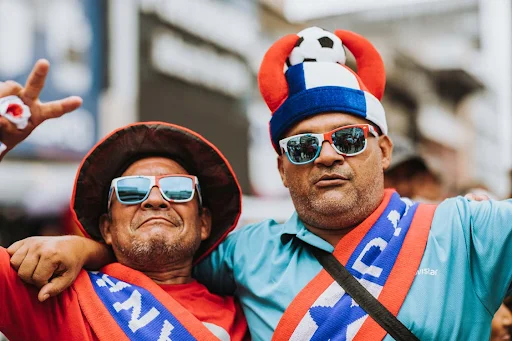
Whether it’s face painting, dedicating weekends to watch every second of a game, or traveling hundreds of miles to attend a game, there are numerous psychological and social factors that contribute to a fan’s competitive drive. Here’s a brief breakdown:
Sense of belonging
Watching or attending a sporting event provides more than just entertainment. It arouses a range of emotions in fans, mainly a sense of belonging. Fans create a sense of identity for themselves, where the team’s wins feel like their wins. The infamous Social Identity Theory (SIT) is the proof of this phenomenon.
Community building
Sporting events, from stadiums to online forums, gather people with a common interest. Fans experience a sense of community and camaraderie.
Self-inclusion
Ever heard a sports fan say, we scored consecutive touchdowns or we won for the fifth week straight? This phenomenon of fans including themselves in their team’s victory is called self-inclusion. Psychologists describe this with two simple acronyms:
BIRG – Basking In reflected glory
CORF – Cutting Off reflected failure
That said, concepts like BIRG and CORF don’t define or categorize every sports fan. Look at it this way: Many teams go years and even decades without winning, but they still have an enormous fan base.
The reason? Sports fans commonly believe that to achieve true fandom, they must remain loyal to their teams under any circumstances. Even if that means backing up a 71-year-old title drought (Sorry, Kings fans). And of course, these die-hard fans detest the fans who bandwagon with the winning teams.
How to Foster Fan Loyalty: Tips for Sports Clubs
Nearly 82% of sports fans watch live streams of their favorite sporting events on TV. But this is changing. This is why sports teams, clubs, and media organizations need to foster engagement through digital and social media channels.
Look at this way: A sports media organization must ensure multi-channel engagement and fan-centric approaches. Understand what drives your specific fan base. According to a new report from Lumenalta, 81% of fans believe that personalization makes them more likely to spend and engage.
This could mean personalized app messages, alerts, and loyalty rewards.
Venture further and uncover ideas that challenge the usual and spark new perspective.