The Importance of Indoor Air Quality in Schools
Schools are more than just spaces for academic learning—they are environments where young minds grow and develop. The quality of the air students breathe during their formative years is often overlooked, but studies show that indoor air can contain higher concentrations of pollutants than outdoor air Cleaner Learning Environments. These pollutants include allergens, volatile organic compounds, dust, and even biological hazards.
With children spending up to 90% of their time indoors, ensuring clean, healthy air is not a luxury—it’s a necessity for educational settings. Thoughtful approaches to air quality control, including adopting specialized cleaning solutions for schools, contribute to healthier occupants and foster a more effective learning environment.
Poor indoor air quality (IAQ) negatively affects respiratory health, causes headaches and fatigue, and contributes to absenteeism among students and staff, impacting academic achievement. Prioritizing IAQ in school design and management is a public health imperative. Key stakeholders, including school administrators and teachers, can enhance air quality by utilizing more effective filtration systems and non-toxic cleaning materials. Supporting these efforts are state and federal guidelines from the U.S. Environmental Protection Agency (EPA), emphasizing comprehensive maintenance and best practices for schools nationwide.
Impact on Cognitive Function and Academic Performance
The influence of air quality on students’ cognitive abilities goes well beyond physical health. Recent studies have identified significant links between indoor air pollution and reduced concentration, slower information processing, and impaired memory Cleaner Learning Environments. Even low levels of air pollution—such as those measured indoors at many schools—can disturb neurological processes crucial for focus and learning.
Children with prolonged exposure to fine particulate matter (PM2.5) and nitrogen dioxide (NO2) exhibit slower development in critical brain areas related to language, executive function, and decision-making. For example, findings from the University of Washington revealed that exposure to NO2 and PM2.5 pollution in early life is associated with alterations in brain development, affecting areas relevant to behavioral and cognitive function.
This evidence highlights that air quality investments are not simply about preventing illness; they are strategic interventions that can directly improve academic performance and equity. In lower-income neighborhoods where schools often struggle with aging infrastructure and inadequate air quality management, such improvements can offer disproportionate benefits, helping to narrow achievement gaps.
Implementing Effective Air Filtration Systems
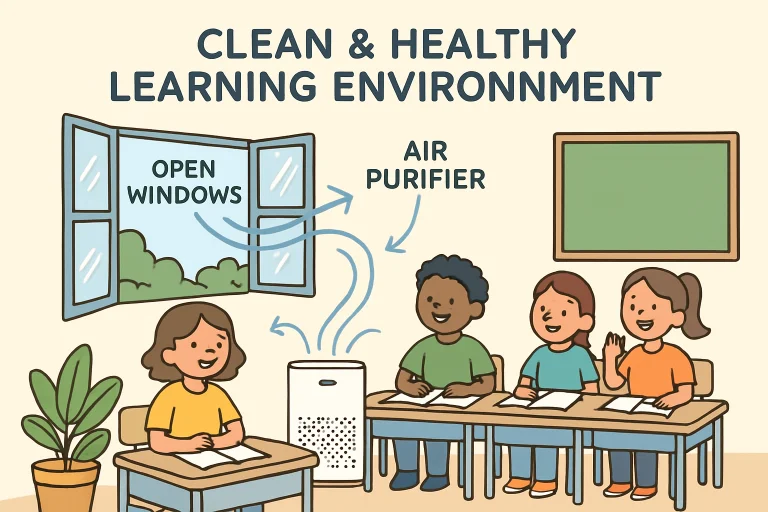
Air filtration systems are proven tools in the fight to keep classrooms free from harmful pollutants and viruses. Modern schools are increasingly adopting portable or built-in HEPA (High-Efficiency Particulate Air) filters, which are effective at capturing tiny airborne contaminants, such as pollen, mold spores, bacteria, and viruses.
In a controlled study published in the Journal of Exposure Science & Environmental Epidemiology, the deployment of HEPA filters in classrooms resulted in a 39.9% reduction in PM2.5 levels, depending on the level of ventilation and room design. These improvements directly translated into healthier student attendance rates and a reduction in respiratory-related complaints throughout the school year.
Another important aspect of filtration is addressing chemical pollutants. Many cleaning agents and materials used in schools emit VOCs (volatile organic compounds). Advanced air purifiers equipped with carbon filters or additional chemical filtration cartridges can further minimize these exposures, improving overall classroom air freshness and safety Cleaner Learning Environments.
Regular Maintenance and Cleaning Practices
An effective indoor air quality plan requires much more than simply installing new filters. Ongoing maintenance, prompt repairs, and daily cleaning routines are crucial for safeguarding indoor air quality. The EPA encourages schools to designate “clean air and cooling centers” for vulnerable children during periods of extreme heat or airborne smoke, ensuring their needs are proactively met.
Routine cleaning, using eco-friendly supplies, removes dust, pollen, and pathogens from surfaces and carpets, reducing the amount that becomes airborne. Regular HVAC inspections, timely filter replacements, and monitoring of humidity levels help keep systems running efficiently and prevent mold growth—the latter being a common trigger for asthma attacks and absenteeism.
Training and Community Involvement
Many schools have found that engaging custodial staff, teachers, and even students in maintenance routines creates a culture of accountability. Whether it’s quickly addressing leaks, reducing clutter, or regularly checking air vents Cleaner Learning Environments, a well-informed school community makes a measurable difference in maintaining high IAQ.
Case Studies and Research Findings
Real-world examples reinforce the transformative power of clean air initiatives in schools. The American Lung Association, in partnership with a Minnesota charter school, provided extensive demonstrations on the impact of targeted air quality improvements. The school saw marked reductions in student absenteeism, reports of asthma incidents, and instances of headaches attributed to indoor air pollution.
Furthermore, an analysis by the Brookings Institution concluded that air quality improvements represent a low-cost, high-impact way to improve both health and educational outcomes. They recommend prioritizing air quality upgrades as an essential part of school infrastructure planning, particularly when schools receive federal or state funding for pandemic recovery or modernization.
Conclusion
Cleaner air is more than a health safeguard—it is a fundamental factor in enabling students to thrive academically and socially. Through prudent investments in air filtration, proactive maintenance, and the adoption of best cleaning practices, schools can create healthier, more equitable, and more effective learning environments. As the research and real-world data show, the path to improved educational outcomes often begins with the air we breathe.
There’s more waiting—discover insights beyond this page at 2A Magazine.