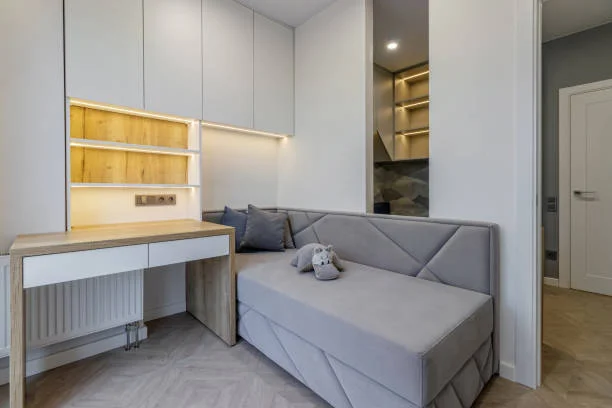
Urban homes are being asked to do more than ever. A small apartment may need to serve as a living room, guest room, home office, dining area, reading corner, and quiet retreat, sometimes all within the same few hundred square feet. In this context, furniture is no longer just decoration. It becomes part of the architecture of daily life.
As cities become denser and living spaces more compact, homeowners and renters are learning to think differently about furniture. The question is not only whether a piece looks good, but whether it helps a room shift from one function to another without feeling crowded or improvised.
This is why multifunctional furniture has become more important in urban interiors. A table may expand for guests. A storage cabinet may divide space. A modular sofa may reshape a living area. A bed may disappear into a wall, or a sofa may become a sleeping area when needed.
For compact homes, pieces such as sleeper sofa beds are especially practical because they allow a single room to support both everyday seating and occasional overnight guests. When designed well, they do not feel like compromises. They help the home adapt.
Compact Living Requires Flexible Thinking
Small-space design is often misunderstood as a problem of fitting more things into less space. In reality, the better approach is to make fewer things work harder.
A compact urban home does not need every traditional room category. It needs zones that can change. The living room might host friends in the evening, become a workspace the next morning, and provide a guest bed on the weekend. The dining table might also serve as a desk. A console might store office supplies, table linens, and media accessories at once.
This kind of flexibility requires careful planning. If every function is handled by a separate piece of furniture, the home quickly becomes crowded. But if each major piece can support more than one use, the space feels calmer and more intentional.
Multifunctional furniture works best when it does not announce itself too loudly. The ideal piece performs more than one role while still looking like it belongs in a considered interior.
The Sofa as a Spatial Anchor
In many compact homes, the sofa is the largest piece in the main room. It defines how people sit, where they gather, how circulation flows, and what the room feels like emotionally. Because of that, the sofa has become more than a seating object. It is often the anchor of the entire living zone.
A traditional sofa may be enough in a larger home with a separate guest room. But in a city apartment, the sofa may need to support more complex use. It may be where someone reads, naps, works on a laptop, hosts a friend, watches a film, or offers a guest a place to sleep.
This does not mean every small home needs a bulky pull-out couch. Proportion still matters. A multifunctional sofa should fit the scale of the room, allow easy movement, and maintain a clean visual line. The best designs hide their utility until it is needed.
Povison’s fully assembled furniture approach can be helpful here because compact homes often benefit from pieces that arrive ready to use. In a small space, the assembly process itself can be disruptive. A room-ready piece reduces that friction.
Multifunctional Does Not Have to Mean Minimal
There is a common assumption that small-space furniture must be extremely minimal. While simplicity can help, compact living does not require stripping a home of personality. A multifunctional interior can still feel warm, layered, and expressive.
The key is restraint with purpose. Instead of filling the room with many small pieces, choose fewer major pieces that offer both function and character. A sofa bed with a refined silhouette, a storage coffee table with a natural finish, or a sideboard with sculptural details can add personality without wasting space.
In design terms, multifunctional furniture should not look temporary. This is especially important in urban homes, where living rooms often sit close to kitchens, entryways, and work areas. If one piece feels too casual or visually heavy, it affects the entire space.
A well-designed multifunctional piece should support flexibility while still contributing to the room’s atmosphere.
The Guest Room Has Changed
One of the clearest examples of this shift is the disappearing guest room. In many urban homes, a dedicated guest bedroom is no longer realistic. That does not mean hospitality disappears. It simply changes form.
A living room can become a guest room for one or two nights if the furniture supports it. A sleeper sofa, side table, reading lamp, and a place to store bedding can create a temporary guest zone without requiring a permanent extra room.
This approach also reflects how people actually live. Many households do not host overnight guests every week, but they still want the option. Keeping an entire room empty for occasional use may not make sense in a compact home. Designing a flexible living room does.
The challenge is to avoid making the guest setup feel like an afterthought. If the sleeping function is integrated into a comfortable, attractive sofa, the room remains useful every day and welcoming when needed.
Storage Is Part of Multifunctionality
Multifunctional furniture is not only about transformation. It is also about storage. In compact homes, storage determines whether flexibility works.
A room cannot shift easily from living area to guest space if bedding has nowhere to go. A dining table cannot become a desk if papers, chargers, and office supplies have no home. A living room cannot feel calm if every surface carries objects that should be stored elsewhere.
This is why storage furniture plays such an important role in urban interiors. Media consoles, sideboards, storage benches, nesting tables, and closed cabinets can help keep the room visually quiet while supporting multiple uses.
The best storage is not hidden randomly. It is placed near the activity it supports. Guest bedding should be near the sleeper sofa. Work supplies should be near the table or desk zone. Everyday items should be easy to put away without disrupting the room.
Good storage makes multifunctional living feel effortless rather than improvised.
Designing for Transitions
A compact home often changes function several times a day. Morning coffee gives way to remote work. Work gives way to dinner. Dinner gives way to rest. A guest may arrive, and the living room becomes a sleeping space.
The success of a multifunctional interior depends on how smooth those transitions feel.
If changing the room requires moving heavy furniture, clearing too many surfaces, or dragging items from one end of the apartment to the other, the design will not be used as intended. People will default to what is easiest, even if it creates clutter.
Furniture should reduce the effort of transition. A sofa bed should open easily. A coffee table should be light enough to move if needed. Storage should be close. Lighting should support multiple uses. A floor lamp can serve both evening reading and guest comfort. A side table can hold a laptop by day and a glass of water by night.
In a small space, design is not only about appearance. It is about choreography.
Material and Visual Weight Matter
Compact homes are sensitive to scale. A piece that looks reasonable in a showroom may dominate a small apartment. That is why visual weight matters as much as physical size.
Low-profile furniture can help preserve openness. Raised legs can create a sense of air. Soft edges can make circulation feel easier. Lighter fabrics can brighten a room, while deeper tones may create intimacy when used carefully.
Materials also affect how multifunctional furniture is perceived. A sofa bed in a refined fabric can feel like a proper living room piece rather than emergency furniture. Wood, stone, metal, and woven textures can help functional pieces feel more architectural.
The goal is not to make every piece disappear. The goal is to give each piece enough presence without overwhelming the room.
A More Intelligent Way to Furnish
The rise of multifunctional furniture reflects a larger design shift. Urban homes are not necessarily becoming less ambitious because they are smaller. In many cases, they require more intelligent choices.
A compact apartment can still feel generous if the furniture supports movement, flexibility, comfort, and storage. A small living room can still host guests if seating adapts. A single room can still feel layered if each piece has a clear role.
The best multifunctional furniture does not make a home feel like a puzzle. It makes daily life feel easier. It allows rooms to change without losing coherence.
As urban living continues to evolve, furniture will increasingly be judged not only by form and material, but by how well it supports changing patterns of life. In that sense, multifunctional design is not a temporary response to small spaces. It is becoming a core principle of modern interiors.