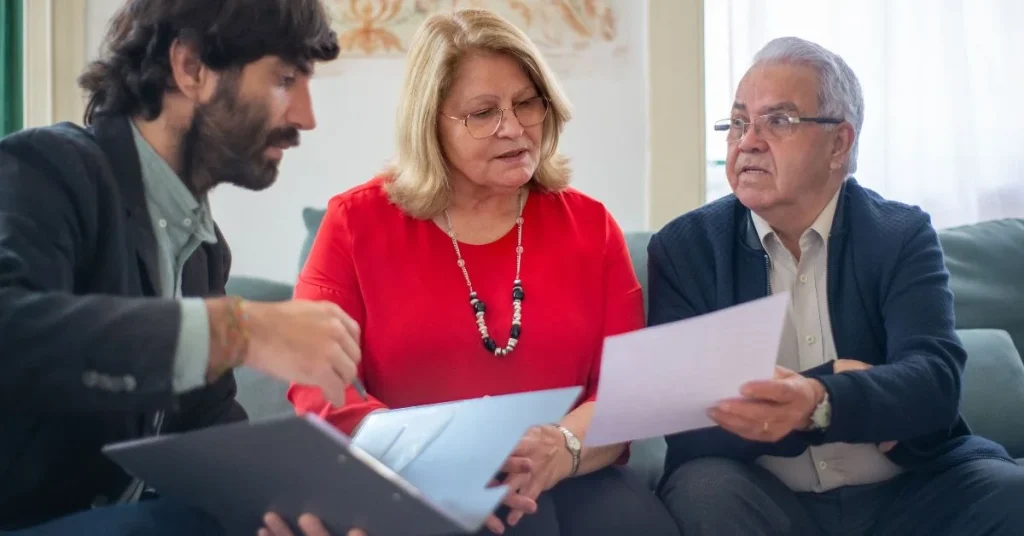
The farm may belong to the family for Saskatoon financial advisor.
That doesn’t mean every family member sees it the same way.
One child has worked there for fifteen years, through early mornings, poor seasons and the kind of equipment breakdowns that never happen at a convenient time. Another child built a life somewhere else and still expects, reasonably, to receive part of what their parents spent decades building.
Then there’s you.
You want to retire. You want the operation to continue. You want to treat your children fairly and, ideally, still have everyone speaking to each other when the paperwork is done.
Simple goal. Difficult structure.
A farm transfer isn’t only a tax transaction or an estate-planning exercise. It’s a retirement decision, a business decision and a family decision happening at the same time, with land values that may look excellent on paper and cash flow that tells a much less exciting story.
That’s why the planning needs to start before anyone is ready to sign.
Equal and fair aren’t always the same thing
You can’t divide a working farm like a bank account
Suppose you have two children and a farm worth several million dollars.
Leaving half to each sounds fair.
It may also leave the child operating the farm unable to buy out their sibling without selling land, taking on heavy debt or breaking apart an operation that works because the pieces remain together.
Leaving the entire farm to the farming child solves that problem and creates another one, because the child who built a career elsewhere may feel that years of unpaid family history somehow ended with them receiving much less.
There’s no formula that removes every difficult feeling.
A Saskatoon financial advisor should help you understand what each possible arrangement means financially, while your accountant and lawyer address the tax and legal structure, but the family still needs to decide what fair means in this particular family, not what looked tidy in somebody else’s succession diagram.
Start with the conversation everyone keeps delaying
Ask who genuinely wants to farm.
Not who feels obligated. Not who once said they might. Not who you assume will eventually come around after you explain how meaningful the opportunity is.
Who wants the responsibility?
Then ask whether that person can run the operation, whether they need more experience, how ownership will transfer and what role you’ll have after the change, because “retired but still making every important decision” tends to confuse everyone, particularly the person who was told the farm now belongs to them.
Talk to the children who aren’t involved too.
You don’t need their permission to make every decision, but silence leaves people to invent their own version of the plan, and the invented version is often more generous, more equal and much less complicated than the real one.
Rising land values make the farm richer and the transfer harder
A valuable asset doesn’t always produce spendable money
Saskatchewan farmland values rose by an average of 13.1% in 2024, the largest provincial increase in Canada that year. Nationally, cultivated farmland values increased by 9.3%.
That increase can strengthen your net worth while making succession more difficult.
The retiring generation sees an asset worth more than ever. The next generation sees land that costs more to acquire and finance. The children outside the operation see a larger estate, while the child working the farm may see the same fields, the same machinery and a much larger number attached to the transfer.
Statistics Canada’s farmland data also show the estimated value per acre of Saskatchewan farm land and buildings rising over recent years, reaching $2,943 in the latest figures shown for 2025.
Good news for the balance sheet.
Not automatically good news for cash flow.
Don’t make the next generation buy the farm twice
Sometimes parents want to transfer the operation while also receiving full market value to fund retirement and maintain equal inheritances.
That desire makes sense.
The numbers may not.
If the next generation has already spent years contributing labour, accepting below-market compensation or building the operation’s value, asking them to purchase the entire farm at current market rates can feel like paying once through their work and again through the financing.
On the other hand, transferring land far below value can leave you without enough retirement income and create resentment among other children.
This isn’t solved by pretending one side is selfish.
It’s solved by modelling the options.
You may transfer ownership gradually, retain some land and rent it to the operating child, use life insurance or non-farm investments to create an inheritance for other children, sell selected assets or structure payments over time.
Each option changes your income, tax, control and family outcome.
Your retirement can’t depend entirely on the next crop
Build income that doesn’t come from active farming
For years, the farm may have paid your living costs while most available money went back into land, equipment, inputs and debt.
That works while you’re operating.
Retirement needs another system.
You may receive rent from land, payments from the next generation, investment income, CPP, OAS or proceeds from selling part of the operation. You may also have RRSPs, TFSAs, corporate investments or off-farm pensions.
Those income sources need to work together, because relying entirely on the next generation to fund your retirement can place too much pressure on the farm, especially during a poor production year or when input and financing costs rise.
Canadian farm debt rose 14.1% in 2024, the largest annual increase since 1981, while farm interest expenses increased 28.6%.
At the same time, realized net income for Canadian farmers fell by about 26% in 2024, with lower crop revenue having a particularly large effect in Saskatchewan.
A transition plan that works only during strong years isn’t ready.
Know what you need before deciding what the farm must provide
Start with your retirement spending.
Not a vague estimate. Not “we don’t need much.” Work through housing, food, travel, vehicles, health costs, gifts to family, taxes and the repairs that continue arriving even when you stop farming.
Then identify what income will arrive without the farm.
The difference tells you what the operation, land or sale proceeds need to provide.
Without that number, you may demand more from the next generation than the farm can support, or transfer too much too early and later discover that your own retirement became the part of the succession plan nobody properly funded.
A Saskatoon financial advisor can help model several outcomes, including a gradual transfer, land rental, partial sale or full sale, and show how each one affects your long-term income.
Tax planning matters, but it doesn’t make the family decision for you
A tax-efficient transfer can still be a bad family plan
Canadian tax rules include provisions that may support qualifying intergenerational farm transfers and provide access to the Lifetime Capital Gains Exemption for qualified farm property.
The federal government reported in 2026 that the Lifetime Capital Gains Exemption had increased to $1.25 million for qualified farm property, with inflation indexing beginning in 2026.
Those rules can make a major difference.
They’re also detailed.
Land use, ownership, family relationships, corporate structures and the history of the farming operation can affect the available treatment. You need advice from a qualified accountant and lawyer who understand agricultural transfers before acting.
Still, minimizing tax isn’t the only goal.
You can structure a transfer efficiently and leave the farming child with too much debt. You can preserve the operation and leave another child feeling ignored. You can create equal dollar amounts and make the farm impossible to operate.
Tax is one part of the decision.
An important part. Not the whole decision.
Coordinate the people giving you advice
Your financial advisor sees your retirement income, investments and insurance.
Your accountant understands the tax structure. Your lawyer prepares the ownership, estate and transfer documents. Your lender sees whether the next generation can finance the plan, and the farm’s operating advisors understand what the business can realistically support.
Those people need to work from the same assumptions.
Otherwise, you may receive several pieces of technically sound advice that produce one impractical plan when assembled.
You shouldn’t have to carry half-understood messages between professionals and hope nothing important gets lost.
The plan belongs to you.
The coordination shouldn’t fall entirely on you.
The transfer needs stages, not one dramatic handover
Ownership and responsibility don’t need to move together
You don’t have to wake up one morning, hand over the keys and disappear.
A gradual transition often works better.
The next generation can take on management before receiving full ownership. You can transfer selected assets, shares or parcels over time. You may retain voting control temporarily, move into an advisory role or establish a clear date when decision-making authority changes.
Clear is the important word.
A gradual transition without deadlines can become permanent limbo, with the next generation carrying responsibility but lacking control while you remain officially retired and unofficially in charge.
Put the stages in writing.
Decide who controls daily operations, major purchases, hiring, borrowing and land decisions at each point.
“Everyone knows” isn’t a governance structure.
Prepare for the transfer that doesn’t happen as planned
The chosen successor may change their mind.
A marriage may end. Someone may become ill. A child who once wanted the farm may discover they want only part of it, or a strong outside offer may arrive and change the family’s view of what the future should look like.
Build alternatives.
What happens if there’s no family successor? Could the farm be rented, sold gradually, transferred to employees or sold to another producer? What happens if you die before the transition is complete?
A plan doesn’t fail because it includes backup options.
It fails when everyone assumes the preferred option is guaranteed.
Choosing a Saskatoon financial advisor
Look for someone who understands farms as families and businesses
Farm planning involves more than calculating investment returns.
Ask whether the advisor has worked with farm families, incorporated agricultural operations, land transfers and retirement plans built around assets that produce income but aren’t easily sold in pieces.
Ask how they coordinate with accountants, lawyers and lenders.
Ask what happens when the financial answer and family preference don’t match neatly, because that moment is coming and a useful advisor won’t pretend the spreadsheet has the authority to settle it.
A high net worth financial advisor can help you compare scenarios and understand the trade-offs, but they should also know where their role ends and when specialized tax or legal advice is required.
Look for work that leads to action
A succession plan shouldn’t remain a binder on a shelf.
It should produce decisions.
Book the family meeting. Obtain current land and business valuations. Review ownership records. Update wills and shareholder agreements. Calculate retirement spending. Decide which child wants what role. Identify the insurance, investments or other assets available to support children outside the farm.
Then assign dates.
A plan without dates is often only a collection of good intentions, and farm families already have enough work that needs doing someday.
The farm can continue without asking every child to want the same thing
Keeping the farm in the family can be a meaningful goal.
It shouldn’t require pretending every child made the same contribution, wants the same future or needs to receive the same collection of assets.
Fairness may involve different assets, different timing and different responsibilities.
That’s uncomfortable. It can also be honest.
A clear plan helps you fund your own retirement, give the operating child a workable path to ownership and provide something meaningful to children who chose another life, without forcing the farm to carry more debt than it can reasonably support.
The goal isn’t a mathematically perfect ending.
It’s a workable one.
One where the farm has a future, you have an income and your children understand why the plan looks the way it does, even when it doesn’t give everyone the same thing.
Frequently asked questions
How can a Saskatoon financial advisor help with farm succession?
A financial advisor can model transfer options, calculate your retirement-income needs, review personal and corporate investments and help coordinate your accountant, lawyer, lender and insurance professionals.
How early should we begin planning a farm transfer?
Start several years before you expect to step back. Complex transfers often require time to train a successor, change ownership, arrange financing, address tax issues and build retirement assets outside the farm.
Should every child inherit an equal share of the farm?
Not necessarily. Equal ownership can create operational and financing problems when only one child farms. Families often use other assets, insurance, cash or different ownership arrangements to create a fairer overall result.
Can I transfer a farm to my child without selling it at full market value?
Different transfer structures may be available, but the tax, retirement and family consequences require professional advice. The plan must also leave you with enough income and avoid placing unsustainable debt on the next generation.
Should I keep ownership of the farmland after I retire?
You may retain land and rent it to the operating child, transfer it gradually or sell it. The right choice depends on your retirement income, tax position, control preferences, estate plan and the farm’s cash flow.
What professionals should be involved in farm succession?
Most farm transitions require a financial advisor, accountant and lawyer. Depending on the plan, you may also need a lender, business valuator, insurance specialist, agronomist or family-meeting facilitator.