Charred timber didn’t suddenly become fashionable. It crept back into view, slowly, almost reluctantly, as architects grew tired of surfaces that looked immaculate at handover and disappointing a few seasons later. Shou Sugi Ban has always existed on the edges of architectural thinking, part craft, part material treatment, rarely marketed loudly. What changed wasn’t the technique itself, but the way buildings began to be judged over time.
For a long stretch, contemporary architecture chased control. Clean lines. Smooth finishes. Predictable ageing. Timber, especially untreated timber, struggled in that environment. It moved. It changed colour. It reacted to moisture and sunlight in ways that made clients nervous. Charred timber, though, behaved differently, and that difference mattered.
Burning the surface of timber alters more than its appearance. The charring process changes how the wood interacts with moisture, insects, and exposure. The outer layer becomes less hospitable to decay. Water sheds more easily. Movement is reduced. None of this makes timber immune to failure, but it makes it calmer. More understandable.
That predictability is the real turning point. Architects rarely avoid timber because they dislike it. They avoid it when it introduces too many unknowns. Charred timber reduces those unknowns just enough to make it usable again, even on projects where long-term performance is scrutinised closely.
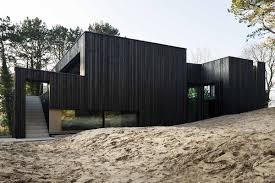
Visually, the material carries a weight that lighter timber finishes often lack. Dark façades ground buildings. They sit quietly against glass, steel, or concrete, allowing form and proportion to do the work. Shadows deepen. Edges sharpen. The material doesn’t shout, but it holds attention in a way that feels deliberate rather than decorative.
Modern approaches to Shou Sugi Ban wood sit somewhere between tradition and industrial control. Charring depth is managed. Finishes are stabilised. Boards are selected and processed with consistency in mind. What was once highly variable is now reliable enough to be specified across full façades rather than limited features.
That reliability has changed how architects deploy the material. It is no longer reserved for accent walls or small interventions. Entire buildings are wrapped in charred timber. Extensions use it to contrast against brick or render. Cultural projects use it to introduce texture without colour. The material feels intentional, not experimental.
Maintenance is part of this conversation too. Light timber finishes demand attention. They stain, mark, and fade unevenly when neglected. Charred timber tends to weather more quietly. Changes happen slowly. The surface dulls rather than degrades. For clients, that difference often becomes the deciding factor.
Of course, timber and fire remain an uncomfortable pairing in public perception. Regardless of how well a system performs, the association persists. Regulations have become stricter, more complex, and far less forgiving, particularly for residential and public buildings. Ignoring fire performance is no longer an option.
Rather than walking away from timber altogether, many designers have taken a pragmatic route. Fire performance is addressed directly, as part of the specification, rather than treated as a secondary concern. This shift has allowed timber to remain in use without constant compromise.
The availability of fireproof cladding systems has changed the tone of these discussions. Fire-retardant treatments allow charred timber façades to meet required classifications while retaining the surface qualities that made the material attractive in the first place.
This matters because visible compromises undermine confidence. When façades look defensive, people assume they are. When fire performance is integrated quietly, without altering appearance, buildings read as resolved rather than cautious.
There is also a broader change happening in how materials are specified. Architects increasingly think in systems rather than finishes. Charred timber combined with fire treatment is one example of this approach. Durability, safety, and appearance are addressed together, not layered on awkwardly later.
From a construction perspective, this reduces risk. Contractors work with materials that behave predictably. Installation details are familiar. The chances of site-led improvisation are reduced. Over time, that consistency matters as much as the initial specification.
Sustainability often sits quietly behind these decisions. Timber stores carbon. Extending its service life improves that equation. Charred finishes and fire treatments both contribute to longevity when applied correctly. It isn’t about claiming perfection, but about making sensible, defensible choices.
What has brought Shou Sugi Ban back into contemporary architecture is not fashion or nostalgia. It is fit. The material aligns with how buildings are now designed, regulated, and judged over time. It performs well enough to be trusted and looks strong enough to be left alone.
That balance is rare. And once architects find it, they tend to keep using it.