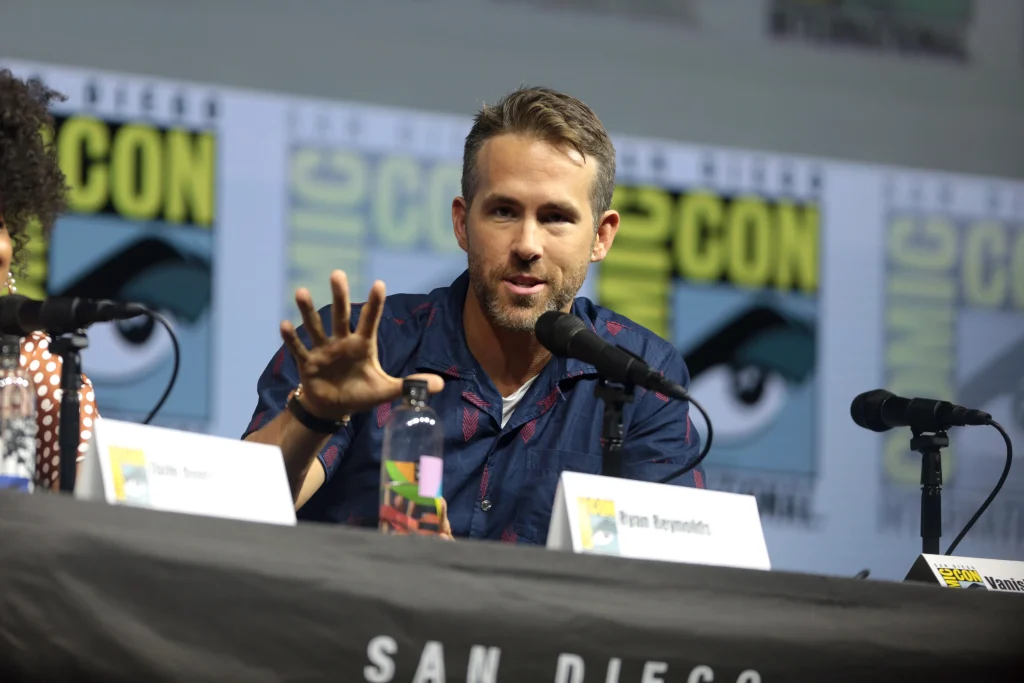
The $1.1 billion sale of Aviation American Gin to Diageo in August 2020 did more for Ryan Reynolds net worth than twenty years of film work. He had owned a stake in the brand for less than two years. He sold it for a reported $335 million upfront plus earn-out payments tied to performance targets — a structure that, according to Bloomberg’s coverage of the deal at the time, could push total proceeds toward $610 million over a decade. The actor who almost didn’t happen became one of Hollywood’s shrewdest dealmakers. That pattern — acquire early, build the brand personally, exit at maximum valuation — is what defines his finances now.
Early Life: Vancouver to Hollywood via Soap Operas
Ryan Rodney Reynolds was born October 23, 1976, in Vancouver, British Columbia. He was the youngest of four sons in a family his father, a former Royal Canadian Mounted Police officer turned food wholesaler, ran with considerable discipline. What stood out at the time — watching his early interviews from the late 1990s — was how specifically he credited his Vancouver upbringing for his comedic timing: the self-deprecation, the deflection, the joke that lands before the emotion can.
He left school at 17 to pursue acting and landed his first significant role on the Canadian teen soap Hillside in 1991. American audiences knew him first from the ABC sitcom Two Guys and a Girl, which ran from 1998 to 2001. Neither role suggested the trajectory ahead. Ryan reynolds net worth at that point was whatever a mid-tier sitcom actor could save — modest, forgettable, unlikely to appear in any financial profile.
Career Overview: The Long Road to the Right Character
The early 2000s were a grind by any measure. Van Wilder (2002) built a cult following but didn’t move Hollywood. Blade: Trinity (2004) put him in a superhero franchise without making him one. Green Lantern (2011) was the nadir — a $200 million production that grossed $219 million globally, generating no sequel and substantial mockery, including from Reynolds himself in every subsequent interview.
What changed everything was Deadpool. The character had been languishing in development hell since the 2009 X-Men Origins: Wolverine cameo that fans rejected loudly. Reynolds spent years advocating for a proper standalone film with an R-rating. Fox greenlit it in 2015 on a budget of $58 million — conservative by Marvel standards. Released February 12, 2016, it earned $782 million worldwide, according to Box Office Mojo. The sequel in 2018 added another $785 million. Deadpool & Wolverine in 2024 crossed $1.3 billion, making it the highest-grossing R-rated film in history, as reported by Variety.
That said, box office gross is not actor compensation. The more important thing Deadpool did was reposition Reynolds as a bankable IP. It gave him leverage — in studio negotiations, in brand partnerships, and in the business world where his real wealth was being built simultaneously.
Ryan Reynolds Net Worth: Career Earnings Breakdown
All figures are estimates based on publicly reported data.
Methodology transparency: This estimate is based on reported film salaries cross-referenced against SAG-AFTRA scale minimums and known backend participation deals, combined with documented business exit proceeds from the Aviation Gin and Mint Mobile transactions. The figure excludes unrealised gains from current equity holdings (Wrexham AFC, Maximum Effort productions) because those values are illiquid and unverified. The range of $350–400 million reflects uncertainty around Mint Mobile’s earn-out structure and ongoing Aviation Gin performance payments.
Film salary history: Reynolds reportedly earned $2 million for the first Deadpool, negotiating a percentage of profits rather than a larger upfront fee — a decision that, given the $700 million in net profit the film generated, was structurally intelligent even if the exact backend figure is not public. For Deadpool & Wolverine, Variety reported his compensation had scaled significantly, with estimates ranging from $20–30 million including backend participation. His non-Deadpool salary history — Free Guy, The Hitman’s Bodyguard, Red Notice — sits in the $20–27 million per film range for lead roles, benchmarked against comparable A-list actors in action-comedy, according to The Hollywood Reporter’s annual compensation surveys.
HOW THE MONEY ACTUALLY WORKS: Hollywood’s backend system means the headline salary is rarely the whole story. An actor who negotiates 5% of adjusted gross receipts on a $700 million profit film earns $35 million from that clause alone — on top of upfront pay. Studios use “adjusted gross” rather than “net profit” specifically to reduce what they pay out; getting gross points instead of net points is the difference between meaningful backend income and nothing. Reynolds has reportedly structured deals with gross-point participation since Deadpool‘s success. That is a negotiating position unavailable to most actors and explains why even mid-sized hits add meaningfully to his total wealth.
Aviation Gin: Acquired a stake in 2018 for an undisclosed sum. Sold to Diageo (NYSE: DEO) in August 2020. Bloomberg reported the deal at $335 million upfront plus performance earn-outs that could reach $610 million total. Given he owned a minority stake, his personal proceeds were a portion of those figures — but even at 30% equity, the upfront number alone exceeds his entire film career earnings to that point.
Mint Mobile: Acquired a stake in 2019. Sold to T-Mobile in 2023 for $1.35 billion, as confirmed in T-Mobile’s SEC filing. His exact equity percentage is not public. At even a 20% stake, the proceeds would approach $270 million — though capital gains tax and deal structure reduce the liquid figure considerably.
Endorsements and Sponsorships
The Aviation Gin and Mint Mobile deals were not conventional celebrity endorsements. They were ownership stakes that Reynolds built into sale-ready businesses through personal marketing involvement — a model closer to private equity than sponsorship.
His Maximum Effort production company, founded with partner George Dewey, creates the advertising content in-house. This removes agency fees and gives Reynolds creative control that traditional celebrity spokespeople never have. The company produced the Mint Mobile ads, the Aviation Gin campaigns, and the Wrexham documentary. According to Fast Company’s 2022 profile of the company, Maximum Effort charges clients a flat fee for campaigns rather than the traditional percentage-of-spend model, keeping margins significantly higher.
Beyond owned brands, Reynolds has maintained traditional endorsement relationships with brands including Hyundai and others, but these represent a small fraction of his income relative to the business exits.
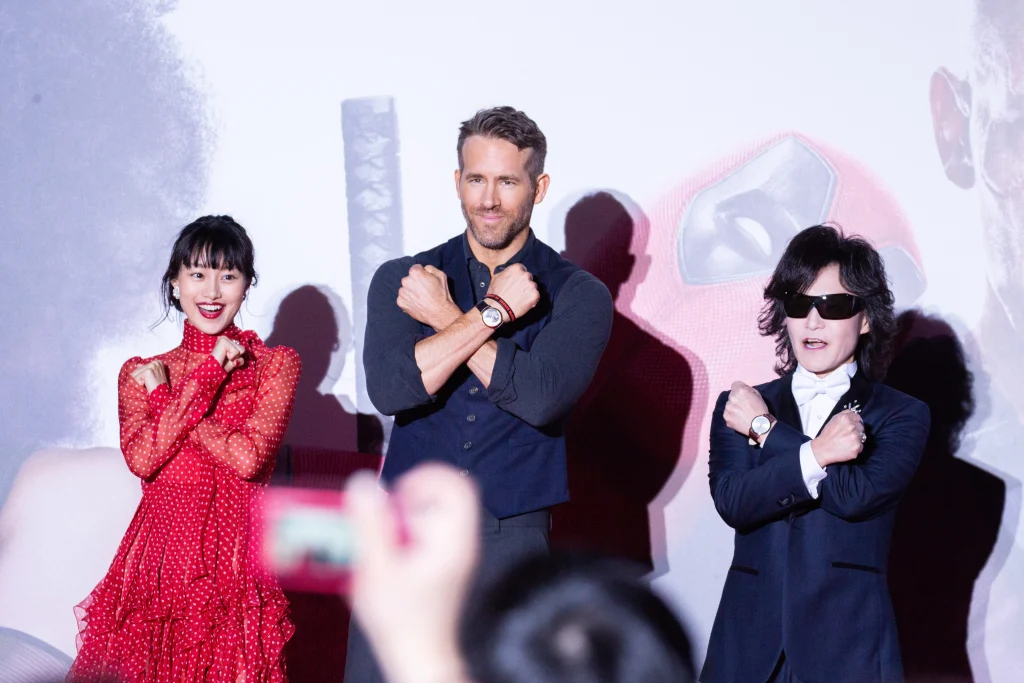
Dick Thomas Johnson from Tokyo, Japan, CC BY 2.0 https://creativecommons.org/licenses/by/2.0, via Wikimedia Commons
Investment Portfolio and Business Ventures
The Wrexham AFC acquisition is the most visible current holding. Reynolds and actor Rob McElhenney purchased the Welsh football club in February 2021 for approximately £2 million. The club’s promotion from the National League to League One by 2024 increased its estimated value substantially. The FX/Hulu documentary Welcome to Wrexham — which ran for multiple seasons — was itself a revenue-generating asset, not just a publicity vehicle. What no one has publicly answered yet is whether Reynolds structured the Wrexham deal with eventual sale provisions or whether this is a long-term hold.
Maximum Effort Productions operates as both a content studio and an acquisition vehicle for distressed or under-marketed brands. The model is repeatable. That is the clearest signal about where his wealth goes next.
Real Estate Holdings
Reynolds and Blake Lively own a Bedford, New York estate purchased in 2012 for a reported $2.35 million, now estimated at $7–9 million based on regional appreciation. They previously owned a Tribeca apartment in Manhattan, sold in 2018. They purchased a second property in the Pound Ridge, New York area. Specific purchase prices for more recent acquisitions are not publicly documented, though real estate industry estimates based on comparable sales in Westchester County place their combined property holdings at $15–20 million.
Post-Career — A Misleading Label
Reynolds is 48 and shows no indication of slowing film activity. Deadpool & Wolverine in 2024 confirmed his status inside the MCU for at least another cycle. Maximum Effort continues acquiring and marketing brands. Wrexham is generating its own media economy.
The more accurate frame is that his acting career is now one income stream among several, rather than the primary one. That structural shift — which happened somewhere between the Aviation Gin sale and the Mint Mobile exit — is what separates his financial position from almost every other actor of comparable fame.
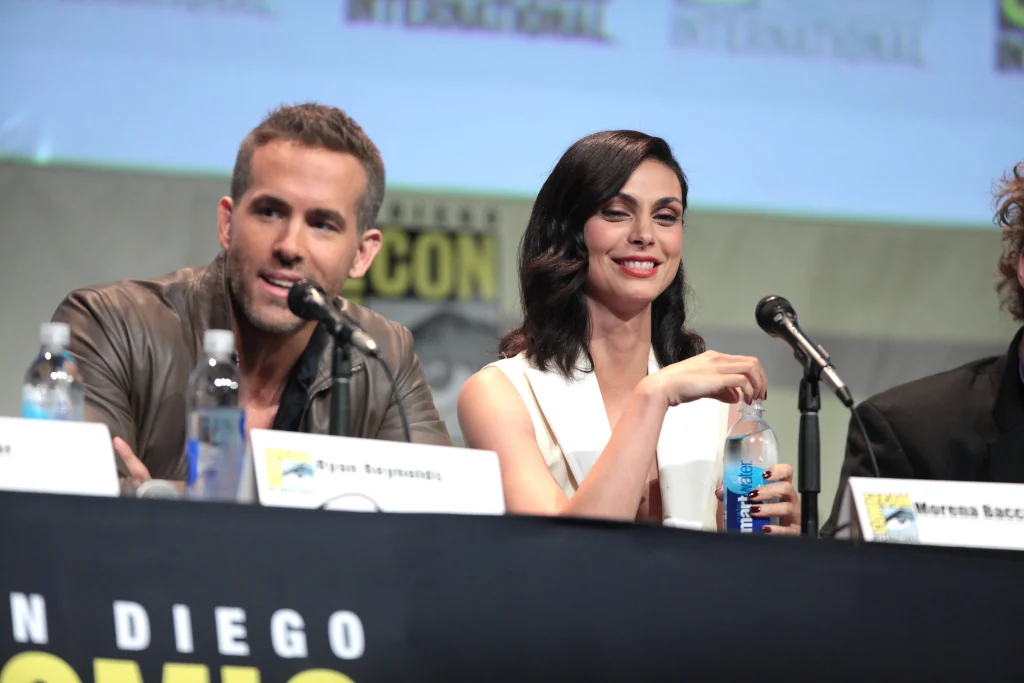
Gage Skidmore from Peoria, AZ, United States of America, CC BY-SA 2.0 https://creativecommons.org/licenses/by-sa/2.0, via Wikimedia Commons
Ryan Reynolds Net Worth: Peer Comparison
Figures estimated from public sources. All values approximate as of early 2025.
| Name | Primary Wealth Source | Est. Net Worth | Key Exit/Deal |
|---|---|---|---|
| Ryan Reynolds | Business exits + film | ~$350–400M | Aviation Gin ($335M+), Mint Mobile ($1.35B deal) |
| Dwayne Johnson | Film + Teremana Tequila | ~$800M | Teremana valuation ~$3.5B (Forbes, 2023) |
| George Clooney | Film + Casamigos Tequila | ~$500M | Casamigos sold to Diageo for $1B (2017) |
| Hugh Jackman | Film + stage + production | ~$180M | No comparable business exit |
| Will Smith | Film + music + production | ~$350M | Westbrook Inc. production company |
| Chris Evans | Film + production | ~$80M | No major business exit to date |
The Dwayne Johnson and George Clooney comparisons are instructive. All three pursued the celebrity-spirits model. Johnson’s Teremana has not yet been sold; Clooney’s Casamigos exit in 2017 at $1 billion was the template Reynolds studied, according to his own public comments. Reynolds executed a comparable playbook in roughly half the time Clooney took.
The uncomfortable truth the comparison reveals: Reynolds’s net worth would be roughly $80–100 million — closer to Chris Evans — if he had only made films. The business exits are the entire story.
Legacy and Cultural Impact
Deadpool changed what an R-rated superhero film could earn. That is a measurable, specific legacy — before February 2016, no R-rated comic book adaptation had approached $700 million globally. The film that followed proved it was repeatable. The 2024 film proved it could scale to $1.3 billion. Reynolds spent a decade advocating for that creative vision against studio resistance, and the industry shifted around him.
His marketing model — founder-led, self-deprecating, culturally fluent — has been widely imitated but rarely replicated at the same commercial scale. The Aviation Gin “proposal” ad, the Mint Mobile campaigns, the fake Peloton response ad: these are case studies in brand communication that business schools have examined seriously, not just viral moments.
What is still unresolved is whether the Maximum Effort model has a third act. The first two exits (gin, mobile) validated the playbook. The question the industry is watching is whether Reynolds can identify and build a third brand to exit-ready status — and whether the market will assign him the same multiplier a second time.
The Real Number
Three hundred and fifty million dollars built from a gin brand, a phone company, and a Welsh football club — with Deadpool as the platform that made all of it possible. Ryan Reynolds net worth is not an actor’s fortune. It is a founder’s fortune wearing an actor’s face. The distinction matters because it tells you something specific about where value actually accumulates in the entertainment industry — and it is rarely in the credits.
Disclaimer: Net worth figures and financial estimates in this article are based on publicly available information, reported contract data, and industry-standard estimation methodology. They should be treated as approximations, not verified financial disclosures. Ryan Reynolds’s actual net worth may differ materially from figures cited here. This article is for informational purposes only and does not constitute financial or investment advice.
Featured Image: Gage Skidmore from Peoria, AZ, United States of America, CC BY-SA 2.0 https://creativecommons.org/licenses/by-sa/2.0, via Wikimedia Commons