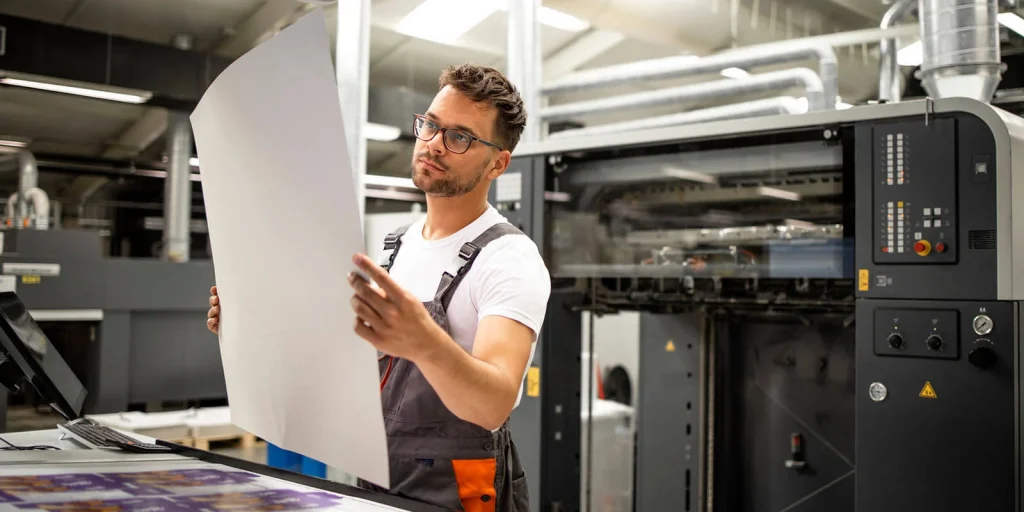
Commercial Printing vs. Local Print Shop: Cost, Speed, and Service Compared
At 9:10 a.m. on a Monday in Manhattan, a marketing manager realizes the “final” trade-show one-pager isn’t final. The QR code changed overnight, the sponsor logo is wrong, and the sales team wants 500 copies on their desks by 3 p.m. The first instinct is predictable: search print shop and pray someone can fix it fast.
Across town, a procurement lead at a mid-size manufacturer has the opposite problem. They don’t need 500. They need 50,000 inserts—price-sensitive, consistent, and drop-shipped to three warehouses. That’s not a walk-in job. That’s commercial printing territory.
This is the decision B2B buyers keep making in NY, IL, and TX: do you buy from a large-scale commercial printer built for volume, or a local print shop built for speed, collaboration, and control? This article breaks down the real trade-offs—pricing models, delivery timelines, and quality risk—so you can choose the right partner for each job.
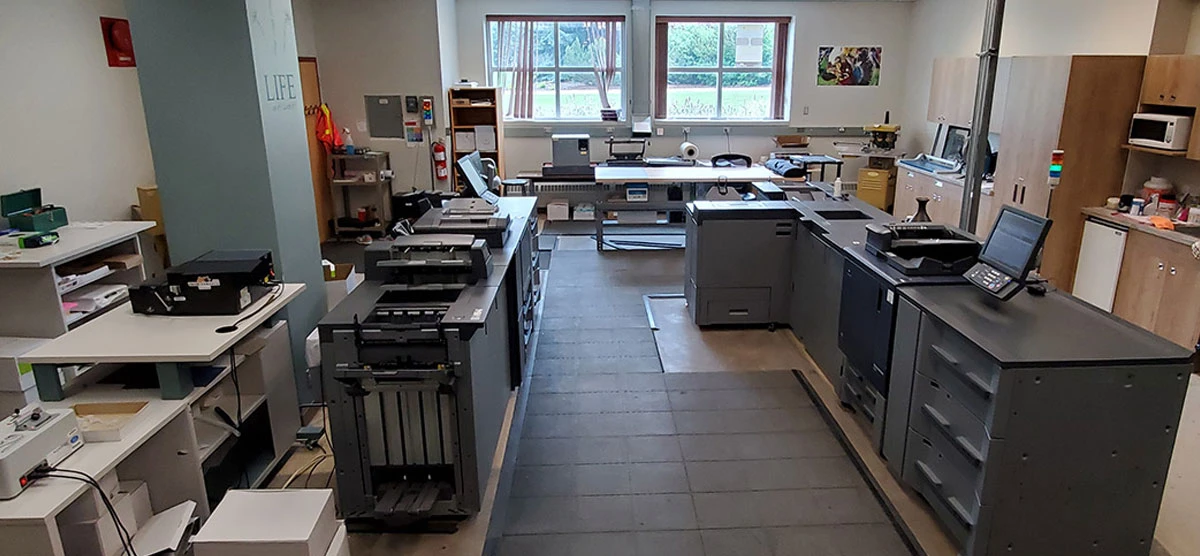
Context: What’s happening in the NY / IL / TX print market
The modern print market is split into two systems that behave very differently:
- Commercial printing (often online-first, centralized production, shipping-based): optimized for repeatable jobs, scale, and automation.
- Local print shops (local pickup, consultative service, hands-on finishing): optimized for deadlines, iteration, and problem-solving.
In New York, the “speed premium” is real—events, real estate, restaurants, and retail run on compressed timelines. Chicago buyers skew toward planned production tied to trade shows, construction cycles, and enterprise procurement. In Texas, the footprint is bigger; logistics and delivery windows matter more, and large-format work (signs, banners) is a constant.
That’s why search behavior looks like this:
- When it’s urgent, buyers search printing shop near me or local print shops near me.
- When it’s planned and scaled, they search commercial printing and compare quotes like freight contracts.
If you’re a buyer in NYC Metro (including print shop New York and print shop New Jersey searches), Chicago, or Texas metros, the right answer is rarely “always local” or “always commercial.” It’s job-by-job.
The main dimensions that matter: cost, speed, service, and quality risk
1) Price isn’t a number—it’s a pricing model
Commercial printers tend to price like manufacturing:
- lowest unit cost at higher volume,
- standardized options,
- add-ons for speed, proofs, or special finishing.
Local print shops price like production + service:
- file help, layout fixes, proofing, color tuning,
- flexible substitutions (paper swaps, trim changes),
- and a premium for urgency.
If your job includes “human time” (fix the file, match the color, reprint 20 because the venue changed the schedule), a local custom print shop can be cheaper overall—even if the line-item quote is higher.
2) Speed depends on where the clock starts
Commercial printing speed is usually:
- production time (queue + press + finishing) plus
- shipping time.
Local print shops often start the clock at:
- “file approved” → “print” → “pickup,” with fewer handoffs.
For example, national retail-style networks publicly advertise same-day pickup windows for certain products (order-before-noon rules), which reflects the local model’s advantage: short-distance fulfillment. FedEx Office notes that many flyer orders can be ready same-day/within 24 hours with in-store pickup, depending on quantity and cutoff time.
3) Service is the hidden line item
Commercial printing is great when:
- the file is correct,
- the spec is standard,
- the timeline is stable.
Local print shops shine when:
- stakeholders are changing the file,
- you need someone to sanity-check bleed, folds, and readability,
- you want to see a proof in person or do quick iterations.
4) Quality control is really “risk control”
Two buyers can order the same spec and have wildly different experiences depending on risk:
- brand colors that must match across reorders,
- large-format installs where a 1% scaling error is a disaster,
- folding or trimming where tolerances matter.
Commercial printers reduce risk through standardization. Local print shops reduce risk through intervention: someone catches the issue before it becomes 5,000 mistakes.
Pricing and turnaround: realistic ranges (with real-world reference points)
Below is a practical way to compare common jobs using published price anchors and turnaround signals. Treat these as reference points, not universal pricing—specs change everything (paper, finish, quantity, sides, shipping, and proofs).
What to take from the table (the buyer logic)
- If you’re buying small quantities fast, local pricing can be competitive because you’re paying for immediacy, not shipping and production queues. Staples publishes same-day pickup windows and tiered flyer pricing that illustrates how local/retail print is structured for short-run demand.
- If you’re buying large quantities planned, commercial printing typically wins on unit economics—especially when the file is clean and the spec is stable.
- If you’re buying anything with high error-cost (brand-critical color, fold accuracy, installation timing), the cheapest quote can be the most expensive outcome.
Decision-making: how B2B buyers should choose (without guessing)
Step 1: Classify the job by urgency and volatility
Ask two questions:
- Will the file change after approval?
- What happens if the print is wrong?
If the answer is “yes” and “it’s a problem,” you want local control: proofing, fast iteration, and a shop that will call you before running the job.
Step 2: Decide what you’re optimizing for
You can’t optimize all three at once:
- Lowest unit cost (commercial printing advantage)
- Fastest time-to-hand (local print shop advantage)
- Highest-touch service (local print shop advantage)
Most B2B buyers rotate priorities by project:
- real estate: speed + repeatability (flyers + real estate sign workflows)
- restaurants/retail: speed + small batches
- manufacturing: cost + consistency + logistics
Step 3: Compare providers using operational questions (not marketing claims)
Use these questions on every quote request:
- What’s the production time vs delivery time?
- What’s the cutoff time for same-day or next-day?
- Do you do file checks (bleed, folds, safe area)?
- What’s your remake policy if there’s a defect?
- Can you keep specs consistent across reorders?
Commercial printers often publish turnaround rules. For example, PrintRunner states many products have a standard turnaround of 3 business days, with expedited options available.
Step 4: Treat “print shop near me” as a strategy, not a panic search
When buyers search local print shops near me, they’re usually buying one of these outcomes:
- same-day pickup,
- a human to fix/preflight the file,
- controlled reprints if stakeholders change their mind.
FedEx Office explicitly describes same-day readiness for many orders with cutoff-time constraints—exactly the operational logic behind local print demand.
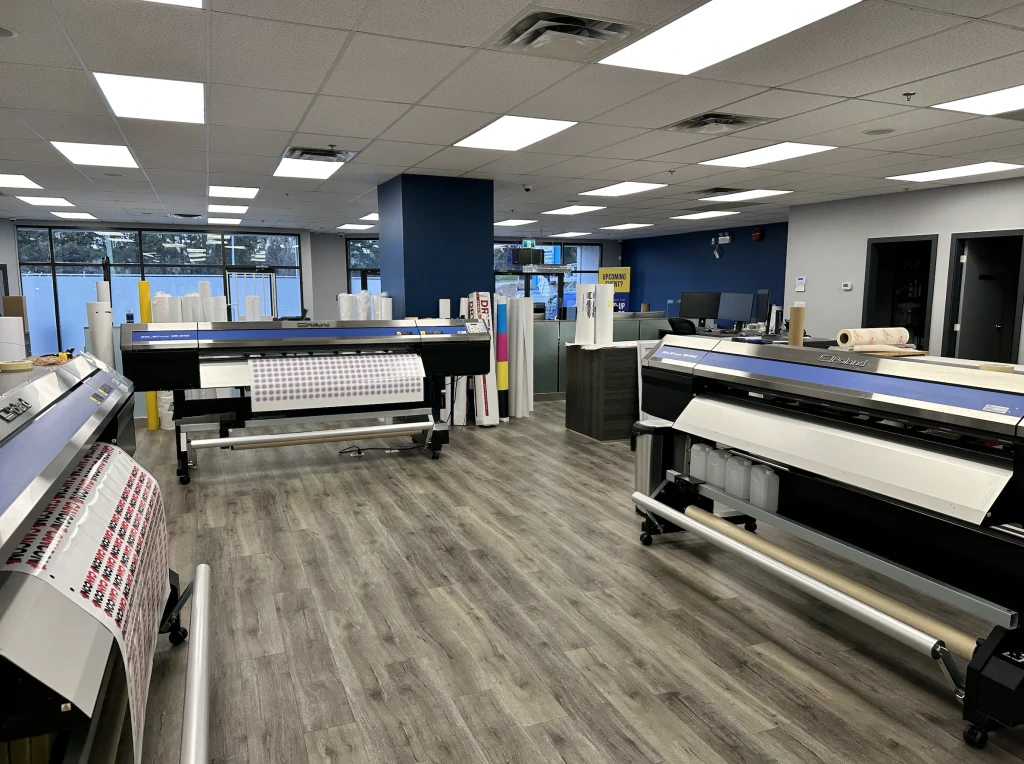
Mini case study: two realistic NY/IL/TX scenarios
Scenario A: NYC real estate team with a Thursday open house
Problem: A Brooklyn brokerage needs 300 flyers, 10 yard signs, and updated QR codes by tomorrow morning. The listing copy is still changing.
Decision: Local print shop NY workflow wins, even if unit cost is higher:
- Flyers can be produced in small tiers (25/50/100+) and re-run quickly if the QR changes. Published local-style tier pricing exists for this exact use pattern.
- Yard signs are straightforward, but the risk is wrong address/agent phone. A local proof step is worth more than “cheap online.”
Result: They pay slightly more than a bulk online order—but avoid reprint waste, shipping risk, and missed timelines.
Scenario B: Chicago exhibitor shipping to Austin for a TX conference
Problem: A company headquartered near Chicago is exhibiting in Austin. They need a banner, handouts, and brochures delivered to the hotel with reliable timing.
Decision: Split the job:
- Commercial printing for brochures if specs are stable (better unit economics; defined turnaround structures are common).
- Banner production can be commercial if production-time options are explicit; one major vendor shows 1-business-day “ready to ship” options and a visible price point for a standard configuration.
- Local backup plan: have a Texas-based shop on standby for emergency reprints.
Result: They control cost where scale matters and control risk where deadlines can break the event.
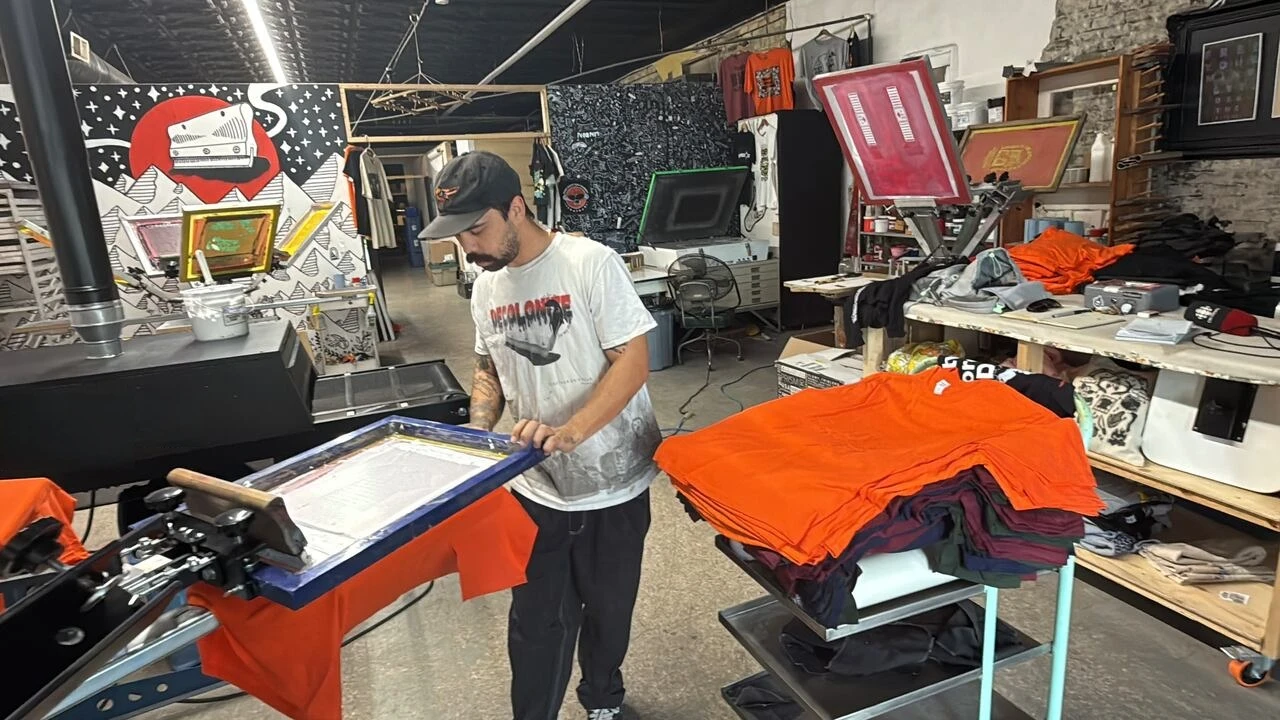
Where Print Shop Signs7 fits (soft integration)
The most practical print strategy in NY, IL, and TX is not ideological—it’s operational: match the vendor to the job’s risk and timeline.
Print Shop Signs7positions itself in the middle of that reality: a print shop built for business buyers who need fast execution, clear specs, and dependable reorders—without turning every job into a weeks-long procurement cycle. If you’re balancing deadlines, brand consistency, and budget across multiple locations, that hybrid mindset is usually what reduces total cost.
Conclusion + CTA: choose the right system for the right job
Commercial printing tends to win when volume is high, specs are stable, and shipping timelines are acceptable. Local print shops win when deadlines are tight, files are changing, and quality risk is expensive.
If you want a clear recommendation for your next job—what to print locally, what to run as commercial, and how to spec it to avoid reprints—book a consultation with Print Shop Signs7 .
FAQ
How much does a print shop cost in New York?
It depends on quantity, finishing, and how fast you need it. Published reference points show small-batch flyers can start around $13.99 for 25 and scale by tier, while yard signs may start around $17.99 each for a standard size.
What’s the difference between commercial printing and local print shops for B2B buyers?
Commercial printing is optimized for scale and standardized production; local print shops are optimized for speed, iteration, and hands-on quality control. If the file is stable and volume is large, commercial often wins on unit cost; if the file is changing or time is tight, local wins on operational certainty.
How fast can I get flyers from a printing shop near me?
Many local-style providers advertise same-day or within-24-hour pickup depending on cutoff time and quantity. For example, FedEx Office notes many flyer orders are ready the same day/within 24 hours with in-store pickup (quantity and order time matter).
Is “print shop near me” better for last-minute business cards?
Often, yes—because pickup avoids shipping delays and allows quick corrections. Public pricing examples show quick-turn business cards starting around $13.99 for 100 in one local-style model, with premium options higher.
When does commercial printing become cheaper than local print shops?
When the job is large, repeatable, and stable—because setup costs spread across volume and production is standardized. Commercial printers frequently publish standard turnaround structures (e.g., “3 business days” as a baseline with paid expedite options).
Can a print shop also support signage and installation workflows?
Many print vendors produce banners, yard signs, and rigid signage; installation is often handled by a separate partner (a signage company in USA or a national sign installation company) depending on the job and location. If your project includes a real estate sign post company requirement, treat print + install as two linked specs: print accuracy and install timing.
For more helpful insights, keep reading our blog.