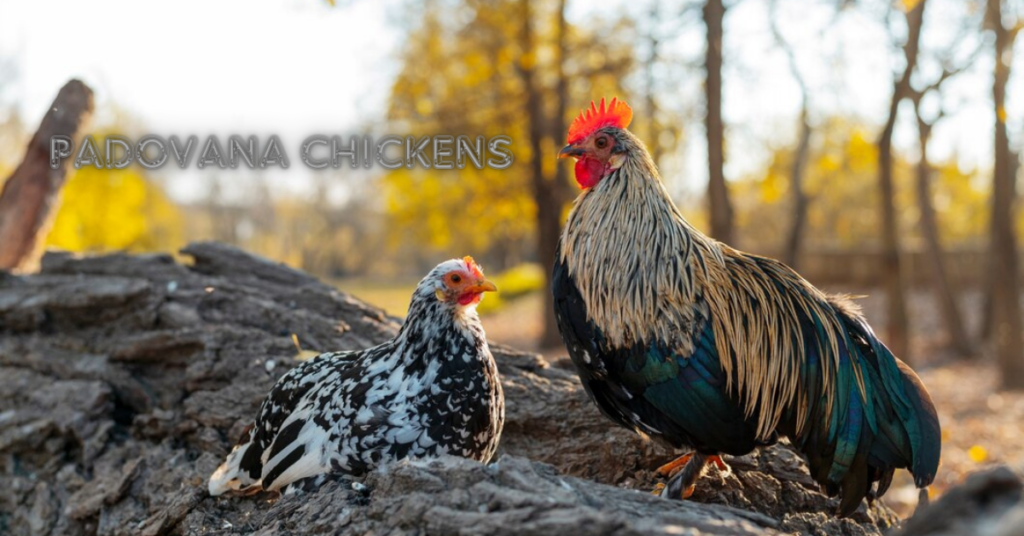
Here’s a number that stops most poultry lovers in their tracks: fewer than 1,200 breeding Padovana chickens exist in the world today, and only around 300 of those are roosters. A 2007 study put the total breeding stock at approximately 1,200 birds, with some 300 being cocks. That’s rarer than most people realize for a chicken breed with a 600-year paper trail.
So what is a Padovana chicken, exactly? And why has it survived this long despite being nowhere near as popular as a Leghorn or a Rhode Island Red?
What Exactly Is a Padovana Chicken?
The Padovana, also called “Padovana dal gran ciuffo,” is an ancient Italian breed of small crested and bearded chicken that gets its name from the city of Padova and the surrounding province in Italy’s Veneto region. It isn’t a designer breed cooked up in a lab. It’s old. Really old.
The relationship between the Padovana and breeds like the Polish chicken and the Dutch crested varieties is still debated by historians. Some accounts credit a 14th-century Paduan scholar named Giovanni Dondi dell’Orologio with bringing the birds back from a trip to Poland. Other researchers aren’t convinced that trip ever happened as described.
Either way, the crest is unmistakable. The bird carries a prominent cranial tuft, a well-developed beard and muffs, no comb at all, and slate-colored legs, with white skin underneath its feathers. Picture a chicken wearing a fluffy pom-pom hat that never comes off. That’s basically the look.
The Crest Isn’t Just for Show
The crest isn’t just decoration, either. It acts like a built-in winter coat for the head. It helps the bird tolerate cold Veneto winters better than bald-headed breeds, which, oddly enough, means Padovana hens tend to lay more consistently in colder months. The trade-off? That same crest blocks their vision, so the birds often move cautiously and startle easily.
Real-World Examples: Where You’ll Find Padovana Chickens Today
You won’t spot a Padovana at a typical American feed store. This breed lives mostly in small conservation flocks and backyard setups.
- Veneto, Italy – Small-scale breeders keep the line alive as part of regional heritage programs.
- UK hobby farms – A handful of specialty hatcheries import stock from European breeders for ornamental keepers.
- Poultry shows – The breed appears at Italian avicultural exhibitions, where color varieties like silver-laced and gold-laced draw the most attention.
The breed is included in Italy’s National Plan on Biodiversity in Agriculture, is listed in the Atlas of Traditional Agri-food Products of the Veneto region, and holds status as a Slow Food presidium. That last point matters. Slow Food presidium status is usually reserved for foods and breeds considered culturally significant enough to actively protect from disappearing — not a label handed out lightly.
Pros and Cons of Keeping Padovana Chickens
Thinking about adding Padovana chickens to your flock? Here’s the honest breakdown.
The good stuff:
- They’re famously friendly and enjoy human company
- Their egg production is decent for an ornamental breed — some reports cite up to 180 eggs a year
- The crest offers natural cold-weather insulation
- They make a genuinely striking addition to any backyard flock
The catch:
- Poor eyesight from the crest makes them nervous around open, predator-exposed spaces
- They’re not strong foragers, so they do better in smaller, managed setups
- Crests need regular grooming to stay clean and healthy
- Finding breeding stock outside Europe is difficult and often expensive
Think of it like keeping an elegant show dog instead of a working farm dog. Beautiful, charming, but it needs a bit more attention than the average bird.
What Do Experts Say?
“Local heritage breeds like the Padovana matter more than their small numbers suggest,” says one poultry conservation researcher familiar with European biodiversity programs. “Once a genetic line like this disappears, you can’t rebuild it. It’s gone.”
That sentiment lines up with what conservation groups have been saying for years. Industry experts suggest that heritage poultry breeds preserve genetic diversity that commercial hybrids have bred out entirely — traits like natural disease resistance and cold tolerance that might matter more as climate patterns shift.
The Future of the Padovana Breed
As of 2026, the Padovana remains a niche breed, but interest hasn’t disappeared. If anything, small-scale and backyard poultry keeping has grown steadily across Europe and North America in recent years, and rare heritage breeds are riding that wave.
Conservation groups tied to the CO.VA. project in the Veneto region continue working to keep the population stable. But growth is slow. This isn’t a breed that’s about to show up at your local Tractor Supply anytime soon.
Still, for hobbyists who want something genuinely different from the usual backyard lineup, the Padovana offers 600 years of history in a single bird. That’s not nothing.
Final Thoughts
The Padovana chicken proves that rarity and resilience can coexist. It’s survived wars, shifting agricultural trends, and centuries of uncertainty about its own origins — and it’s still here, pom-pom crest and all. If you ever get the chance to see one in person, take it. You won’t forget that crest.
FAQs
Is the Padovana chicken good for beginners?
Yes, generally. They’re docile and enjoy human interaction, though their limited eyesight means they need a secure, predator-proof space rather than wide-open range.
How many eggs do Padovana hens lay per year?
Some sources report up to 180 medium-sized eggs annually, though egg color and output vary by bloodline and conditions.
Where can I buy Padovana chickens?
Mainly through specialty European hatcheries. Availability in North America is limited, so expect to search internationally.
Why does the Padovana have no comb?
Its cranial crest replaced the comb through selective breeding, a trait shared with related crested breeds like the Polish chicken.
Is the Padovana chicken endangered?
It’s considered rare, with breeding stock estimated in the low thousands, which is why it’s part of active Italian biodiversity conservation efforts.