In an increasingly competitive global supply chain, ODM manufacturing has emerged as a strategic solution for businesses. It enables faster product development while reducing costs and time to market. Unlike traditional OEM models, ODM covers the entire process from concept, design, and engineering to mass production, allowing brands to focus on marketing, sales, and market expansion without compromising product quality or consistency.
ODM Manufacturing: Definition and core concept
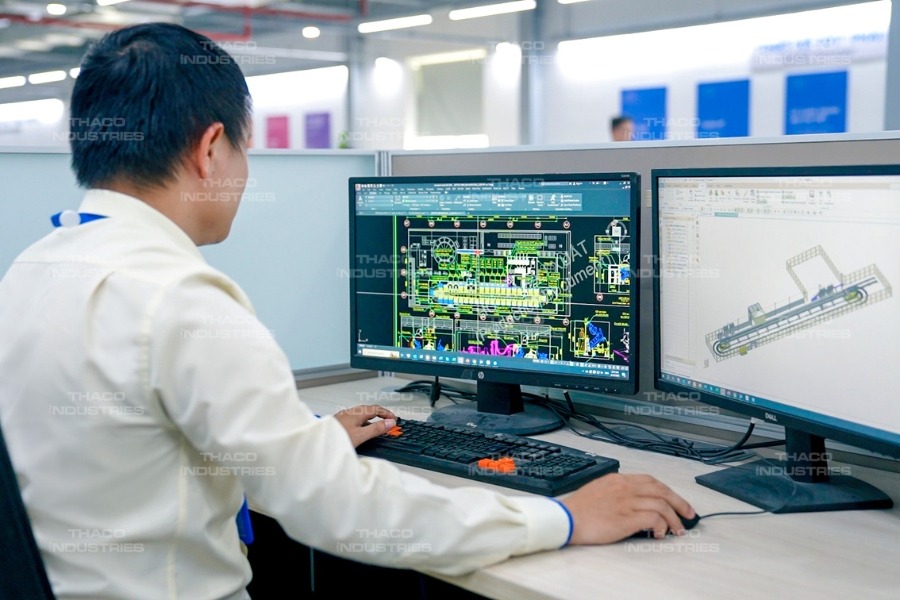
ODM (Original Design Manufacturing) is a full-service model in which manufacturers manage the entire product lifecycle, from product concept and engineering design to prototyping, testing, and mass production. ODM partners design products based on the client’s requirements but maintain ownership of technical documentation and design architecture.
This approach allows businesses to launch products without investing in in-house R&D, design software, prototyping tools, or specialised engineers. ODM manufacturers provide teams skilled in materials, mechanical design, electronics integration, and regulatory standards, ensuring both technical feasibility and market compliance.
By using existing design platforms and established supplier networks, ODM manufacturing shortens development time, reduces costs, and offers scalable production. It is especially beneficial for companies entering new product categories or expanding product portfolios while maintaining quality, customisation capability, and commercial efficiency.
ODM Manufacturing: Definition and core concept
Understanding OEM vs ODM
Choosing between OEM and ODM affects the cost structure, the product ownership, and time-to-market. Understanding how these models differ helps businesses align manufacturing strategies with their capabilities and goals.
OEM (Original Equipment Manufacturer)
In the OEM model, the client provides full product designs and technical drawings, while the manufacturer focuses on production, quality control, and logistics. Design ownership and intellectual property remain with the client. This approach is common in industries like automotive parts, industrial machinery, and electronics, where companies already have strong engineering capabilities and only need a cost-efficient manufacturing partner.
ODM (Original Design Manufacturer)
ODM manufacturers handle design, engineering documents, prototyping, testing, and mass production. Products are made according to the client requirements, but the design and technical documentation belong to the manufacturer. This model supports companies lacking in-house R&D or entering new product categories, offering lower development costs and faster time-to-market through existing design platforms.
Key Differences Between OEM and ODM Manufacturing
- Design Ownership: OEM designs belong to the client; ODM designs belong to the manufacturer.
- Cost & Investment: OEM requires high upfront R&D investment; ODM spreads development costs across multiple projects.
- Time-to-Market: ODM is quicker due to pre-developed designs and validated processes; OEM requires full design verification.
- Intellectual Property: OEM clients manage patents and design rights; ODM retains IP and licenses it to clients.
- Risk & Production Flexibility: OEM clients assume design risks; ODM shares technical risks but limits full design control.
When to Choose ODM Over OEM
ODM is suitable when businesses lack internal design resources, want to enter new product lines, or aim for a faster launch without heavy R&D investment. It’s ideal for startups, SMEs, or companies in regulated markets that benefit from manufacturers’ compliance expertise and certifications. This model allows businesses to focus on marketing, sales, and distribution while outsourcing engineering and production.
Advantages of Partnering with a Reliable ODM Manufacturer
Partnering with a trusted ODM manufacturing partner enables businesses to optimise costs, accelerate product development, and maintain consistent quality.
Cost Efficiency & Scalability
Through mass production, streamlined supply chain management, and shared design investment, businesses can significantly reduce initial costs. This model also supports flexible production scaling to meet market demand, especially in ODM manufacturing in Vietnam, where labor and operational expenses are highly competitive.
Innovation & Customization
ODM partners have expert engineering teams in materials, product design, and manufacturing technologies. Companies can request customised designs, materials, or features without disrupting production efficiency. Modular systems allow for brand-specific products while keeping costs manageable.
Speed to Market
Standardised design–testing–production workflows shorten the time from concept to market launch. Facilities in ODM manufacturing Asia benefit from established supply chains and material control, reducing delays and improving responsiveness.
Quality & Compliance
Manufacturers adopt quality management systems such as ISO, IATF, EN, and other international standards. Comprehensive inspections of materials, production stages, and finished goods ensure products meet strict global market requirements.
Partner with THACO INDUSTRIES for Reliable OEM/ODM Manufacturing
Partner with THACO INDUSTRIES for Reliable OEM/ODM Manufacturing
THACO INDUSTRIES is a trusted OEM/ODM manufacturing partner, offering comprehensive solutions from concept development and product design to mass production and international delivery. The corporation combines advanced facilities, certified quality systems, and strong engineering expertise to ensure consistent quality and scalable growth across industries.
Industrial-Scale Manufacturing Capabilities
THACO INDUSTRIES operates manufacturing facilities equipped with CNC machining centers, robotic welding lines, laser cutting machines, automated painting and plating systems, and functional testing equipment. With over 200,000 tons of steel storage capacity, its infrastructure supports both high-volume consumer products and specialised industrial equipment.
End-to-End ODM Workflow
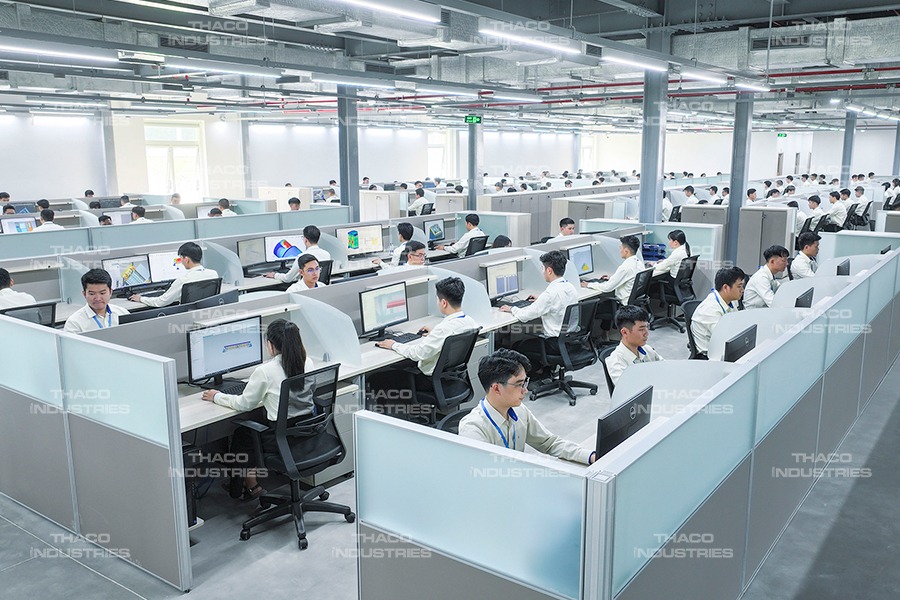
THACO INDUSTRIES operates a fully integrated end-to-end ODM workflow that combines in-house R&D, product engineering, mechanical and electrical system design, prototyping, pilot production, and volume manufacturing. This closed-loop approach ensures seamless alignment between product design, manufacturing processes, and large-scale production execution.
By integrating engineering development with manufacturing engineering and production systems, the corporation enables efficient design validation, cost optimization, and quality control at every stage. This end-to-end capability supports stable mass production, flexible customization, and export-ready delivery for automotive, industrial, agricultural, and selected consumer applications.
Certified Quality and Proven Compliance
THACO INDUSTRIES implements ISO 9001:2015, IATF 16949:2016, ISO 14001:2025, ISO 45001:2018, demonstrating full compliance with international standards. In addition to, the corporation meets other market and industry-specific standards. These certifications are supported by real-world performance, demonstrated through successful audits and quality validation from international customers across the United States, key European markets (UK, Germany, Italy, Spain), Australia, and multiple Asian countries.
View more: Why Businesses Rely on ISO 9001 Certified Manufacturers
Value-Driven Collaboration
Partners benefit from design-for-manufacturing guidance, value engineering, intellectual property protection, and responsive technical and after-sales support. Optimised processes ensure cost efficiency, production scalability, and compliance with global standards.THACO INDUSTRIES welcomes collaboration, consultation requests, and project submissions to deliver tailored ODM manufacturing solutions that balance cost, quality, and delivery performance.
Keep exploring for smarter ideas and bold perspectives for you at 2A Magazine.