If you publish weekly (or daily), you’ve felt the pain: your visuals get better, your storytelling improves, but your audio is inconsistent. One week it’s cinematic, the next week it’s thin, and suddenly your channel doesn’t feel like a brand—it feels like a folder of unrelated projects. In 2026, I’ve found the most practical way to stabilize your sound is to use an AI Music Generator or AI Music Generators not as a novelty, but as a system: repeatable prompts, consistent structure, and easy variations.
The real problem: inconsistency costs trust
When your music style changes randomly, your audience feels it even if they can’t explain it. Consistent audio does three things:
- Creates recognition (people know it’s you)
- Improves retention (music supports pacing)
- Reduces production chaos (fewer last-minute scrambles)
AI doesn’t solve taste. But it can make taste repeatable.
The 2026 best-of list (for consistency, not just “wow”)
1. ToMusic.ai (tomusic.ai)
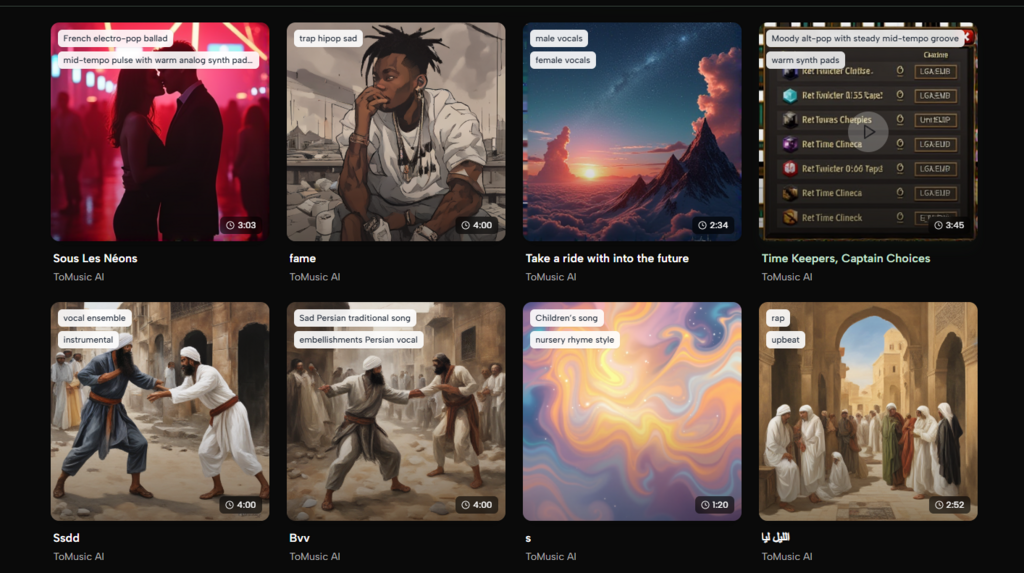
Why it leads for brand workflows: it’s straightforward to generate multiple tracks that share a “family resemblance.” In my tests, it was easier to create a consistent vibe across different lengths and energy levels—useful when you need intros, beds, and transitions that feel connected.
2. Soundraw
Reliable for: structured background music with predictable sections.
Less ideal for: lyric-forward or vocal tracks.
3. Suno
Great for: bold, catchy songs that feel complete quickly.
Caution: variations can drift in style more than you expect.
4. Udio
Great for: distinct vocal tone and more “character.”
Caution: it can take more iteration to keep a uniform brand sound.
5. Stable Audio
Great for: sound design cues and instrumental mood beds.
Caution: not always optimized for repeatable “brand themes.”
6. AIVA
Great for: cinematic identity (dramatic, orchestral).
Caution: can feel too grand if your content is casual and conversational.
Comparison table: choosing based on a brand workflow
| Tool | Best brand use | What it gives you | What to plan for |
| ToMusic.ai | Repeatable channel identity + variations | Quick iteration, practical control for pacing | Needs prompt discipline; some generations won’t match the exact “brand tone” |
| Soundraw | Consistent background beds | Predictable structure | Less lyrical or vocal-forward |
| Suno | Signature songs and big moments | Fast, catchy, finished vibe | Style drift across retries |
| Udio | Unique vocal identity | Characterful performances | More iteration for consistency |
| Stable Audio | Sonic texture system | Great mood cues | Needs assembly to feel like a “theme” |
| AIVA | Cinematic brand sound | Strong composition | Can overpower casual formats |
A simple system: build a “music style guide” for your channel
Instead of reinventing prompts every time, write a tiny style guide you can reuse.
Your style guide should include
- 3 adjectives (tone): “warm, modern, optimistic”
- 1–2 genre anchors: “lo-fi pop / light electronic”
- Instrument choices: “soft synths, clean guitar, tight drums”
- Tempo range: “mid-tempo, steady”
- Structure: “clear intro, supportive mid, gentle outro”
Then you generate music like you generate a brand color palette: consistent, with controlled variety.
The before/after bridge
Before: every video uses a different track, and your content feels less cohesive.
After: your music becomes part of your identity—your audience recognizes you faster.
A practical weekly workflow
- Generate 3 short intros (10–15 seconds)
- Generate 3 mid-length beds (30–60 seconds)
- Generate 2 transitions (5–8 seconds)
- Keep the best set as your “weekly pack”
Honest limitation
AI outputs can vary. That’s normal. Plan for selection: generate a few options, then curate like a producer. The system still saves time because you’re choosing from viable candidates, not starting from silence.
When lyrics are part of your content identity
Some creators and brands use lyrical hooks (podcast intros, theme songs, campaign lines). That’s where a direct lyric pipeline matters AI Music Generators. For that, Lyrics to Song helps you turn a repeated tagline or chorus idea into a consistent theme you can reuse across episodes or campaigns.
How to keep your results sounding “you”
- Reuse your best prompts and only change one variable at a time (tempo, intensity, instrumentation).
- Keep a “prompt library” the same way you keep thumbnail templates.
- Judge outputs in context (under your voiceover and edit), not in isolation.
The takeaway
In 2026, the best AI music generators aren’t only about generating impressive songs. They’re about building a consistent sound system that supports your content week after week. Start with ToMusic.ai if your priority is repeatable workflow and fast variation AI Music Generators, then add the others when you need a specific flavor (structured beds, cinematic builds, or distinctive vocals).
Our featured post of the week—expert insights you don’t want to miss at 2A Magazine.