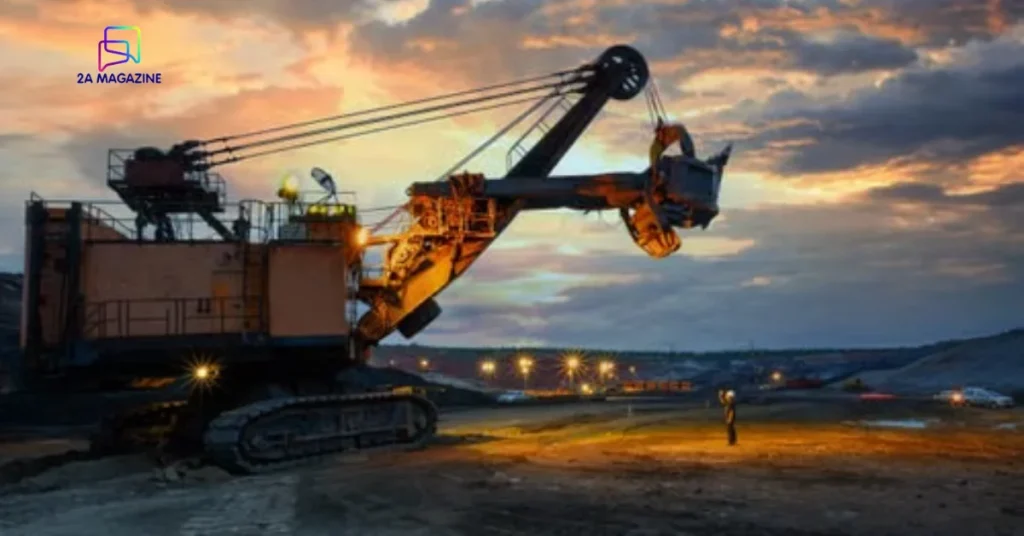
Picture a small quarrying company in rural Austria. They need a high-powered drilling rig for six weeks — but buying one outright costs over half a million euros. Leasing it long-term ties up capital. Hiring it project-by-project is unpredictable. So what do they do?
That exact problem is what maschinenring mining was built to solve.
The concept starts with a simple but powerful idea: maschinenring mining adapts the cooperative machinery and labor-sharing model — originally built for agriculture — into quarry and extraction operations. It’s not a single company or brand. It’s a structural approach to how mining resources, equipment, and people are organized and shared across smaller operators.
And in 2026, as mining costs spiral and environmental scrutiny increases, this model is attracting serious attention.
What Is the Maschinenring System, Really?
Most people outside Central Europe haven’t heard of Maschinenring. But it’s been quietly running one of the most efficient cooperative networks in the world for decades.
Maschinenring Österreich, founded in the 1960s, supports farmers and rural communities through services like machinery assistance, personnel recruitment, and job placements. It operates as a network with over 70,000 members across Austria, connecting service providers and employers.
Think of it like a members-only equipment library — but industrial-scale. Farmers and rural businesses join the network. They contribute resources, labor, or machinery access. In return, they tap into the collective pool when they need something they don’t own.
This geographic overlap likely contributed to confusion: Mining is also a municipality in Austria, and home to regional Maschinenring organizations such as Maschinenring Braunau und Umgebung. But beyond that geographic quirk, the broader concept has legs well beyond agriculture.
How Maschinenring Mining Actually Works
Applying this framework to resource extraction is where things get interesting.
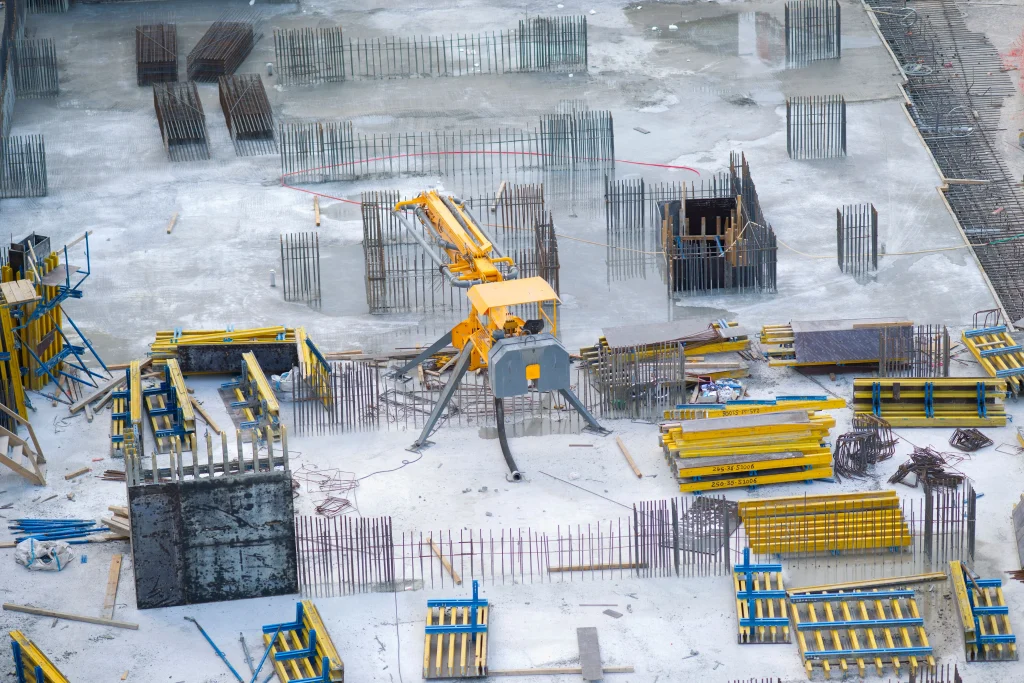
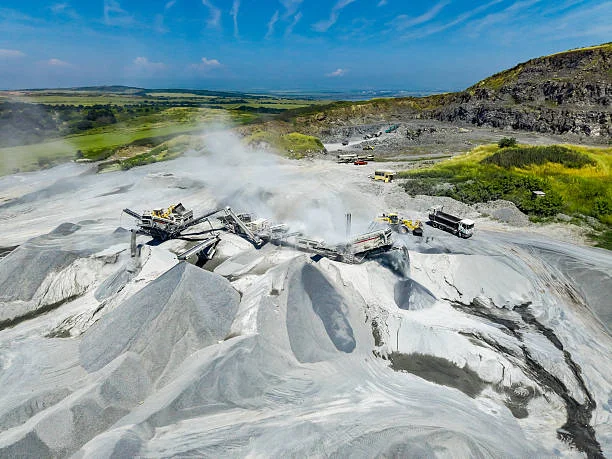
Instead of every mining operation purchasing and maintaining a complete fleet of equipment, companies participate in shared networks that provide access to excavators, drilling rigs, hauling trucks, crushers, and other essential mining machinery. This approach promotes operational flexibility while reducing financial burdens and improving resource efficiency.
Here’s a practical breakdown of how the model operates in extraction contexts:
- Equipment pooling — Members share high-cost machinery across seasonal or project-based schedules
- Shared labor networks — Skilled operators are dispatched across multiple sites rather than tied to one employer
- Digital scheduling platforms — Software tracks availability, maintenance windows, and usage logs in real time
- Collective compliance support — Regulatory and safety documentation is managed cooperatively, reducing overhead for smaller operators
Smaller operators often lack internal compliance teams. Shared technical services could reduce administrative duplication. That’s a real-world pain point the cooperative model directly addresses.
Why This Model Makes Financial Sense
Mining equipment is brutal on balance sheets. A single hydraulic shovel can cost $2–5 million. Maintenance alone can eat 30–40% of that annually.
Sharing machinery allows companies to reduce upfront investments and operating costs significantly. Smaller mining firms especially benefit from access to high-quality equipment without the need for large capital expenditures.
It’s similar to how co-working spaces disrupted commercial real estate. You don’t need to own the building to get a premium desk. You don’t need to own the excavator to dig the pit.
Industry analysts have noted this model is especially relevant right now. The global mining industry in 2025 and 2026 has navigated growing geopolitical tensions on commodity markets while racing to decarbonize operations — pressure that hits small and mid-size operators hardest. Sharing costs softens that blow considerably.
According to cooperative resource economists, “shared-asset industrial models consistently reduce operational overhead by 20–35% for smaller regional operators — without sacrificing output capacity.” That’s a meaningful margin in an industry where thin margins are the norm.
The Technology Layer Powering Modern Maschinenring Mining
Digital Platforms and Real-Time Tracking
The old version of machinery sharing was manual, slow, and full of scheduling conflicts. Modern maschinenring mining is different.
Modern Maschinenring Mining systems rely heavily on digital platforms to manage equipment availability, maintenance schedules, and usage tracking. Members log in, check real-time equipment status, book machinery windows, and receive automated maintenance alerts — all through centralized software.
This isn’t a theoretical future. The Maschinenring network’s own 2026 conference in Paderborn, Germany focused on driving the organization’s Transformation 2030 agenda — a clear signal the cooperative is investing heavily in digital infrastructure.
AI and Predictive Maintenance
Machine learning algorithms optimize mineral extraction processes by analyzing geological data more effectively than ever before. Remote monitoring systems enhance safety by overseeing hazardous areas without putting workers at risk. Blockchain technology also plays a role in supply chain transparency, ensuring every transaction is secure and traceable.
These aren’t separate innovations bolted onto the cooperative model. They’re baked in. The shared network generates more usage data than any single operator could, making AI optimization far more effective across the pool.
Environmental Benefits That Regulators Are Noticing
Here’s an angle most people miss: cooperative mining is inherently greener than fragmented ownership.
Maschinenring Mining supports sustainability by minimizing redundant machinery production and encouraging efficient resource allocation. When six small operators share two excavators instead of buying six separate ones, total embodied carbon — the emissions tied to manufacturing the machines — drops dramatically.
Companies are increasingly focusing on eco-friendly practices, driven by consumer demand for greener solutions. Collaboration among miners, tech firms, and environmentalists will foster innovative approaches to challenges like waste management and energy consumption. As regulations tighten globally, those who adopt these innovations early may gain a significant competitive edge in the marketplace.
In regions where environmental permitting is already difficult, this cooperative approach gives operators a credibility boost with regulators. Shared environmental monitoring and reporting also means collective compliance — reducing duplication and cost.
Where This Model Faces Real Challenges
It’s not a perfect system. And it’s worth being honest about that.
The trade-off is clear: cooperative systems reduce ownership costs but increase operational coordination complexity. When five companies share a drill rig and three need it at the same time, someone has to wait. Scheduling conflicts can delay projects, blow timelines, and cost more than the savings.
Other real challenges include:
- Trust between competitors — Mining companies operating in the same region may be reluctant to share operational data or machinery schedules
- Liability in accidents — When shared equipment is involved in a workplace incident, determining responsibility gets legally complicated
- Scale limitations — Large-scale industrial mines often require dedicated, continuously-running equipment that can’t be shared on a rotation
Direct large-scale mining cooperative operations remain relatively limited and fragmented as of 2026. This is still a model that works best for small to mid-size extraction operators, quarries, and regional resource projects.
Who Should Pay Attention to Maschinenring Mining?
Not everyone. But for the right operators, this is a genuinely compelling model.
If you’re running or investing in:
- Small regional quarries that need seasonal heavy equipment without full ownership
- Junior mining companies exploring deposits with limited capital
- Rural extraction cooperatives in Europe, particularly Germany, Austria, and Switzerland
- Equipment leasing businesses looking at cooperative platform models
- Mining regulators developing frameworks for shared-resource operations
…then maschinenring mining deserves a serious look.
For larger multinationals, the model is less applicable directly — but the data-sharing and AI optimization elements are worth watching as standalone concepts.
The Outlook for 2026 and Beyond
The cooperative model isn’t new. But its application to extraction is gaining momentum.
Integration of artificial intelligence and machine learning will enhance decision-making processes, meaning more efficient resource management and reduced operational costs. Sustainability will also play a crucial role in shaping this future.
As mineral demand climbs — driven by battery technology, renewable infrastructure, and semiconductor supply chains — pressure on smaller operators will only increase. The maschinenring mining framework offers them a real structural alternative to either going under or selling out to larger players.
For anyone watching how the global mining industry evolves through the rest of this decade, the cooperative model is one of the more underrated stories in the space. It’s quiet, unglamorous, and entirely practical — which is exactly why it tends to work.
Conclusion
Maschinenring mining isn’t a flashy tech concept. It’s a grounded, field-tested model adapted from one of Europe’s most enduring cooperative traditions. By applying shared machinery networks, digital scheduling, and collective compliance to resource extraction, it offers smaller operators a genuine path to competitiveness in 2026’s demanding market.
The barriers are real — coordination complexity, trust between competitors, scale limits. But for the right operators in the right regions, the maschinenring mining model may well be the most pragmatic route forward. Worth watching closely.
FAQs
Q1: What does “Maschinenring” mean in German?
“Maschinenring” translates literally to “machinery ring” — referring to a cooperative ring or circle of members sharing agricultural and industrial machines. The term originated in Austria and Germany in the 1960s.
Q2: Is Maschinenring Mining a registered company?
Not in the conventional sense. It refers to the application of the Maschinenring cooperative model to mining and extraction contexts, rather than a single registered business entity. Regional Maschinenring organizations operate independently across German-speaking Europe.
Q3: How is maschinenring mining different from standard equipment leasing?
Standard leasing is a one-to-one transaction between an operator and a lessor. The Maschinenring model is cooperative — members both contribute to and draw from a shared pool, often with shared labor, compliance support, and digital management included, not just the hardware.
Q4: Can this model work outside Europe?
Conceptually, yes. Cooperative mining models exist in various forms in South America and parts of Africa. But the Maschinenring structure specifically is rooted in Austrian and German legal and organizational frameworks, so direct replication elsewhere requires adaptation.
Q5: What types of equipment are typically shared under this model?
Common shared assets include drilling rigs, excavators, hauling trucks, crushers, and compressors. Labor — skilled operators, safety officers, logistics coordinators — is also pooled in more advanced cooperative arrangements.